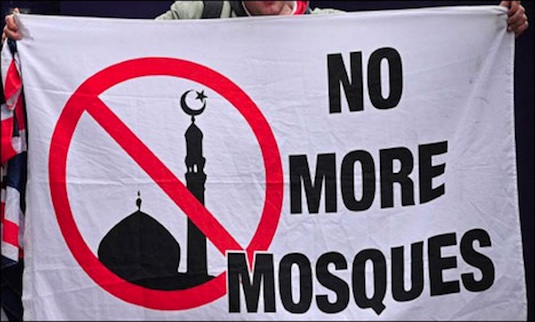
What is going to happen to the United Kingdom Independence Party? Not many people care any more. Since they were broken at the Stoke-on-Trent by-election its fortunes have gone from bad to worse. Members have fallen away faster than Paul Nuttall's hair follicles, UKIP has tanked in the polls and they scored their worst general election result since 2001. What do you do when Brexit - your raison d'etre - is now owned by the Conservative Party, when Nigel Farage is more interested in presenting radio shows and having selfies with Donald Trump, politics has shifted appreciably to the left and not many people give a fig about what you have to say? Under such circumstances folding is an option, but there is a modest local authority gravy train to protect. The biggest problem for UKIP is its social base has entirely evaporated, and when political parties are expressions of classes and class fractions that is something of a deal. Without an alignment to a constituency, which in UKIP's case was always quite volatile, it is loose from the rest of society and is buffeted by the turbulence even further to the margins. And once there, empty of social content, it becomes the battleground of (effectively) de-socialised, detached individuals. This shows up especially in leadership contests. As big parties are coalitions of interests, different political figures and currents represent certain constituencies. When there are large numbers of candidates, chances are the relationship between the party and the wider world is somewhat tenuous. That UKIP has 11 people standing for the role says all you need to know. There are two front runners in the race to replace Nuttall and, interestingly, there is a smidgen of a political difference between them. The "moderate" appears to be David Kurten, who sits on the London Assembly. In his corner you will find Arron Banks, Raheem Kassam of Breitbart, and that no mark conspiracy fool from Infowars. I know it's old, but a more accurate picture of the dud, the mad, and the smugly is seldom found. Incredibly, there is worse political effluvia floating in the hard right toilet bowl and our second candidate found them. Anne Marie Waters, self-styled anti-Islam activist has had her person endorsed by Geert Wilders and Tommy Robinson (or whatever his name is these days). The Charybdis of homophobic batshittery versus the Scylla of a BNP turn. It couldn't happen to a nicer party. Waters has the higher profile by a country mile thanks to her being a regular on far right scene. As "director" of the Sharia Watch blog and founder member of the still-born Pegida UK, I first came across her thanks to the efforts of Andy Newman, who outed Waters as an anti-Islam bigot trying to get on the Parliamentary gravy train via the Labour Party. Among her political positions are the enforced closures of mosques and mass deportations, which marks her out as a right charmer. She also probably stands a good chance of getting the leadership thanks to 1,000 people signing up to the party to vote for her. Having Waters as leader is too much for Farage, who has said UKIP would be "finished" in the event of her victory. It's difficult to see what passes for UKIP's faces - Suzanne Evans, Patrick O'Flynn, perhaps even Neil Hamilton - hanging around either. Still, no matter how putrid they become UKIP's safe seat on BBC Question Time is unlikely to be affected. Here is the problem. There is a political market for anti-Islam bigotry, unfortunately. It's not a massive one - after all, the BNP at its height only mustered 50-odd councillors, a couple of MEPs and a London Assembly member. The Waters strategy does hold the possibility of connecting with and catering for a very small, very backward section of the electorate. She offers something, even it means changing the party colours from putrid purple to fascist brown - and for some members staring oblivion in the face, that will do. It comes with a hefty cost though. UKIP would be finished as a party with a hope of future mainstream success. See, there is a slight possibility of a future UKIP revival. If Brexit is "betrayed" and the Tories are seen to be either delivering an insufficient exit from the EU (whatever that means) or bending the knee to Brussels as we negotiate from a position of obvious weakness, the volatile ex-kipper vote now with Theresa May could be off on its travels again. While such voters have no love for Muslims, UKIP as the BNP mk II carries the pall political stigma. They will likely go where Farage leads. That could be UKIP if Kurten wins, or curtains entirely if Waters gets the job.
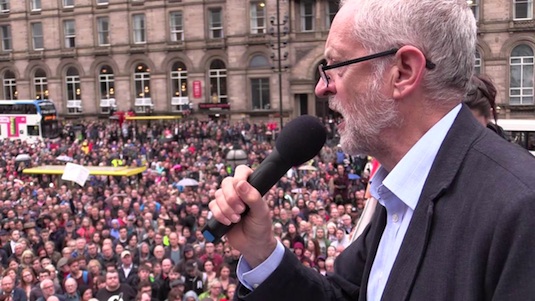
I hate to say I told you so, but I told you so. Rallies in politics matter, and you needn't take my word for it any more as Alia Middleton at the LSE has crunched the numbers. She found that where Theresa May set down during the election campaign, her visits had little appreciable effect on the outcome in those seats. When Jeremy Corbyn rolled into town for one of his rallies, the party vote share change went up almost double versus constituencies he didn't visit. Amaze. If you cast your mind back to any point before this year's general election campaign, some wise old wise old could be found lecturing the world about how rallies do not win elections. Indeed, some might have said they're a complete waste of time. Why bother listening to someone tell you things you already know when you could be posting leaflets and knocking on doors? And, of course, in Jez's case it was just another case of him being in his comfort zone talking to folks who agree with him. Yadda, yadda, yadda. Rallies are important for several reasons. They bring large numbers of people together, just like demonstrations. When big numbers of like mind turn out for something, it not only builds up a collective feeling of solidarity, it enables people to meet, talk, get involved. Why do you think Momentum, Labour and sundry Trot groups have stalls at these sorts of events? Because they know new people will be drawn there out of curiosity and interest, a fair chunk of whom would be looking to get involved further. Second, rallies - especially Jez rallies - are a spectacle. They're something we haven't seen with any degree of regularity since the mid-1980s, particularly outside London, and for large numbers of younger people it is entirely novel. If you happen to just be passing by and a thousand or so people are gathered, chances are you're going to hang around and see what the fuss is about. And think of what the spads and wonks call the optics. During the election people saw Theresa May shuttled from one staged event to another, whereas Jez was meeting and addressing real people. When the media barrage is this man is weak/dangerous/unpopular and yet the same is showing him in front of crowds, that message ain't going to wash. Lastly, don't underestimate the impact this has on the Labour Party's enemies. Rallies are supposed to show your opposition the kind of strength you can muster. When Jeremy Corbyn can pop up in any part of the country and draw a crowd, that's going to make the Tories nervous. They are finally waking up to we saw in Derby North. A rally also ensured coverage in the local rags (every local newspaper reader is very likely to be a voter), which would have percolated out into the nearby marginals. Their geographic spread is therefore unlikely to have made much of a difference. Meanwhile, May's strategy didn't help her - the more the public saw, the more stilted, awkward, robotic she and "her team" appeared. This week Jez embarked on his summer tour of marginal constituencies. There will still be grumblers and naysayers grumbling and naysaying, but now the electoral impact of this strategy cannot be denied.
It's truly silly season if talk of a new centre party is abroad yet again. James Chapman, ex-Daily Mail and former office boss in David Davis's Department for Exiting the European Union sparked off the latest chittery-chattery in a series of pointed posts on yours and mine's favourite social media outlet. He said Boris Johnson should be banged up for his moronic £350m/week pledge to fund the NHS, and took several gormless ministers to task about how Brexit is affecting their briefs. Of more interest is his desire for a new 'Democratic Party' that would seek to overturn the result of last year's referendum. No cheap shots on the incongruence between the name and the reluctance to accept a democratic decision, please. Unfortunately for "Chappers" his new party fantasy is just that. It might be a dream he shares with Tony Blair, the Jolyon scene and "very interesting people", but it's the pantomime gesturing of a political elite left out of sorts by the post-referendum, post-election landscape. It appears superficially similar to what went before, but try as they may the new world rebels against them. Nothing underlines this confusion more than their stubborn, centre party meme. Here then for the umpteenth time are five reasons why it won't work and cannot work. Show me the money, show me the money, show me the mon-ey There was talk before the election, at least according to gossip relayed by The Mail, of Tony Blair lining up donors to fund a new centre outfit should Labour badly lose but Jeremy Corbyn stay on. Since then, nothing. Lord Sainsbury, the normal "secretive billionaire" go-to for political money has decided that charidee alone will now benefit from his largesse. And there are no other takers. According to Private Eye, Blair even tried touching Brexit-supporting ex-Labour donor John Mills for moolah. You can imagine the conversation didn't go well. The problem with rich donors is they expect a return as they would with any other investment. That His Blairness, now worth a reputed £60m give or take, isn't stumping up the readies says everything you need to know. Absent friends What MP is going to be tempted by a new centrist party? Apparently Chuka Umunna had one on the launch pad and ready to go, and then the electorate spoiled everything and awarded Labour its largest vote for 20 years. How thoughtless of them. Now, while Chuka might needle Corbyn over Brexit and sundry others cause mischief about Venezuela and the like, no one is about to tender their resignations for an unproven force. The same applies to annoyed Cameroons such as Nicky Morgan and Anna Soubry. The one thing most MPs want is ... to remain MPs. Would anyone out of step with their respective parties want to go to the electorate with 'Democrats', 'Spring' or some other meaningless appellation and have someone else stand under the Tory or Labour banner? No. Simon "800 votes" Danczuk helpfully rendered his former colleagues a service by offering a vision of their potential futures should they be tempted to jump ship. Generals without an army Party members can be very annoying. They badger parliamentarians in their constituency/association meetings, bang on about issues no one cares about and sometimes have the temerity to want a degree of collective control over their party. Yet party members are a necessity too. You must have people to fill candidate vacancies in local elections, folks who'll speak to punters on the doors, on stalls, at work and in all the social settings they inhabit. Someone has to deliver the leaflets. Who then are going to do this for a new centre party? Though they're not going anywhere, let's have a brief look at the standard bearer of the self-described centre politics in Labour. That would be our friends Progress, and they're bust. The sugar daddy has left them high and dry, and an attempts to infuse new blood to keep them attractive has failed. Turnout in their recent round of strategy board elections finds just 50 young members, and 2,500 members in total. In short, a body not much larger than Britain's principal Trotskyist outfits and, I would wager, with considerably fewer activists. If Progress is the most likely feeder for a new party from Labour, what about the Tories? They're hardly overflowing with members and, if anything, their base is getting more right wing as all the kippers come back. The Cameroons did not have a numerous grassroots cadre to fall back on either. Might a new party attract people presently uninterested in politics? Unlikely, because ... Dissolve the people and elect another The electorate aren't in the market for a new centre party. The election result squeezed the smaller parties severely - even the SNP weren't immune and are likely to be less resilient in future. On the one side the Tories have stacked up a coalition of classes and class fractions in long-term decline, which means they are too. Labour on the other hand are presently benefiting from changes to the class composition of British capitalism, which accounts for how it is managing to win over middle class strata and the most exploited and marginalised. The election result was polarised because politics is now in line with the real polarisation taking place beneath the froth of official society. Our self-described centrists, our Blairists and Cameroons do not and cannot understand this because their privilege inoculates them against conceiving of the world as anything other than the shilly-shallying of fellow elites. Sadly for them, the realities of the new class politics is no respecter of ideological illusions. The real asserts itself whether you recognise it or not. The only centre party in the (Westminster) village All talk of a new centre party has an element of unreality about it, because there already is a centre party. The Liberal Democrats are hardly in the rudest health, but they're not doing too badly considering how the tectonics of politics are shifting. They now have in excess of 100,000 members, they made a modest advance in the election, and while their polling is rubbish local council by-elections are returning okay results. Not on the scale of their surge in the 12 months leading up to this year's council elections but respectable enough. What can a new party offer that the LibDems can't already, especially as they're now doubling down on a second referendum on the Brexit deal? Tony Blair and "celebrity" newspaper columnists? Please. A new centre party is a stupid idea in defiance of political realities. But the people touting it are so disoriented by British politics that them seeing through this absurdity cannot be ruled out.
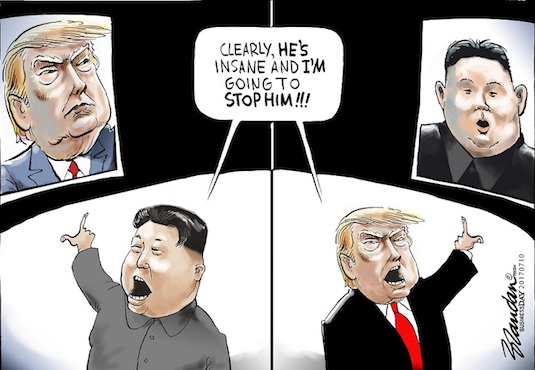
It's 9th August 2017, 72 years to the day since a nuclear weapon was last used in anger. How might the leadership of the nation who launched that attack commemorate the event. I suppose the United States could have taken a leaf out of Barack Obama's book and at least utter a few pious words. Then again, you can't expect anything of the sort from Donald Trump who responded to another outburst of North Korean tough talk - this time an empty boast of their intention to launch a pre-emptive attack on the US airbase on Guam - with the threat of nuclear war. An impeccable sense of timing, that man. I'm forever hopeful we won't see war on the Korean peninsular, because anyone with half an understanding of the situation knows a conflict would exact a huge cost, even though the outcome would be a foregone conclusion. The South would pay a horrendous blood price, and the huge cost of rebuilding an entire country and dealing with millions traumatised by dictatorship, war and occupation would be on them. The Federal Republic had a hard time absorbing the former East Germany, and that was one of the world's richest countries doing so under more benign economic circumstances. A Republic of Korea doing the same with the north after a war, and after its economic and cultural centres around Seoul have been reduced to rubble by artillery is a nightmare that doesn't bear thinking about. Korean politicians know this, Korea-watchers know this and, crucially, Kim Jong-un knows this too. Part of the recurrent difficulties the United States and the West have with North Korea is their inability (some might say refusal) to apply realpolitik motivations to its actions. For instance, speaking for the Trump White House Jim Mattis says the North must "stand down its pursuit of nuclear weapons" and "stop isolating itself". And yet, from the point of view of the regime, acquiring nukes and possessing the means to deliver them to targets half a world away are entirely rational. You just have to look at the fates of others not a million miles away in awfulness from the Kim monarchy. Saddam Hussein's Ba'athist regime in Iraq, no weapons of mass destruction, hence taken out. Colonel Gaddafi's dictatorship - the best part of a decade spent cosying up to the West, particularly Britain, and removed when the WMD programme was safely a thing of the past. Bashar al-Assad and Syria, again, no WMD to ward off Western intervention. If you are a despot who prefers palaces to the hangman's noose, recent history shows it pays develop deterrents. The nuclear and the missile programme goes much deeper than just defence considerations in North Korea. It is bound up with the grotesquerie of the Kim cult, its position in the pecking order of the Cold War and the economic strategy the regime is trying to pursue. These are the conditions for understanding why the North behaves as it does. The short version is this: because of a dispute with the Soviet Union and its subsequent withdrawal of military aid in the 1970s, the country was forced to depend more on its own resources for economic development and to maintain its side of the demilitarised zone. It's worth remembering then, as now, the North faced the South Koreans and the American military, among whose arsenal there was (and is) deployed nuclear arms. As the North restructured itself around a military-first autarchy, it marked the moment when the "celebrated" Juche ideology - or self-reliance - emerged and the personality cult around the Kim family assumed gargantuan proportions. However, it became apparent to Kim Jong-il before his death and to the Brilliant Comrade now running the show that an economy this unbalanced eventually makes for a situation with some imbalances of its own. Maintaining the stand off with the Americans may become sustainable if the ridiculously overblown army is scaled back. The weapons programme therefore is primarily about making it prohibitively expensive to undertake regime change from the outside by military means, while in the long-term cutting spending on the army and directed investment to elsewhere. This has become a priority under Kim the younger. Having seen China's economy take off, you can understand how market Stalinism might appeal. There have been some market reforms, and it appears the Kim purge of a few years ago was a bloody bureaucratic falling out over who gets the spoils and directs the process. There is a political necessity here too. The smuggling of standard consumer goods from China poses a risk to the regime's monopoly on information, and presents a legitimation crisis in the making. The pressure is on Kim to develop a China-style consumer society with stable food supplies and the luxury goods increasingly enjoyed over the border, but do this on the basis of his poor, sluggish economy weighed down by unsustainable military commitments. The blood curdling squeals Pyongyang lets rip every time there is a new round of sanctions pressures the precarious economy further, but perversely provides incentive to carry on with the weapons programme. If the North can project power the international community have no choice but to treat with it on a more equal basis. None of these are radical insights. This is more or less the standard understanding and explanation of North Korea among foreign policy and international relations specialists. The game the North is in is one shared with its brethren elsewhere: as Trotsky observed from his analysis of the Soviet Union under Stalin, what they want is a permanent accommodation. The Kim dynasty's long-term foreign policy goal is less the reunification of Korea under its aegis but a non-aggression treaty with the US, which would include the withdrawal of its forces from the South. Again, not because it plans to invade but because they want to get on with the business of holding down their own people thank you very much and make like the Chinese bureaucrats and the Russian oligarchs. The danger we have now is Donald Trump. Despite his portrayal, Kim Jong-un is entirely predictable and entirely knowable. His objectives are easy to discern, and the linkage of WMD, economic development and the sustainability of the regime can be readily understood. The problem is Donald Trump is entirely incapable of understanding this, and is uninterested. When he matches Pyongyang's rhetoric with boasts about "fire and fury ... the likes of which the world has never seen", it's impossible to tell if he's enjoying the bants of the occasion and playing to his audience, or whether he means it. Unfortunately, we are probably going to find out. Trump has stated the North's possession of a nuclear warhead capable ICBM is unacceptable to the United States. Kim is not going to scrap his programme because of harsh words, especially when the offer is all stick and no carrot, and that puts Trump back on the spot. Does he lose face and follow the conciliatory approach favoured by the new government of Moon Jae-in, or will he choose the catastrophic course of action? I think we all know, and fear, the most likely answer.
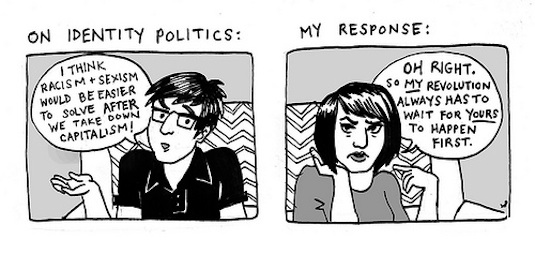
In their Commonwealth, Michael Hardt and Toni Negri address the increasing importance of the common both to capitalism and our futures beyond it. In this vein they discuss the barriers to the realisation of its potenza, or potential power, presented by capital and the contradictory relations that form the common themselves and discuss in particular identity politics and its simultaneous expression and frustration. Before we go there, we need to wind the discussion back a touch. In a number of posts looking at the emergent mass appeal of Jeremy Corbyn and Corbynism, their Empire trilogy of books were drawn on to make sense of what is happening to British politics. It is an interpretation that accounts for how old certainties were stirred up, and why it puts the Tories at an inescapable disadvantage. In sum, it's the economy, stupid. To be more precise, it's the class politics underpinning the economy. To recap, for mature, industrial capitalism the secret of capital accumulation and profit lies in the value creation process, of surplus labour and surplus value. That doesn't mean other opportunities for profit didn't exist. Marx, for example, was particularly interested in rent. The model beloved of establishment economics ultimately roots profits in buying cheap and selling dear. The point, however, is that neither were sufficient to explain the dynamics and tendencies of capitalism as Marx wrote about it. Hardt and Negri suggest there has been a movement away from the production of material commodities as the primary means by which capital grows, and increasingly finds itself in invested in a new relationship of exploitation. The tradition of Italian autonomism, of which Negri is part, argued that increasing numbers of people need to be employed to attend to the social fabric that makes the possible exploitation and capital accumulation. Western Europe in the post-war period with its expanded welfare states clearly demonstrates this. It meant public sector workers were also productive, but productive of relationships. The autonomists extended this argument beyond workplace into wider social relationships. Women stuck at home were as productive as the assembly line worker because of the affective and socialising labour they performed in the context of the family, which led some feminists to agitate for wages for housework in recognition of the benefits the reproduction of living labour provides capital. Hardt and Negri take this a step further with their argument about the spread of immaterial labour. Welfare states may have fallen back, but socially productive work has spread. In the advanced countries, workers increasingly perform a service, generate knowledge, and create social relations as the object of their work. Immaterial commodities and commodified relationships is the emerging way of the world. This doesn't mean material production isn't important, but is gradually being displaced as the primary arena of accumulation and hegemonic way of working. Yann Moulier-Boutang in his Cognitive Capitalism suggests the Silicon Valley worker shows us our future in the same way the industrial waged labourer in Marx's day was the coming wave against an ocean of agricultural work. Nevertheless, this presents capitalism with three challenges. The first is the move to intangible goods, and in the case of capital intensive information commodities, their infinite capacity to be copied poses the circuit of capital a severe difficulty. Secondly, whereas "classical" capitalism pulled workers into places of work and furnished them with the tools and knowledge needed for production, workers now bring their own skills, knowledge and aptitudes to the table that were acquired outside of employer/employee relations. Capital therefore is dependent on the store of living social knowledge, sometimes referred to as the general intellect, and in Commonwealth referred to as the common, to keep on keeping on. This represents a major tilt in the class balance between capital and increasingly socialised workers. Thirdly, and in a nice twist of irony, as the materiality of commodities evaporate the class relationship underpinning capital condenses and becomes visible. If these weren't bad enough, engaging socialised workers produces a surplus of information that cannot be consumed by the commodity in the production process. The programmer retains the knowledge of their contribution to a video game. The Uber driver has their car at the end of the journey. The sales assistant takes their personality home with them. Their knowledge and experience adds to the social store, the common, enhancing its capacity to produce relationships, experiment, and generate new identities and new ways of being. Capital is always exceeded, its attempts at capturing and monetising the social value of aspects of the common can never be total. The more it tries to take a scoop out of the common, the more that is left behind. Lastly, socialised workers are simultaneously networked workers. Under capitalism work has always required cooperation in the workplace, and over the course of its development has arranged a highly complex division of labour mediated at all levels by bureaucracy and machinery. Immaterial labour is cooperative too, but with a difference. "Classical" capitalism enforced cooperation in the workplace, the performance of service provision or knowledge production draws on cooperative relations outside of work, of competencies forged by communication and interaction. When I teach dozens of scholars are effectively co-present on my side of the lecture hall, for instance. The development of the internet and the coming of social media has multiplied this cooperative sociality. As we move through life now many millions of us are embedded in dense networks. There is no longer an online and an offline, the digital and the real are fused in an immediately accessible common. For Hardt and Negri, the socialised and networked worker is the hegemonic worker of the 21st century. As the processes driving its numbers roll on, something else interesting happens: all workers are transformed into socialised workers. The machinist, the assembly line worker, the brickie, new technologies and immaterial labour might inform the production process without meaningfully changing how they do their work (assuming the jobs aren't automated out of existence), but out of work they are plugged into and networked up with the common as much as any socialised worker. Additionally, while access to the most rewarding, both financially and personally, immaterial occupations is restrictive generations of young people are being socialised in the expectation of getting a career that ticks those boxes. That they don't is piling up frustration, and is helping drive radical politics. It is also alienating them from work and encouraging them to find themselves in the common. That suits capitalism as it leeches off collective social knowledge, but doesn't as capital starts appearing increasingly superfluous and unnecessary to the constitution of social life. Hardt and Negri refer to the social collective as the multitude. This is, effectively, their shorthand for the classes and categorisations who, throughout history, are not the ruling classes. The popular classes in the 20th century were proletarians, the peasantry, and small business people. You might add to that fractions of classes and transitory locations, such as the unemployed (temporary and long-term), students, professions, the retired, and what have you. They were multitudinous, but they were discrete classes and fractions with their own interests, propensities, and potential for friction with other popular classes. These still exist, but the coming of the socialised worker has inserted a new quality into the multitude: the more socialised and networked all become, the more their common interests are brought out. It's not a case of a borg-like proletarian mass bearing down on capital as per mechanical renderings of Marx's approach to revolution, but more like a swarm in which the differentiated nature of the multitude nevertheless swarms in a particular direction; and that is against the homogenising exploitative character of capital. What has any of this got to do with identity politics? In Hardt and Negri, the multitude and the common are blurred. Both are irreducible and interdependent properties of each other. When you add to the general intellect, when you engage in social production you modify too the composition of the multitude. As the multitude comprises of more socialised workers, the spread and potenza of the common increases. They argue the coming of the networked, socialised worker has an equalising effect. No one class position is "better" or more politically "potent" than another, as per the industrial worker in old imaginings of proletarian revolution, instead the spread of social production via the reach of the common, and capital's attempt to exploit the common via the immaterial labour of others multiplies the points of antagonism across the body of the multitude. It's not the case of finding the weak links in capital's chain anymore because all points are brittle, all points offer opportunities to condense the constituent order-making power of the common and all can act as moments of rupture for swift, exhilarating change. The multitude then is comprised of the mass of humanity. It is the living, breathing medium and constituent of the common, and it is increasingly capable of collective thought and collective action because all points of it are engaged in social, or 'biopolitical' production. However, the multitude also comprises of what Hardt and Negri term singularities. These are the locus of the identity politics/new social movements that emerged toward the end of the 1960s, and they typically comprise of gender, race/ethnicity, sexual, disabled and culturally-based identities. These are axes along which oppression has been exercised and continues to be exercised, as well as offering rallying locations against social injustice and points at which the social world can be challenged. The term 'singularity' for identity does not mean essentialism for all identity locations are socially constituted and determined, all are internally variegated, and all derive meaning from relationships with other singularities and a history of oppression. They nevertheless have a tangibly irreducible character to them, a refusal to read them off as the epiphenomenon of some other relationship of exploitation. Hardt and Negri also suggest that singularities are not fixed, they're always in a process of becoming or tendency, of being on the road from somewhere to a future destination. Singularities are necessarily the immediate subjectivities because this is the way we are addressed by the state and its institutions. Its recognition of identity categories and efforts made to at least manage structural oppression are a consequence of past struggles, but are have also been recuperated into the structures of management. Therefore the first task, which is repeated over and over again by identity politics is to make visible the hierarchies of violence that underpin them. The danger lies in losing sight of this violence, of treating identity as less a matter of inequality and more a problem of difference. Which leads into the second potential difficulty. The state recognises us as individuals with certain rights and responsibilities, but most crucially as individual owners of property. Liberal democracies only recognise the sovereignty of individuals, and therefore take the identity locations to be individual properties. Here lies the first problem that can arise out of identity politics. Because sovereign powers treat identities as a property, some themselves might also so treat it. Rather than a political location, or a possible route to freedom it is deployed, sometimes cynically, to make the individual. It becomes a resource for career advancement. Unsurprisingly those sections of identity movements that are closest to and seek accommodation with established power are the ones most likely to treat identity this way, and also possess a stake in maintaining it as such. The third issue is identity politics in the revolutionary mode go beyond accommodation and seek to abolish themselves. This has nothing to do with sameness and everything to do with obliterating structural violence - proletarians are interested in the abolition of class, women the abolition of gender, non-white ethnicities the abolition of race, sexual minorities the abolition of sexuality, and so on. A revolutionary approach pushes each of these along because any can cause a rupture with the increasing order and throw capital on to the defensive. Despite the gains made, capital still requires gender and sexual systems, it needs racial hierarchies just as much as it requires the common and the people it provides to generate surplus value in the first place. Therefore, a biopolitical identity politics recognises the violence done and the oppression and disadvantage suffered, it affirms, contests, and repositions identities away from victimhood, and these are then resources for strengthening the constituent power of the common and throwing capital onto the defensive. In effect, working with identity politics means going beyond identity politics because it is intersectional. It is simultaneously a singular politics that mobilises a multiple (or multitude) of singularities. Hardt and Negri therefore offer a novel way of going beyond the dull, reductive and unproductive debates/theory wars that have taken place when it comes to intersectional politics. By situating social (biopolitical) production of the common as the increasingly important pole of accumulation, the multiplication of the reproductive circuits of capitalism, the diffusion of the socialised worker and the spread of antagonisms establish a fundamental equality between singularities, of placing class and gender and race and sexuality on equal footing while placing them in the context of a crisis-ridden political economy. Pitting them against one another when they all mutually constitute the social and capital stymies the potential of the multitude to make and remake the world. It winds down the possibility of building alternatives, of producing the modes of living and the human beings for whom sharing life with capital is unbearable. To emphasise the point and use the trusted rhetoric of class conscious politics, sexism, racism, homophobia and so on are little more than scabbing. Multitudinous politics are necessarily co-present at each possibility of rupture, which means we should always be alive to deepening solidarity amongst ourselves in the face of exploitation and oppression wherever it is taken on.
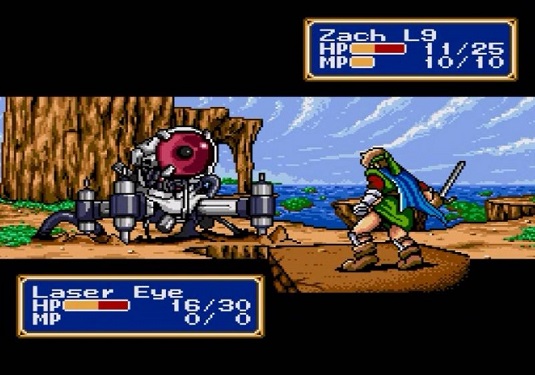
It's about time we got round to Shining Force. And by that, I mean actually playing the bugger. My game playing habitus is stuck at a point where three dimensional gaming never became a thing and role playing games were simple grinding affairs. Shining Force, however, is different. It represents an evolutionary leap into a genre of RPGing I didn't know existed until coming back to gaming. Shining Force was seen as ground zero for the emergence of the tactical RPG, at least in the West. What does this mean? In the 1970s, TSR's Dungeons and Dragons started life as an offshoot and development of tabletop wargaming. It was a logical extension. If complicated rules could be used to govern the movement of units on a board or bespoke miniature battlefield, then why not adapt those rules for a more cooperative, imaginative, and less restrictive gaming experience? By the time computers and consoles came around, the concept was variously adapted for solo adventures. Typically RPGs revolved around a party going through the motions and becoming powerful as experience and money was acquired from killing monsters and the like. How game mechanics, progress, and success in combat were based on numerical attributes and improving on them via an accumulation of experience points lend these games to a cultural critique looking at the inculcation of neoliberal subjectivity. Shining Force certainly sits in this frame, but how it went about its business significantly differed from the standard model. Just as (non-digital) RPGs evolved from wargames, so Shining Force borrowed significantly from console war simulations. As plots go, it's fairly standard Japanese RPG fare and wasn't a million miles away in inspiration from Sega's Phantasy Star series. It too marries the themes of swords and sorcery to a weird and sometimes jarring science fiction subtext, and it resurrects the bad 'un from its immediate predecessor, the conventional (and, unfortunately, very dull) Shining in the Darkness. Here, the realm of Guardiana is threatened by Dark Sol and the rampaging military of Runefaust and it's up to you and your mates to stop him. As you travel throughout the lands it becomes apparent that your antagonist is looking to collect the bits and bobs necessary to unleash the banished Dark Dragon on the land. That doesn't sound like good news. Half of the game is typical RPG. Enter into towns to talk to the residents, wander about castles, buying stuff and raising characters who've had their hit points depleted to zero, picking up new characters. So far, so familiar. The icon/menu system used here is very similar to the predecessor game and is entirely user friendly. Which is just as well because the battle system is something of a departure. Taking its cue from the likes of Famicom Wars, combat presents as a battlefield grid around which your party and the enemies take turns to move. At first you don't have too many but you can build your party up to field a maximum of 12 per battle, and each of these are from different classes and races: warriors, mages, monks, knights, archers, and later all manner of beasties. All have different strengths and weaknesses and so do the enemies you face. Warriors are fine bruisers, for instance, but at the lower levels particularly they're slow and nimble-footed enemies can escape their blows - hence you counter them with speedy folks of your own, or magic users. Hence the term tactical RPG. The emphasis is on combat formation, protecting vulnerable party members but giving weaker characters a chance to level themselves up, and deploying the character most appropriate to the combat situation. Thankfully, when it comes to the tactical side of things the computer is pretty rubbish. In almost every situation mortal danger would present if their units swarmed you from the off. Instead they tend to hang back until you enter a particular zone of the battlefield. Also, because the demise of your lead character means game over and a respawn back in the nearest town (minus approximately half your gold) they have a tendency to go after him if he's any way exposed. The other problem here is despite battles not being random, it is very easy to level up certain characters at the expense of others. You can have almost any of them elevated to super hard standards to the point boss baddies present hardly a challenge. If that happens, the tactical battle system becomes a chore because winning each easily merely means sending forward your beefy minions. The availability of meaty ranged attacks can also make combat a tedious affair, even as the monsters start getting tougher. The true tactical side only really comes out at the lower levels when you have to think and not simply plough through. Welcome, however, is the absence of grinding. Each battle yields enough experience and treasure to theoretically allow for a measured levelling up, but the option is there to go into battles and retreat, rinsing and repeating if you want to toughen everyone. Alas, life's too short these days for that kind of thing. The accumulation logic remains. Each combat compares attacking and defence scores with an element of random number generation, as per the die throws of paper and pen RPGs. On that basis your character/monster inflicts/receives damage and hit points fall accordingly. As it only takes 100 experience points to move up a level with a (usual) boost to your stats, it pays to feed everyone into the meat grinder. The difference here is you have to be a little bit entrepreneurial and think through your actions whereas standard eight and sixteen-bit RPGs are usually mindless affairs - tactics only really come into play when thinking about deploying magic or healing up. Shining Force is much better than what came before, and tell has it that Shining Force II is one of the best RPGs ever made. We'll see in due course. Shining Force is certainly an interesting game and is very enjoyable to begin with, though ultimately the accumulation logic of the gameplay - of striving to be powerful and invulnerable - does rob the game of the joys of tactical combat later on. A nice illustration in JRPG form of a dynamic destroying the very thing that made it possible. Where have we encountered such a thing before?
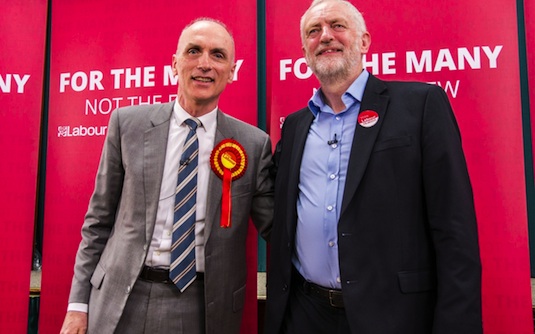
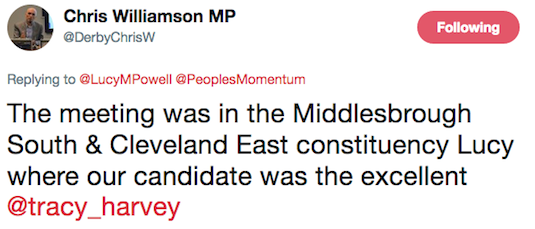
With silly season in full swing and without a factional Labour dispute in sight, it has become necessary to invent one. Chris Williamson, the MP for Derby North and shadow fire safety spox yesterday tweeted that he was on his travels. This is what he had to say.
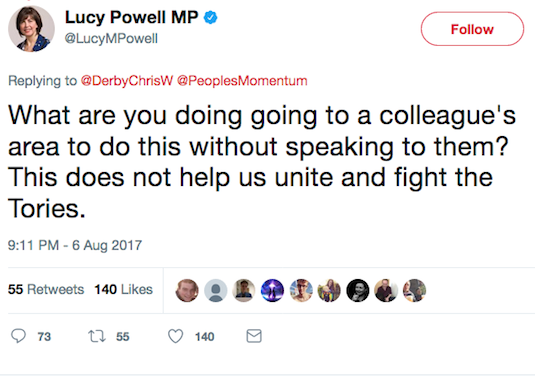
Not the sort of thing you'd expect to spark a factional kerfuffle, eh? But it has. Chris's tweet drew the following response from Lucy Powell.
Ah, jolly old Parliamentary convention. It's a big no-no for one member to visit the seat of another without informing them first. Especially if they sit for the same party in the Commons. Except there was no such breach of etiquette. As Chris himself explained:
Phew. Problem averted? Well, no. Anna Turley of Redcar has taken exception. Not that she minds there's a Momentum group now set up that covers her constituency. She's been at pains to say that doesn't bother her. It's the principle of the thing. First it was an unannounced visit to her constituency, which didn't happen, and now it's the annoyance of another MP setting up a faction in her patch. Okay, let's unwind the spool of the politics underpinning all of this. Let's start off with Parliamentary convention. Yes, it is true that there is an expectation, not a rule mind, that when a MP visits the constituency of another in a political capacity of some sort, be it for the party or in an official role, the incumbent be notified. This convention however tends not to be strictly observed. During my time carrying bags, Stoke Central had not a few visits from ministers. Some of them notified us beforehand, others not. In the "not" category was the then Prime Minister. Likewise, as my MP was somewhat prominent there was a lot of demands for him to speak, and there were plenty of occasions when he did so. Were the sitting MPs of those seats religiously notified? Not at all. As with a lot of things Jeremy Corbyn-related, minor issues are only matters of earnest principle when it suits. I don't mind Anna, and thought she did a very good job around the campaign to keep the Redcar steel works open. But her hurt behaviour reminds me of the sexism furore over the "four great offices of state". When Blair and Brown had men as PM, chancellor, home secretary, and foreign secretary there was nary a peep. When Corbyn didn't (initially) it was another example of Jeremy's "misogyny". Something tells me Anna wouldn't have minded not being informed had another MP rocked up in the constituency next door to address a Progress or Labour First meeting. Nor, if she wasn't bothered, would she have expended a great many tweets on the topic. Ultimately, what Anna and Lucy's prickly response betrays is a deep unease a lot of Labour MPs feel. Corbynism hasn't won total control of the party yet, but the old certainties are on the retreat and the Labour right are falling back. Unable to out-recruit Corbynism and lacking a political rebuttal to the challenge it presents them, their anxiety over their future as Labour MPs finds expression in moaning on social media. Anna is definitely not the first, nor is she going to be the last.
Here's a turn up for the books - the first time a new blog round up has followed a previous outing within the space of a month. We haven't seen that round these parts knocking on for three years now. Is mass politicisation encouraging more people to pick up their keyboards and writing outside of Facebook status updates? We shall see. In the mean time here are the new blogs that have caught my eye this last month. 1. Anti-Nazis United (Unaligned/anti-racist) (Twitter 2. Aufhebunga Bunga (Unaligned) (Twitter) 3. Bill40: PROgrassive MOmentum (Unaligned) (Twitter) 4. Cold and Dark Stars (Unaligned) (Twitter) 5. Daisy Norfolk Notes ... (Unaligned) (Twitter) 6. Labour Vision (Labour) (Twitter) 7. Open Your Eyes to Hate (Unaligned/anti-racist) (Twitter) 8. Progressive Pulse (Unaligned) If you know of any new(ish) blogs that haven't featured before then drop me a line via the comments, email, Facebook, or Twitter. Please note I'm looking for blogs that have started within the last 12 months. The new blog round up appears when there are enough new blogs to give a shout out to!
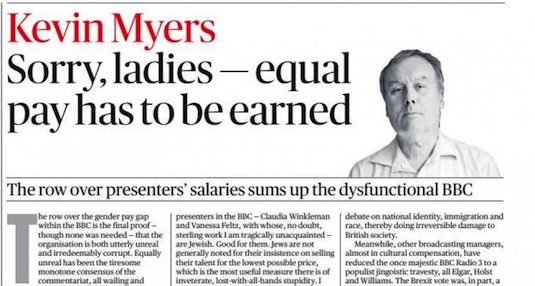
If you are a mainstream journalist with a mainstream gig, racism can kill your career. Or, to be a stickler for accuracy, certain kinds of racism. You carve a living out of attacking Muslims and you're probably okay. You have to limit your racism to matters of culture to prosper because showing your discomfiture with non-white skin tones, or trading in crude racial stereotypes is beyond the horizon of racist plausible deniability. I mention this because the case of Kevin Myers, formerly of the Sunday Times, did cross that line. And he, at least for the purpose of knocking out a post, interests me. Not just because the paper went ahead and printed his anti-semitic outburst unedited (the British edition redacted the racism but kept the 1970s sexism), not just because they happily employed Myers for years, despite holocaust denial, writing hateful rubbish about single mums and saying Africa's only contribution to the world is AIDS. No, what amazes me is how some people are prepared to defend him. Ben Lowry of The Newsletter has gone in to bat for Myers, arguing his dismissal amounts to a "silencing". This silencing involves a BBC interview and mates like Ben talking up his virtues. Whatever. Ben thinks Myers is a fine columnist and denies his denial of the holocaust, spinning his quibbling over the number of dead can ever be "a well written exposition of the danger in turning historical events into political dogma”. Getting the big one out the way, he has no trouble soft soaping Myers' comments about Jewish BBC presenters as a complement, of "admiring their chutzpah". In truth, I'm not that familiar with Myers oeuvre but when five minutes with a search engine shows up the right wing fare found in the pages of the Daily Mail and elsewhere. This bilge, a ceaseless barrage of punching downwards and playing up to prejudice is treated here as a blunt, barrelling style that carries all before it. His pieces "fizz with brilliance", and "on occasion his whole thread became hard to follow, but that is often the way with great minds." Please. Therefore we should therefore be patient with Myers and understand his view the world through the prism of Ireland, which is the weirdest euphemism I've encountered for prejudice thus far. We should give Myers another chance because he was an early critic of Islamists, attacked the naivete of anti-war protesters, polemicised against the "left’s thuggish crusade against water charges", and has a go at the "feminazis". Do remember, this is supposed to be a defence of a "great mind". If none of these are to your political tastes, he did at least campaign for the recognition of Irish Catholic volunteers from the Republic in the war against Hitler. That's okay then, one moment of decency versus a filing cabinet jammed with bad faith and ignorant ravings makes everything alright. Ben finishes by hoping Myers sets up a blog or writes a book. He's welcome to try, but in a crowded market where right wingers have prominence because of their sinecures in the press, what room for another Rod Liddle, Melanie Phillips, or Douglas Murray? Any rant about the left or the feminists or the Muslims sounds much like another. And so, with a bit of luck, Myers will disappear down the swanny. Unfortunately, the same cannot be said for our Ben. You see, contrarian bigotry doesn't just happen. It is sought after and cultivated. An editorial team has to sit there and think "yes, we want someone writing hit pieces on the most vulnerable and powerless". For Ben however, this is less a cynical exercise in snagging market share. He typifies a layer of senior journalism who doesn't see anything wrong in this kind of politics, let alone giving it a mass audience. The soft soaping is so desperate, his admiration for Myers so embarrassing it borders on fellatio. The problem then isn't so much the superstar pinheads who make a living from treading on others, but the people that enable them. Words set down by a poison pen are not the responsibility of the author alone. Ben reminds us that editorial offices have a great deal to answer for too.
It's one of those nights where you want to write something but inspiration just doesn't catch. Under these circumstances the musics have to come to the rescue, and what a tune I've got for readers in possession of cultivated disco sensibilities.