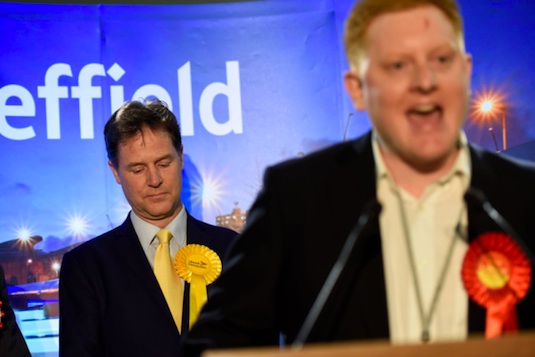
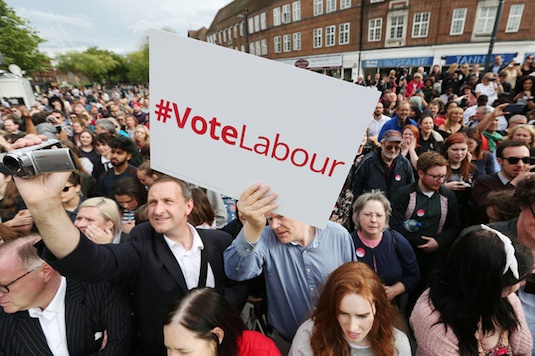
"We will scrap the Conservatives' Brexit White Paper and replace it with fresh negotiating priorities that have a strong emphasis on retaining the benefits of the Single Market and the Customs Union - which are essential for maintaining industries, jobs and businesses in Britain. Labour will always put jobs and the economy first." There you go, clear as day. Labour's position from the 2017 manifesto on the Brexit negotiations. That nicely prefaces a look at Chuka Umunna's rebel amendment on retaining single market membership that was put to the Commons yesterday. I would like to make a basic distinction between the people who rebelled between the principled and the self-serving. On the one hand you have those who retired from shadow positions and appeared to vote out of conviction, like David Zeichner and Rupa Huq. I do have some sympathy with their position. Dis-integrating Britain from the European economy after 40 years is incredibly damaging and a complete waste of time when there are more pressing problems, not least climate change, structural reform of the economy, etc. And it should be rowed back on were the casting aside of a majority decision, flawed and as slight as it was, not an unacceptable precedent to be set in a democracy. I would therefore hope they could come back in the future and that the door be left open for them. Completely different are the dismal band of familiar names, the suicide squad of the Progress and Primadonna tendency. Without seeing a list you could guess who I'm talking about, they're all there. Chuka himself, Chris Leslie, Jess Phillips, Wes Streeting, Alison McGovern, Mike Gapes, Stella Creasy - a who's who of the entitled, the vain, and the ridiculous. You might believe they too were making a principled stance about the kind of Brexit Labour should be shooting for, except a) the manifesto that ensured their reelection to the Commons was explicit on the matter as per above, and b) the amendment wasn't sponsored by someone who believes sacrificing single market membership is a price worth paying for ending free movement. Nor, it must be noted, are any of these people synonymous with the principled defence of free movement across the European Union. Indeed, it was Progress supporters in the PLP who demanded Labour wallow in the immigrant-bashing gutter to win votes on a prospectus set by The Sun and the Daily Mail editorial offices. There's the hypocrisy and there's the politics. Never team players unless they were the managers, did they stop to think for a moment that reopening divisions or, to be blunt, parliamentary party divisions seeing as the membership are minded to get on with Brexit as per the manifesto, might damage the party's standing? Of course they did but they do not care, as nearly two years' worth of backbiting and whingeing demonstrate. Yes, I note a dubious argument has done the rounds justifying die-hard remainism. You have probably heard more than a few pundits, the ones that get everything wrong mention it. This is the view (the hope) people will find out Labour is a party committed to following Brexit through, and the realisation is going to pull our new coalition of voters apart. The problem with this drivel is the assumption Labour voters are thick and didn't realise what the party's position was, despite it being in the manifesto and having got raked over many times during the campaign and since. This justification is no justification, a cobbled together rationale from a dying faction in a bid to stay relevant. It says more about their desperation than the real state of affairs. Nevertheless, I'd like to take this opportunity to thank Chuka and his mates for their cynical amendment. In the prevailing good mood post-election, some Labour folks were happy to overlook recent PLP behaviour that crippled our party and cost us a better result. There were even people arguing that Jeremy should bring some of the personnel managers back to the front bench in a big show of reaching out. By cynically and pointlessly putting down their own amendment to the Queen's Speech, Chuka has dosed the party up with a helpful spoon of reality medicine. We are reminded that they are never going to reconcile themselves to a left-led Labour Party, regardless of the votes the party receives or the extent to which it has redefined the terms of politics in this country. Success is on their terms only, and that is measured by column inches, media portraits, front bench positions and, ultimately, the ministerial chauffeur. Whereas others are keeping their heads down and biding their time, in a display of brilliant politics we are reminded that they are fundamentally opposed to the direction Labour is taking. This means there is no way around it. If Labour and the country are going to be remade to reflect the interests and aspirations of working people, they need to be deselected and replaced by MPs prepared to stand up and be counted.
Time to get me books out. Snow by Orhan Pamuk Survivor by Chuck Palahniuk The Constitution of Society by Anthony Giddens Non-Fiction by Chuck Palahniuk Social Theory and Modern Sociology by Anthony Giddens Lullaby by Chuck Palahniuk Fear and Trembling by Amelie Nothomb Negations by Herbert Marcuse Shame by Salman Rushdie Shalimar the Clown by Salman Rushdie This Woman Can by Sally Keeble (ed.) Everyman by Philip Roth Fight Club by Chuck Palahniuk Reclaiming the Sociological Classics by Charles Camic (ed.) The Age of Trump by Ian Kearns and Kate Murray (eds) Ideology and the Social Sciences by Graham C Kinloch and Raj P Mehan (eds) The Wellness Syndrome by Carl Cederstrom and Andre Spicer The Fourth Industrial Revolution by Klaus Schwab Beloved by Toni Morrison The Human Stain by Philip Roth Platform Capitalism by Nick Srnicek Liquid Modernity by Zygmunt Bauman The Power of Women and the Subversion of the Community by Mariarosa Della Costa and Selma James Towards a Critical Theory of Society by Herbert Marcuse Gravity's Rainbow by Thomas Pynchon Speed and Politics by Paul Virilio The No.1 Ladies' Detective Agency by Alexander McCall Smith The Tears of the Giraffe by Alexander McCall Smith Morality for Beautiful Girls by Alexander McCall Smith Marx Beyond Marx by Antonio Negri The Kalahari Typing School for Men by Alexander McCall Smith Unspeakable Things by Laurie Penny The Full Cupboard of Life by Alexander McCall Smith Reflections on Empire by Antonio Negri Some interesting juxtapositions there. What kind of sicko can slide from Negri's intense close reading of Marx's Grundrisse the one moment, and then hang out with Precious Ramotswe the next? Um ... That's my tally for this quarter, though readers may be interested to know I plan on writing a review of Nick Srnicek's excellent little book on capitalism and the social media firms. What have you been reading lately?
Got your lanterns and hard hats ready? I want us to take a trip down the memory hole. We don't have to go too far down, just a couple of years or so. That's right, go through the gallery in the dead centre. See the opening glowing with the yellow of liberal smuggery? There's our destination. You might want goggles because the shine is intense. Okay, we're here. Can you make out the halo of images flickering on the rock face? Look, there's one of Tony Blair telling Jeremy Corbyn supporters to get a heart transplant. There's another! Ian Dunt of politics.co.uk calling Brexit voters thickies. Who else? Ah yes, the shining talent of Britain's liberal intelligentsia valiantly taking on extremes of left and right. And there we have an ensemble of Graun columnists mocking UKIP's support. Calling them Flat Earthers, that'll learn 'em! Liberalism as a current of thought and movement in wider society is in crisis. The party that bears its name in Parliament is a runt comprised of meaningless, shapeless non-entities. The liberal wing of the Conservatives, if one wants to be generous and style Dave and his Cameroons, were such a shallow shower that even Theresa May had no problem brushing them aside. And in the Labour Party not only do we find their standard bearers reduced to penury but also, thanks to the election result a complete collapse in their strategy and therefore their politics. Sad times for them, better times for socialist politics. Having undertaken a too long apprenticeship on the far left, I know a thing or two about what happens when you're politically irrelevant. You can double down and carry on grinding in exactly the same way, hoping reality will swing your way eventually. Not unrelated to this, you can indulge in the expressive politics of identity display as a substitute for making a difference. Or you can retreat from a world you find bewildering and frightening, firing off angry brickbats about how everyone but your smug, liberal self is stupid from the comfort of your hermitage. Along comes Nick Cohen with another episode in this retreatism. Our poor little group of do-gooding centrists, or "internal exiles" as Nick terms them, aren't politically apathetic like the "fools" who fell for the Moon-on-a-stick promises of Nigel Farage and Boris Johnson. They care. It's why they shout at the telly and swear on Twitter, but cannot countenance participating in public life because there is no way of winning. Why waste your time struggling when there's an Aga to clean? And we're told this disengagement of the engaged will have serious repercussions. If the liberal intelligentsia loosen their attachment to the country and give up on activism, then bad things will happen. I know Nick is a doyen of comment but, to employ a phrase beloved of the imaginary campus radicals he frequently fulminates against, he could do with checking his privilege. The elite liberal strata he champions haven't done too badly over the last two decades. Cameron's "centrist" cuts always hit those at the bottom the hardest, just as Blair and Brown's third way wonkery shafted the "undeserving" poor. The "scientists, technicians, academics, managers, civil servants, doctors", on the whole, didn't have as bad a time of it - there was no clobbering. Their status remains intact, their role in society, the rewards they receive (I'm assuming Nick had senior civil servants in mind), and the security they enjoy are a cut above the rest. And scanning the pantheon of writers to have scored regular gigs in The Publications That Matter, there is hardly a dearth of liberal middle class people giving liberal middle class takes on things. Yet he does have point. His people, his tribe are on the slide, but it's more serious than the oikish classes refusing to listen to their betters any more. For one, large numbers of the middle class are abandoning liberalism. Being on a good salary is one thing, but to be forced to swallow year-on-year real terms salary cuts with no let up in the workload focuses the mind a bit. There is no greater teacher than experience and this applies to the liberal pretense that class does not matter as much as any other political myth. The second, and more horrifying prospect given the invective Nick has thrown the Labour leader's way, is large numbers are turning towards Corbynism. It would be a serious mistake to call it a middle class fad, because it really isn't - the data proves it. Nevertheless, Corbynism's power lies in its articulating a broad range of interests. Nick then isn't even talking about all liberal-leaning middling people, but a small media set in and around comment journalism and news production. You know the sorts, the people now arguing (hoping) that Corbyn's coalition is going to break up once those remain-supporting Labour-voting layers realise he isn't going to reverse the EU referendum. Yes, this is the best they can do at the moment. And there is a third, more serious element: obsolescence. With the rise of the networked worker, where shelf stackers, fruit pickers, and assembly line workers are, like more privileged layers of working people, plugged into a dense web of social networks via the supercomputers in their pockets, the liberal centrist scribbler - of which Nick is the archetype - doesn't have the reach. People getting drawn into politics are more interested in those writers whose work is about organising, and less switched on to what the liberal on their perfect perch miles above the fray has to say. If that wasn't bad enough, the people caught up in and remaking the Labour Party are learning more from each other. They have an intuitive grasp if not a deeper sophisticated understanding of the world precisely because a) they live it, and b) their political imagination is not straitjacketed by piffle. As one wag on Twitter put it, you had teenagers with the handles 'Tories are nonces' putting out more savvier and better takes than our liberal media heroes. Good. They are becoming their own media, their own comment, their own means of making sense of politics. What Nick represents is a lament for a strata whose privilege and standing is evaporating. And so next time I recommend pausing before clicking his narcissistic whinges. Be kind and pass over - following through only means you're prolonging his agonies.
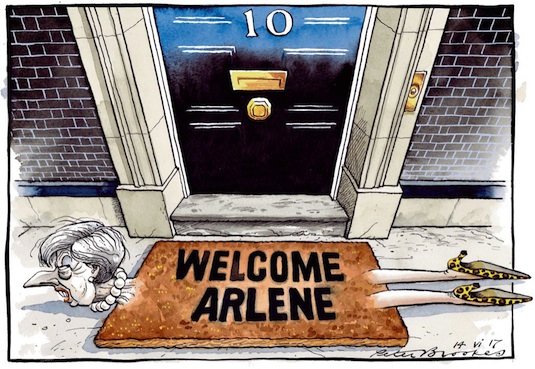
In all the years I've been following, commenting on, criticising, and campaigning against the Conservative Party and the interests they represent there was never a time or an occasion, includingthe concession of the EU referendum, that sums up their decadence and short-sightedness quite like the deal finalised with the Democratic Unionists today. Where do you begin, really? In a bizarre case of projection and blow back, every insult, threat and warning spat at the Labour Party has fantastically rebounded. "There is no magic money tree" droned a succession of borg-like ministers, before a cool £1bn extra is suddenly found for Northern Ireland. "Voting Labour means a Coalition of Chaos!" ranted excitable headlines in declining newspapers. Meanwhile, the Tories are dependent on a cranky and capricious outfit that can, at any time, demand extra concessions for continued support. Smart. And need we mention the irony of attacking Jeremy Corbyn for cuddling up to terrorist sympathisers, when the DUP's links to loyalist death squads can be laid out by any pre-schooler with a rudimentary knowledge of Google? All this is absolutely terrible for the Conservative Party. The DUP are what they are, nothing more need be said about their appalling politics. Yet you have to hand it to them: they fought hard and well in this instance for the constituencies they represent, and that billion quid extra is much needed for the North. Still, their partnership, civil or otherwise, is a bloody stupid thing for the Tories to do. Well versed in the divide and rule game that May's predecessors played with alacrity, it's bad enough from a self-imposed position of miserly cuts to throw money at a problem of parliamentary arithmetic but it adds strain to their precious union as well. If Northern Ireland can get extra cash, why not Wales? Why not the South West? The Midlands? Now a precedent of sorts is set, this leaves the government open to pressure from backbenchers and gifts Labour another attack line, which is just the tonic in the so-called "left behind" seats we retreated in at the election. Divisive politics are never smart politics in the long run. In his lead up to 2010, Dave made a good show of taking the sting out of the Tories. They embraced social liberalism and threw over the racist and homophobic garbage. For some they looked a bit more in tune with the times, and they were duly given a punt by enough of the electorate on this basis - despite promising damaging cuts to public spending. It's true enough the Parliamentary party now has more women, BME and lesbian, bi, and gay MPs than ever before. Yet none of this will wash while that same crowd looks on aghast. It's one thing to toady after Middle Eastern countries that flog and execute gay people, but quite another to publicly parade an arrangement with their co-thinkers nearer to home. However, there is one sliver of a positive here for the Tories. That volatile UKIP vote May was able to win back might think a Tory government beholden to DUP-y social mores is just the tonic the country needs. And so Theresa May is sacrificing future electoral fortunes and the chances of her successor for a two year crack at Brexit. We'll see how that goes. The biggest problem, the most difficult and irresponsible turn is what the deal means for the Good Friday Agreement and peace in Northern Ireland. For the sake of an easier time in the Commons, May and the Tories are prepared to risk the hard work done by previous governments and province politicians in making the deal work. The UK government is positioned in the agreement as a neutral arbiter when it comes to disputes between the parties. This was and remains a constitutional fiction, but it has so far proven a successful - recent difficulties notwithstanding - arrangement. By going in with the DUP, the Tories make the fiction explicit. In all serious, as it brokers talks at sorting out power sharing how can it possibly say no to the DUP when its viability depends on their votes? It cannot, and Sinn Fein are right to call bullshit. This isn't to say the Tories are courting a return of violence in the North - there is very little appetite on either side for this, especially among the young. But it is a reckless course to take just so they can cling on to office. Another example in a roll call of infamy of putting their narrow party interest above all else. Notwithstanding another crisis, and there are events aplenty that could blow the government off its Brexit course, it does look like the Tories may have bought enough time for themselves. But for what? I'm reminded of the fabled Oak Island Money Pit. Reputed to be the home of buried treasure, for 150 years prospectors and adventurers have poured resources into excavating shafts that have turned nothing up but a few bits of wood, tonnes of dirt, and an expensive dollop of disillusion. This Tory-DUP deal is the Conservatives' own money pit. They're digging a hole and don't care what it costs, be it political capital, reputation, competence, party unity, for the prize of handling a set of negotiations that, irrespective of outcome, is going to make Britain worse off. Come the end of the process and the Prime Minister is packed off to the knacker's yard, May can expect one of the less flattering entries in the history books and, provided Labour's rise is the shape of things to come, a generation or longer out of power cannot be ruled out. For all this they're prepared to put the Good Friday Agreement into jeopardy. If that doesn't damn them, I don't know what will.
Consolidating Corbynism involves the transformation of the Labour Party from a vote-catching bureaucracy into a movement capable of winning power by prosecuting its class interests. This in mind, the decision of Lord Sainsbury to pull funding from Progress shows, if you like, some progress towards this goal. Needless to say this, which was apparently announced prior to the election to Progress staff, is a significant setback for the Labour right as a whole. Progress was set up in 1996 as a praetorian guard of sorts for Tony Blair and New Labour politics. Presenting as an innocuous organisation known for sending free copies of its glossy magazine to leading local politicians and select "influencers", it runs policy seminars, day events, and a full roster of fringe events at party conference. And complementing its outward facing activity is its role as a clearing house and cadre school for career-minded Labour right-wingers. As a matter of course it offered training events for would-be politicians, and some members could expect (and received) coaching for selections. It also provided network opportunities between ambitious party climbers and the PLP cognoscenti, where it has and continues to exercise disproportionate influence. Take a cross section of the parliamentary party today, and you will find a surprising number of honourable members who habitually attended Progress events before their passage into the Commons. And we need to at least mention the politics, of which I'm sure most readers will be familiar. Progress is the keeper of the eternal flame lit by His Blairness to keep at bay the shadows cast by trade union influence and Labour's socialist legacy. By stepping away from the party's heritage, "forward, not back" as the pithy Blairist slogan eloquently put it, Progress sought to carve out a post-ideological, post-political space for itself and mainstream politics as a whole. While the Master bestrode the Atlantic with earnest seminars in the Oval Office about the Third Way, it fell to Progress and friendly think tanks to put flesh on the brittle skeleton. Elected as New Labour and determined to govern as New Labour, the immediate intellectual project was one justifying "what works". "What worked" was Gordon Brown's adherence to Tory spending plans for the first couple of years of government, followed by "prudence": the extension of markets into more areas of social life. And there was the small matter of an increasingly punitive approach to social security. It was from Progress terms like 'combining social justice with economic efficiency' were conjured, that aspiration was understood narrowly as flashy gadgets and gaudy baubles for greater numbers, and market economics were enthusiastically spun as the most efficient and dynamic means of delivering services. Part of Progress's job was to enure the old ideas stayed beyond the pale, and to assist (read mobilise for and stitch where necessary) Blair's grip over the party machine from branch level all the way up to the NEC and conference arrangements. Given its political history it is understandable why some view Progress as an alien body within the Labour Party politic. Unfortunately, making such a claim involves ignoring some inconvenient facts about Labourism's intellectual pedigree. Progress's outlook is fundamentally Fabian; politics is something that happens in government, and policy is about (the right sort of) parliamentary elites using legislation and government machinery to implement them. It's the Labour analogue of Tory patricianism as it requires people to turn up every four or five years for elections, and then leave the rest of the business to the politicians. Hence the other stuff, the politics of the street, the organising of community groups, the unionisation of workplaces, all of it is secondary and subordinate to getting into government and implementing whatever tumbles down from the top. The electorate, the members are mere bystanders. Progress appears to break with the Labour tradition of right wing revisionism, but this is more at the level of appearance than political substance. While there are and were plenty of Progress-sponsored MPs from working class backgrounds, Blairism's post-class conceit revealed itself to be very much a middle class affair. The penchant for suits and commodity fetishism (in the non-Marxist sense), its love for power for power's sake, the top-down politics, the personnel officer approach to political presentation, and the hostility to trade unions that didn't shut up and hand over the cash as per USDAW and Community appeared to jar with Labour tradition. Right wingers of the past, even if they did hail from middle class backgrounds, always paid lip service to the received party culture. That was gone here in the name of electoral expediency and, in more than a few cases, personal distaste. Old Labour was naff and tired, New Labour was shiny and young, the Y2K aesthetic materialised in politics. Hence its tensions with the old trade union right, why lash ups between Progress and Labour First for internal elections and the like were (and continue to be) more alliances of convenience than genuine love-ins. Its strength was also an expression of the weakness of the Labour movement. New Labour and Progress would never have happened had the industrial politics of the 1980s played out differently, had bastions of working class power in the mines and the nationalised industries successfully held out against Thatcher's assaults. History would certainly have taken a very different turn. Likewise, New Labour's and Progress's love for the market only appears to break the Labourist mould. Remember, prior to Blair's ascension in 1994 Labour politics were quite statist (or were more tilted toward the mixed economy) and were sceptical of untrammeled markets. These terms were entirely reversed and remain a key component of continuity Blairism. Remember, as recently as the 2015 Labour leadership contest Liz Kendall was advocating even more privatisation and marketisation of public services, the default assumption being that markets are good and efficient and state delivery inherently more wasteful and disempowering. Though, again, I would not argue this is a break within the received revisionist tradition of right wing social democracy but rather an adaptation to what it perceived to be the prevailing mood. After four general election defeats and 18 years out of power, capitulating to market fundamentalism and actively building a consensus around it in the name of electoral viability had a certain logic, even though it was the wrong thing to do. Needless to say, the policy menu Blair handed down to his epigoni doesn't meet the tastes of the party and the country anymore. After years of lean and bland fare, the party and public are turning toward tastier, more substantial (if not a touch traditional) options. Progress, however, have been out of sorts since 2010 when their man wasn't elected leader. Over the following four-and-a-half years they took the hit for continued discontent and backbench bellyaching. Matters weren't helped by the appearance of an anonymous dossier that was mailed to CLP secretaries outlining their funding and their activity. It was a clear shot across the bows from unions finding their feet and starting to assert themselves in the party structures again. It also forced Progress to become a more open organisation with a regular conference and internal elections for its strategy board - though in practice decisions were made by the full-time director in conjunction with the revolving door of key Progress MPs and Peter Mandelson. Then come 2015, the poor showing for Liz Kendall was a rude shock for the faithful as it demonstrated how shallow their roots were in the wider party. The appalling behaviour of some affiliated MPs in the Commons during the first year of Jeremy's leadership followed by the defeat of the attempted coup marginalised them even further. This was congruent with the wider retreat of the Labour right and now, after the strong performance of Labour in the general election, what role for Progress? Yesterday's scenes summed the difficulty up. As Jeremy Corbyn addressed a couple of hundred thousand at Glastonbury, Progress members were in a telephone box booing a left wing journalist. With the withdrawal of monies by his Lordship, Progress will have to turn to their membership for cash. Perhaps the shortfall can be made up by going cap in hand to its MPs, its friends in Community and USDAW, and former supporters of its events - like the British Venture Capitalist Association. A whip around at conference with a bucket too. Whatever they do, Progress's chief difficulty is political. How can you cling to market fundamentalism when it is on the slide in the Conservative Party, let alone Labour? What role in the party when electoral realities have collapsed their entire project? How can they detoxify themselves when they remain committed to stymieing Corbynism as it works its way through party structures? Where will the support come from as Blairist fundies among the membership drift away to the LibDems and/or private life? And what use as a career ladder now Progress are busily courting irrelevance? There are no easy answers to these questions for them.
A future beckons as a disco night at party conference where all that is spun are the greatest hits of 1997 perhaps.Because at the moment that is all they have to offer.
Every now and then you come across something you think came out yesterday when it was actually released 17 years ago. The passage of time is a terrible thing.
Among the big winners of the general election are the wave of new blogs collectively dubbed the "alt-left". You know who I'm talking about. The Canary, Skwawkbox, Novara, Evolve Politics and Another Angry Voice have been singled out by the mainstream as the authentic voices of the new socialism that has seized hold of the Labour Party and powered it to its highest number of votes for 20 years. Despite these blogs being around for some time (AAV since 2010, Skwawkbox 2012) they constitute part of the third age of blogging, which saw outsiders seemingly appear from nowhere to muscle in on online comment. In a short period of time, they have all carved out serious audiences, according to Buzzfeed's in-depth feature (itself a product of the third wave). How, and why is it - Novara's Aaron Bastani aside - they are all outsiders? Why didn't established radical journalists, other socialist blogs, or the regular output of the far left become key artefacts of the Corbynist zeitgeist? It's because of how this "outsiderness" relates to their content which, in turn, has found substantial audiences. Putting Novara to one side (as its comment model is more "traditional"), each of the blogs try and do different things. The Canary and Evolve Politics offer partisan comment and investigative pieces, Skwawkbox combines similar with gossip from inside Labour (much to the chagrin of Guido). AAV provides easily-digested arguments and briefing notes that some activists have found useful on the doorstep, and memes that enjoy a wide circulation on social media. What they all share is a default (and correct) assumption that the system is rigged and the powers-that-be will conspire, collude, and collaborate to forever gerrymander privilege for themselves and their cronies. The stock-in-trade for the blogs are stories that reinforce this healthy scepticism. For example, one of the reasons why media bias - particularly the BBC's - gets a great deal of focus is because it has proven to be egregious and blatant, particularly over the two years coincident with Jeremy Corbyn's leadership. This is by no means their exclusive focus. Their treatments of the Grenfell disaster, NHS marketisation, social security reform, Labour Party shenanigans draws attention to privileged groups either looking to profit from the state of affairs or are covering their arses. Their output is a case of confirmation bias. We have a sense British society is unfair, and they dig out and post up the evidence. In his critique of Skwawkbox, Bob Pitt argues that blog proprietor Steve, and by extension the rest of the alt-left stable, blur the line between political analysis and conspiracy theorising - and establishes this via a forensic analysis of Steve's piece on Grenfell and his argument the media were subject to a D Notice. As such, he suggests they have a cavalier attitude to the truth similar to the fake news we find peddled by Breitbart and co, except from the diametrically opposed perspective. Because these pieces can then easily be picked apart by fact-checking, Bob believes they flout journalistic ethics and embarrass the left as a whole. We'll come back to the character of their commentary in just a moment, but I think the substance of the criticism is correct. Albeit with the caveat that Novara and AAV confront politics with an analytical mindset. That said, I don't think the conspiracy approach to politics is a cynical move either. It is instead an outlook conditioned by their status as outsiders. I can remember when Skwawkbox first started out. If memory serves its focus was on disability cuts and the Tory looting of the NHS. Kerry-Anne Mendoza and comrades were variously involved with Occupy and other protest movements before setting up The Canary. The rest of their writers and Evolve's contributors are/were, for whatever reason, locked out of writing careers in traditional media platforms. In all cases they were outside of and alienated from the established way of doing things, and as outsiders looking in politics, the media, the comment factories all looked (and look) sewn up. Even on the left it appeared less comrade and more chumrade, where everyone got on because everyone knew everyone. Whether this viewpoint accurately describes what happens is neither here nor there, it can appear that way and not just to the authors of our blogs. Hundreds of thousands, if not millions of frustrated and angry people share it - it's the stuff of the anti-politics wave you've all heard so much about. In our case, readers will recall that the first flush of Corbynism was made up of atomised but (social media-) connected people, folk who used to shout at Question Time but found an outlet via Facebook and Twitter. Jeremy Corbyn's candidacy was a lightning rod for their discontent and into the party they poured. At the moment his candidacy looked like it was going to win, he started attracting the bile to which we have grown accustomed and virtually all the media joined in. There weren't a great many lefties with a platform prepared to back him enthusiastically, and others doubted his ability he could ever win an election for the party (including me at the time). Unsurprisingly, this group bypassed hostile media and lighted upon the blogs who shared their views and articulated their position. And to their credit, they have backed Corbyn through thick and thin while others have wobbled. And this has allowed them to consolidate a mass readership. The size of their audience is one reason why they cannot be dismissed with a flick of the polemical wrist. The other is their impact on the political process. Despite the conspiratorial thinking, they have proven effective in cohering armies of social media activists around the Corbyn project. During the election, they inspired and encouraged thousands of people to get active in campaigns independently of the herculean mobilisation efforts of Momentum. Those activists are not disappearing either. They're turning up to constituency meetings in increasing numbers and are steadily making their presence felt. In short, the new blogs top the collective propaganda efforts of established left activism and are helping touch off a mass radicalisation, and that is not to be sniffed at. As with many things, their key strength is simultaneously the Achilles' Heel. Substituting conspiratorial suppositions for social and political analysis can hinder the further development of the movement. One of the many tasks we face, on top of everything else is to better understand the dynamics underlying Corbynism, the transformation of politics and how this is constituted by (and in it turn constitutes) a significant shift in the workings of global capitalism. This isn't because analysis and the elaboration of social theory is jolly interesting (though it is), but because we have to understand the world so we can consciously remake it. This includes working out appropriate strategies for defeating the Tories and the interests they represent, how to power our movement to greater heights while understanding and addressing its weaknesses, and elaborate the sorts of policies that don't just look after our people but positions them as active agents of their own political destiny. Apart from Novara and, to a lesser extent, AAV, this is something the alt-left blogs do not do. Of course, no one should expect them to become theoreticians over night after cramming three volumes of Capital and assorted Marxist texts. But they do need to move beyond explaining power and inequality in terms of shadowy goings on and adopt the standpoint of social and political critique. Otherwise, at best, they will get left behind by the movement they've helped cohere as it develops. Or, at worst, they will act as a fetter on its growing sophistication. I hope the comrades understand this and act accordingly.
Last week I enjoyed the worst train journey of my life. The rush hour choo-choo from Stockport to Sheffield is a busy service that ordinarily serves up four coaches. On this occasion, the powers that be at East Midlands trains decided to put just two on. That meant we were rammed in cheek by jowl, an experience that included being in the middle of a jam of 17 bodies in the vestibule area. Still, the passengers are only "beer-drinking, chip-eating, council house-dwelling, old Labour-voting masses", at least according to proprietor Brian Souter, so what does he care as the subsidies roll in? No matter. The journey was worth it in the end as the comrades at Wellred films had asked me to appear on their latest show. Evidently, I hadn't scared them off last time despite trying my damnedest. Carry on Campaigning features Malwina Modrak and Mick Napier discussing the state of politics and the kinds of campaigning/activism theyre involved with, and I'm there to make the numbers up. Discussion-wise the fur didn't fly, alas. Nor was it a Jeremy Corbyn ego-stroking party. Here, see for yourself.
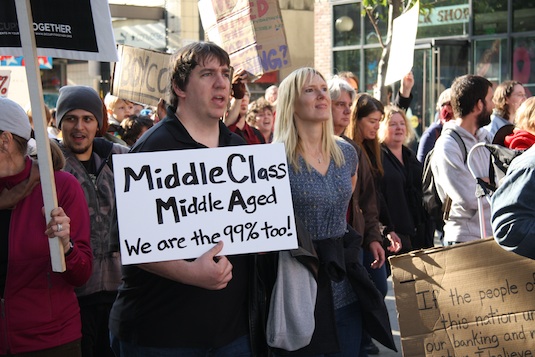
You have your hot takes, and you have your duff takes. There's little doubt which category Daniel Allington's latest lazy missive on Corbynism and the Labour Party falls into. His piece looks at the some features of Labour's electoral performance that should be a cause of concern: that ethnically homogeneous (white) working class voters with few formal qualifications are less likely to vote Labour than was previously the case, and that this has accelerated between 2015 and 2017. He also notes that if a Labour-held constituency voted leave in the EU referendum, there was a swing toward the Conservatives and vice versa if it voted Remain. To use the old management speak cliche, it's one thing to bring me problems but I want to hear solutions. Otherwise, what is the point? Alas, it quickly becomes clear this is a polemic without one. First things first, it's interesting that ethnicity, education, and "class" are the characteristics picked out to "prove" blue collar Toryism. Because if he had added age to the mix, a different story is told. Across all the so-called class categories, Labour was the preferred choice for young people, and here you found a class effect too. The lower down the grades you travel, the more youngsters turned out for Labour. Secondly, according to the same you found a less muted but nevertheless strong correlation between position on the scale and the 35-54s. Or, to you and me, the bulk of Britain's working population. The, for want of a better phrase, conservative worker effect primarily plays out on the over 55s. As these are more likely to vote than the rest of the population, it skews the figures for class in general, even though the bulk of this group do not work. Therefore, while there is much to be done addressing this issue, no one's interests are served by pretending the "working class problem" is bigger than it is - especially when, as noted by James Semple, the correlations on which Daniel's argument rests range from weak to the point of negligible. Then there is the issue of class itself. As any half-decent sociologist will tell you, the social grades system used by the Office of National Statistics (your ABC1s and suchlike) carries two conceptual dangers. It is a static definition of class that maps occupation into discrete categories. As such it can only provide a snapshot of a process, for class is a set of fluid and dynamic relationships, at certain points in time. The second issue is a matter of definition. Because skill and knowledge are the defining characteristics, it falls well short of grasping the full complexity of class. For example, if I'm a computer programmer, am I in the AB group regardless of conditions of work, whether salaried, on a temporary or zero hours contract, or work for myself? Likewise, if I'm a manual labourer of some sort, a gardener, a window cleaner, a haulier, but work for myself where do I fit? The first example would see me in the top grades regardless, and the latter in the C2 or D bracket. Such a tick list approach distorts actual class relationships. This is fine for crunching numbers, but buyer beware if you want to do more with the scheme. It should be taken as an invitation for further, finer grained analysis. It definitely should not be used as the basis to draw political conclusions. Unfortunately, these weaknesses are on show in Daniel's piece. He commits the basic scholastic error of confusing the things of logic with the logic of things, of treating class as if it really is a fixed, freeze dried phenomenon. I don't know if he claims to be a Marxist or thinks he's informed by materialist analysis, but his treatment of class leaves out a very basic property of social relationships: the law of tendency. That is, looked at at a certain level of abstraction, sets of relations tend to move and develop in particular directions. Daniel doesn't take the working class Tory vote and interrogate it in its movement, there is no sense of where it has come from (apart from Corbyn's bad mmmkay) or where it is going. I think that answer is pretty obvious, but Daniel doesn't ponder whether this is a trend or the high tide of the Tory vote. And because he can't get beyond a schematic view of the social world, he is blind to the wider processes that are reconfiguring society and redrawing class relations. I would contend the middle class/working class distinction is increasingly meaningless, especially when (outside of the professions) conditions of work are similar, cultural diversity has and is continually dissolving cultural barriers between the salaried and the waged, and that the nature of labour in advanced capitalist societies is increasingly immaterial. This is giving rise to a new proletarian mass of networked workers drawn from all socio-economic backgrounds. This is the law of tendency in action. Meanwhile, Daniel potters around an anachronistic approach to class and class division. All that's missing is t'cloth cap and whippet. And this brings me on to the most hare brained of Daniel's innovations, the "socialism fans". Making a splash earlier in the year, his argument amounts to Labour getting taken over by virtue-signalling middle class lefties who aren't interested in changing the world but are in a narcissistic display of radical credentialism. It's a hobby for them, they don't need socialism, it's something jolly interesting for them to do when quinoa smuggling loses its shine. This argument isn't entirely a stranger to this blog - we were talking about lefty identity politics before virtue signalling became an insult of choice among hipster fascists and small-headed Tories. But in Daniel's case, it does fulfill two political objectives, whether he's aware of them or not. It allows for an out-of-hand dismissal of Corbynism, of not bothering to critique it seriously because it itself is unserious. And it circumvents the need to think, because grasping afresh what's happening can only raise serious questions about established politics. And for some, that is difficult bordering on the impossible - especially when it tells you everything you know is wrong. The second point about the socialism fans argument is its historical ignorance. Just look at the state of the title, 'Does the working class need to ask for its Labour Party back?' It implies that the working class were in charge of the Labour Party prior to Jeremy Corbyn winning the leadership. That's right, Tony Blair, Gordon Brown, Ed Miliband, all of them horny handed sons of toil. In the real world, it's no coincidence they, and their army of Oxbridge spads-turned-frontbenchers came to the fore during a period in which the labour movement had been politically defeated, was in retreat, and barely asserted itself through the party. The second point is Labour wasn't founded as a "working class party", it was fundamentally a proletarian party. The distinction is important. It was and remains the party of people who have to sell their labour power in return for a wage or a salary, and that encompasses the overwhelming bulk of everyone who has to work. Nothing says this more clearly than the fact the Fabian Society is as much part of Labourism as the forerunners of today's affiliated unions, that the professional associations organised by the socialist societies were there from the start alongside the industrial worker. It has always been an alliance of "middling" and "working" strata because that's what the labouring class of 20th century Britain looked like. What is different now is as the 'old' working and middle classes makes way for the networked worker, so Labour is reflecting that change. It has to, otherwise it will die. Daniel's concept of the 'socialism fan' fails because it doesn't help understand any of this. Even worse, it actively hinders it. When I write about political matters, which is nearly all the time these days, I always ask what am I trying to achieve. When it comes to the Tories and the right, it's checking and rechecking whether the decline thesis is being born out by events. When it's Labour it's getting to grips with its transformation and trying to offer words that might help it along. When Daniel sat down and wrote his piece, what was he trying to achieve? Without any suggestions of a solution, with a concept so flimsy it screams bad faith, we're left with a self-indulgent lament of narcissistic miserablism.
The unexpected happened, so where do we go from here? How can Corbynism, or the new socialism, build on what it has achieved so far? The Tories are in an unenviable position, but we cannot rely on their rolling catastrophe and infighting to win the next election for us. Besides, Labour is reborn as a social movement, it has shown that street politics can combine with electoral success. As such, while the party has Momentum, it needs to keep momentum too. For the Corbyn project to succeed and become the vehicle of the new class politics it needs to keep in mind three things: the transformation of the party, the winning of the next election, and the transformation of society. Luckily, the disarray the Tories are in gives us a moment to think and take stock as we consolidate our position. First things first, the party. And let's start at the top. At a stroke, the electorate have proved the naysayers in the parliamentary party completely wrong. In truth, for a number of MPs the electability argument merely offered cover for those opposed to Jeremy Corbyn's politics but didn't have the wherewithal, and in some cases the ability, to oppose him politically. Ultimately the outlook characteristic of Fabianism, of enlightened legislators reforming society to make it a better place while a semi-apathetic mass pays attention only to politics at election time, is at odds with the campaigning street politics and, if you like, the reformism "from below" of the "hard" Labour left. With the electoral viability of the leader proven, there now remains three Corbyn-sceptic strands. Those whose opposition was genuinely based on the pragmatics of vote catching and are now repenting publicly and, it would seem, sincerely. The second strand remain politically opposed but are prepared to reconcile themselves to the new order, for whatever reason. And then there are the hardened critics who can look forward to an inglorious stint as this Parliament's Simon Danczuks, though with waning press power and constituency parties set to take future reselections very seriously, one hopes their reach and frequency is weaker. While Jeremy got a standing ovation at last week's PLP meeting, and though the number of pro-Corbyn MPs have grown when it comes to filling out the front bench he should nevertheless appoint with an eye to two things (in addition to ability, of course): whether an appointee will be the source of future sabotage should things go south, and who will carry on building the left advance so far made. Understandably, Corbyn wants to bring in former rebels, but he can now do so from a position of strength. Therefore, making Owen Smith shadow Northern Ireland was a good move. As an oppositionist he is a spent force. He has been suitably contrite and is, from the point of view of Ulster politics, even-handed and experienced. Also, in the view of the diehards, he'd temper the pro-republican sympathies of Jeremy and John McDonnell. It also ticks the reaching out box. Additionally, there are calls to offer Ed Miliband something, preferably the environment. Here the same reasoning very much applies - assuming Ed fancies something, of course. However, when it comes to appointing from the second group of Corbyn-sceptics he has to be very careful. We've seen some whingeing from people who feel entitled to a position, which naturally rules them out. Much play has been made of Stephen Kinnock, Chuka Umunna and Yvette Cooper jockeying angling for a role too. And Jeremy would be mistaken to let them back. For Chuka, well, one wouldn't want to interrupt the interesting intellectual journey he's taking, and Yvette? Well. She talks about unity and conciliation now, but it's worth recalling she (and Chuka) had leadership bids on the runway before the electorate cratered the approaches. And there is her well-trodden disingenuousness to contend with. For all three, a front bench position keeps them in the spotlight while they play the long game and would, given half the chance, undo all that has been accomplished so far. I also don't think projecting a personnel management image is what the party needs right now, either. While treating with the PLP, there should be no let up in the transformation of the party. Key here is cementing the sovereignty of the membership, particularly over policy direction and selection and reselection. The Labour right are weakened, retreating from their already reduced circumstances prior to the election. A flood of new members have simultaneously poured into the party, the union tops have no choice but to be even more solidly behind Corbyn and, crucially, whole swathes of formally Corbyn-sceptic activists have switched as Jeremy has proven himself a winner. The election has also made activists out of many of the recent arrivals. Here, the new wave of left blogs married to social media savvy helped cohere Corbynism and got supporters out on the doors. There is nothing stopping them from repeating the trick where it comes to internal party matters. Hence in the next couple of years the advantages Corbynism has must be played to extend the left's control over the party machinery to ensure it cannot be used as a base for the right. Of course, the leadership and key left activists know this, and so do the right. If the latter want to make a comeback, they should have to make the political case for their ideas and approach instead of relying on bureaucratic chicanery and scaremongering to do it for them. As regards the Westminster game itself, I cannot recall in modern times when a party has been as paralysed as the Tories. Everything that could go wrong for them did as their incompetence and arrogance caught up with and helped them get found out. Labour then needs to think about how to make the most of this crisis and get the divisions in their parliamentary party to break out like a rash. There's some good advice from John McTernan(!) in this regard though, again, I don't think there's anything here the leadership doesn't already know. In addition, I would suggest the PLP collectively have a think about Private Members' Bills. If you're not au fait with procedure, backbenchers from all parties can bring forward proposals that go into a draw that then receive parliamentary time. Sometimes they're used as stunts to attack the party opposite, but at others it's usually an individual member's hobby horse and invariably gets defeated by indifference or a whipping operation by the government. There is a case therefore to use this session to coordinate entries to inflict maximum political damage and exacerbate them Tory divisions. As well as using Opposition Days, issues pertaining to care, the NHS, tax credits, fracking, on all these the Tory factions are at sixes and sevens. Some would balk at voting against the government on, say, lifting the public sector pay freeze but do so knowing their party and their would-be Prime Minister will take a reputation hit. In other words, the balance in Parliament and Tory disunity gives Labour an opportunity to effectively govern from the Opposition benches. At least at intervals. This is important not just because we have to demoralise the Tories, but because we've got to make serious inroads into their vote. Despite losing seats, the Tories captured 42% of the vote. And in the latest Survation poll, while Labour enjoy a three-point lead the Tory vote is stubbornly high. That is afterthe dementia tax, afterthe shambles, and even after the fall out from the Grenfell disaster. This apparent solidity doesn't surprise me. Under the conditions of a polarising electorate, theirs is a bloc in which traditional Tory supporters are pressed cheek by jowl with Scottish unionists, the bulk of UKIP's refugees, and a layer of Corbyn-sceptic Labour voters. The power of the traditional media, though waning, is helping to keep the bloc together with nationalist appeals to Brexit and scaremongering about what a new Labour government means. This is an old vote and one most unlikely to replace itself like-for-like. In the medium to long-term they could well be screwed, especially as they busy themselves toxifying their party to anyone under the age of 50. Hence why Dave and May were so keen on the boundary review. Nevertheless, we can't wait for demography to crank out the right result, we need to chip at that Tory edifice further - especially when you consider in a number of post-industrial towns and cities (like Stoke, like Mansfield) Labour went backwards. It goes without saying this requires continual campaigning, but on the basis of emphasising aspects of our manifesto that didn't get much of an airing during the election. Hammond spent last Sunday touring the studios and moaning about the lack of focus on the economy, where the Tories think they have a good story to tell. They don't, but let Labour start going hard on their dismal record, fairness at work and, crucially, on the protection of pensions - understandably an issue on the minds of older workers as employers carry on trimming their contributions here and there. Pressing for more time off work under the Patron Saints' bank holiday pledge is something that more socially conservative voters who switched to the Tories this time might like to hear more about - perhaps that's one for the aforementioned Private Members Bill? And on old people, speaking to and getting their attention requires more than bundling up care and the NHS and hoping it will work. Serious thought has to be given to what their concerns are. Labour has to be seen to listen. For example, pensioners are disproportionately dependent on public transport and buses in particular. While this was addressed in the manifesto it was always the trains that grabbed the headlines. There's an open goal here waiting for a ball to be kicked at it, and it opens a new route for Labour to start addressing community life and senses of security in an insecure world. There's a reason why older people are more susceptible to the scaremongering of the right, but it can be neutered. Lastly, there is that unique thing Jeremy's campaign and Labour's result brought to British politics: hope. Speaking for myself, I've only felt hope about the state of politics once before, and that was in 1992 when I was a teenage Tory. The Labour Party now has a rare opportunity to define what the future should look like, and not be afraid of saying what it should be. We've seen the experiences of Blair, Obama, and now Macron in France where hope is an empty signifier that invites supporters to project their own fantasies onto it. The result is bitter disappointment and right wing governments follow as constituencies are undermined and dispersed. Their hope is vapour, ours has substance. Policy does some of the leg work, but we need that vision thing. I hope John reconvenes his economic advisory council to draw back some of the best brains, but it shouldn't be limited to this. The Co-operative Party is too often Labour's forgotten affiliate, but their experience with shared ownership and cooperative economics should be heard by the leadership. Additionally, there is a case for a society advisory council that can assist in thinking through the general line of march and helping Labour align with the powerful dynamics that are transforming cultures, economies, and politics, including the party itself. There is much to be done but for the first time during my 25 years on the left, Labour has the strength, ambition, motivation, and capacity to do what needs to be done. There's a planet to save and a world to win, so let's do this.