Wednesday, 19 August 2009

Coming Attractions: Marx Meets Foucault

Have you ever found yourself craving a systematic comparison of the political theory of Karl Marx and Michel Foucault? Seven years ago I did but there being few about (this tendentious critique of Marx from a Foucauldian position was the only one I knew about), I decided to write one for my Master's dissertation. What I attempted to do was see if it was possible to combine the two in a common framework in a naive attempt to create a grand sociological theory of everything. Obviously I fell short of that but the dissertation did examine ways of how Foucault's genealogical concepts could be disentangled from his anti-statist political theory and employed usefully by Marxists.

For months on end I cobbled 16,000 words together on the back of till receipts at work and on my dinner hour. Many a summer's day was spent in the kitchen pouring over the writings of Marx, Lenin, Althusser, Foucault and plenty of others. And the total audience of my efforts up until now have been three people. But not for much longer. As blogging is slow thanks to the final push with the
PhD I've decided to slice and dice my dissertation into what will be a series of blog posts. The first post will be the lengthy introduction followed by blog-friendly sized cuts of the chapters. I apologise in advance if some of the arguments seem to go nowhere but a total re-write with the benefit of seven years academic and political experience is going to have to wait. The only editing will be welcome concessions to readability. When I was a 25 year old Althusserian tailoring language to a lay audience was an unforgivable bourgeois deviation.

Each piece will have a link back to here for ease of use.

Apart from 'Toward a Marxian/Foucauldian Encounter' I have a few long term posting projects in mind. When things have settled down a bit Gramsci's
Selections from the Prison Notebooks are going to get the AVPS Lukacs/JS Mill treatment. And beyond that I can see Eduard Bernstein and Edmund Burke bobbing about on the horizon.

Toward a Marxian/Foucauldian Encounter

Contents

Introduction: Marxism and Post-Marxism

Power
Marx, Engels, Lenin and the State
Gramsci, Althusser and Hegemonic Struggle
Foucault and Political Theory

Method
Foucault and History
Dialectics and Abstraction
Foucault vs Marx
Marx vs Foucault
Althusser and Social Complexity

Marx and Foucault: Some Conclusions

Monday, 17 August 2009

Moving Beyond Liberalism

We left the previous post on On Liberty by noting the problematic nature of John Stuart Mill's application of his philosophy to economics. Just to quickly recap, because the economy is the collective outcome of self-organising individual activity liberty's interest is best served by the state and society keeping their noses out of it as much as possible. However, the (relatively) brief airing of his views on economics in On Liberty are by no means his final words on the subject. Mill did after all produce a large body of work examining the political economy of the day and, according to a collection of Mill's and Jeremy Bentham's essays on utilitarianism, began enunciating positions calling for a 'cooperative wage system' and means of narrowing the wealth divide between employers and employees. But at the same time Mill - consistent with his understanding of liberty - remained a resolute opponent of economic planning by the state, the practice of trade unionism and championed flat taxes over progressive taxation because they infringed the liberty of the individual.

Looking at the foundation of Mill's philosophy is the individual, albeit the individual abstracted from all social contexts. Society as a conglomeration of individuals minding their business and having the freedom to pursue their heart's desire - provided their conduct is not injurious of others and/or does not interfere with the right of every other individual to do the same - is the good society. Liberty is the freedom to act without unjust interference from the state, society and other groups of individuals while respecting at all times the right of others to the same.

Applied to economics we have a picture of individuals freely buying and selling and entering into contractual relationships with one another. The latter can assume any number of types of transaction, but what interests us here is the contract of employment, whereby one party to the contract receives a regular payment in return for working under the direction of the employer. Though Mill was aware these relationships were open to abuse society had thrown up legal remedies designed to protect the interests of contract parties and, fundamentally, the liberty of withdrawing from the contract remains intact. For example, an employer who runs their workplace as a mini-police state does not damage liberty because all the employees are there voluntarily. If they do not like it they are always free to leave. However if those workers down tools or otherwise not cooperate with the employer in an attempt to change their conditions they are collectively overstepping their contracts and are actively forcing their will on the manager/owner. From Mill's point of view they are acting against liberty.

This is where Mill's liberalism is its weakest. To put it bluntly where the vast majority of people engaged in economic activity are
compelled to work in return for a wage because they have very little or no capital to invest, all talk of their economic freedom is meaningless. Mill fails to appreciate the illiberal authoritarianism that underpins market economies. One does not have to adhere to Marx's theory of exploitation to acknowledge that this situation, which is an unshakeable characteristic of all capitalist economies, is not compatible with liberty of the majority who live in these societies. And if we move into a situation that acknowledges inequalities between individuals exist - again without necessarily having to support Marx's treatment of these as systemic features of capitalism - the key assumption liberalism makes concerning the fundamental but abstract a priori equality of individuals completely breaks down. This leads to two basic political positions. You either accept the prevailing state of affairs as natural or the best of all possible worlds, or you seek to improve and/or radically transform society. There is no room in between for a distinct, independent liberal position.

Does that mean
On Liberty's arguments can be deposited in history's museum of nice ideas? No. Firstly the stress Mill placed on liberty is invaluable to any critique of capitalism that would like to see it replaced by a freer democratic society not scarred by the injuries of class, race, gender and sexuality. Taking liberty as a central element of radical politics does not mean a trip into the whacky realms of "libertarianism".

Second the abstract character of liberalism that renders it a utopian strand of capitalist politics can paradoxically make it useful to address problems in Marxian political theory - so argues Leo Panitch in his 2001 book
Renewing Socialism. For Marxists the fight for socialism is bound up with the material existence of the working class. Capitalism will only be transcended by our class becoming conscious of its existence and its interests and waging class struggle successfully. This culminates in the first, or lower stage of socialism - the dictatorship of the proletariat. This simply means the replacement of the dictatorship of the bourgeoisie (under which we exist now, be the state forms it takes are constitutional monarchies, liberal republics or outright dictatorships) by the rule of the working class. The workers' state constructed on the bones of what went before would likely be more democratic and free than any form of political rule possible under capitalism, but there remains a key contradiction at its heart. As the rule of the workers become more consolidated and a greater proportion of society falls under its conscious democratic direction the need for security against counterrevolution from within and without remains pressing until capitalism is decisively defeated on a global scale. The Russian revolution and the history of the USSR demonstrates the negative resolution of this contradiction. Actual counterrevolution and the threat of it saw the infant workers' state in that country relied on militarily defeating those who wished to overthrow it. But in so doing, exacerbated by the backwardness and devastation of the country the state became increasingly bureaucratised and turned into the very opposite of a socialist state.

For Panitch liberalism's theorisation of the relationships between individuals, states and societies in an idealised context is ready made for addressing these issues in an emerging socialist society. They offer a set of arguments that already have wide currency and can be deployed in defence of and for furthering democratisation - in other words they can be a resource for countering the bureaucratising consequences of vigilance against counterrevolution.

Liberalism means Marxists do not have to re-invent the wheel to defend the democratic gains of revolutionary change.

Edit: A complete list of posts on On Liberty can be found here.

Friday, 14 August 2009

Daniel Hannan, the NHS and Twitter

Engels once remarked that parties more or less express the political interests of classes and class fractions. Similarly political science argues parties are aggregates of certain interests that simultaneously bridge the divide between the concerns of everyday folk and those who occupy the highest echelons of political office. This is known as the 'linkage' function.

In recent years there have been a number of arguments about the declining "quality" of democracy in this country. These have found voice in arguments over falling turn out at elections, the rise of the far right and the creeping authoritarianism of the state. Academics and activists alike point to the falling memberships of mainstream political parties as another symptom of a brewing crisis in liberal democracy, a crisis of legitimacy that recently found vocal mass expression in the outcry over MPs' expenses.

One of the stark features of this political landscape is the position in which the Labour party finds itself. Organised labour was sent into a tailspin by the onslaught unleashed upon it by the Tories in the 1980s. Compounded by election defeat after election defeat the (right-wing) Labour tops increasingly believed the only way to win was to shamelessly steal the Tories' clothes and dump anything that could remotely be linked to socialist politics. It is a strategy that appeared to work for three elections, but one that has exacted a terrible price. Membership has tumbled. Long-standing and experienced activists have torn up their party cards. The traditional base of the party feels betrayed and many have taken to abstentionism. And to aggravate matters, increased managerialism and centralisation has expunged Labour of any effective avenue whereby the leadership can be called to account by the members.

The hollowing out of the Labour party has resulted in a diminution of its linkage function. As the party has withered the leadership have turned to means other than the declining quality of information being transferred up the party from members for feedback on policy ideas and their impacts. Famously, policy under Blair was driven by focus groups. But even more so, the media - especially the Mail, Express and Sun were seen as the authentic mouthpieces of the constituencies New Labour needed to win over if it was going to carry on winning elections. Hence the obsession with spin and the very public courting of these titles by Blair and Brown alike. While it is true neither the Tories or Liberal Democrats party organisations have suffered to the same extent, they have adapted to the media environment New Labour helped create.

What has all this got to do with the Daniel Hannan/NHS/Twitter furore? Quite a lot.

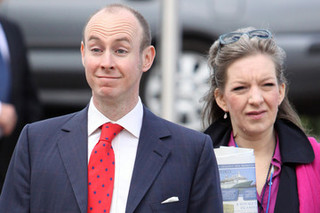
Obama's moves to implement basic health care provision has brought out the ugliest the American hard right has to offer. Sarah Palin, Glenn Beck and Lyndon LaRouche are all united (with the power of the Murdoch media and insurance giants behind them) in defending the "choice" poor Americans have between paying for medical care, or choosing to suffer and/or die unnecessarily (see here). As has been widely reported, that swivel-eyed evangelist of Tory economic "libertarianism", Daniel Hannan MEP (pictured) has been spending his summer zipping around the States feeding Republican wingnuts a bellyful of lies and misinformation about the National Health Service. The willful ignorance married to Hannan's behaviour has enraged many on this side of the Atlantic, who have hit back with the #welovetheNHS hash tag on Twitter.

For readers not au fait with Twitter, hash tags are used to generate a trend, which gathers all subsequent tweets (i.e. updates) that carry that tag. According to this site over Wednesday and Thursday, some 20,000 tweets were sent with this hash tag. And when a certain volume of tweets with the hash tag are reached they appear in the top ten trending topics, viewable to an audience of hundreds of thousands at any one time.

Typically the #welovetheNHS tweets have mostly carried positive stories in defence of the NHS. A significant minority have used it to attack Hannan and his unsavoury American friends. But all of them have combined to embarrass David Cameron who has been at pains to stress how safe the NHS would be under the Tories, forcing him to now disown Hannan's comments.

This embarrassment for the Tories illustrates how Westminster is mainly anchored to the outside world through its relationship to the media. Even if we control for the effects of the silly season (where news media are desperate for stories in the absence of parliamentary reportage), if say a petition of over 20,000 names had been handed in to Downing Street over the government's determination to chop up and privatise Royal Mail, chances are there would be no movement whatsoever. Had 20,000 tweets been sent on the same issue, picked up on and amplified by the news media, the outcome would be quite different. Again, this is because for all the party leaders the media has a more immediate impact on their day to day activity than any grumbles ongoing in their party structures.

This is not to suggest we are a heartbeat away from Twitter-led governance. After all it costs Cameron very little to take Hannan aside and tell him to shut up. But it impacts on media management and strategy and might under some circumstances force governments and oppositions to rethink their positions. It is the potential Twitter has for forcing items onto the news agenda and the faith mainstream politicians have in it as some sort of people's voice that will see Twitter give them more headaches in the future, and it is a potential we on the left should seek to use.

Tuesday, 11 August 2009

Solidarity with Stoke and Burslem Posties!

Below is a report which will be in this Thursday's Socialist. All readers need to send messages of support as soon as they possibly can. When postal workers turn up at Leek Road, Stoke tomorrow they need the delivery workers to continue supporting the all out strike of the distribution and processing staff. A lot of messages of support today could just make the difference. The same urgency applies to the new rooftop protest at Burslem so make sure you send your message of support there as well. Don't forget to mention you found out about these disputes via Stoke Socialist Party.

Stoke postal workers on all-out strike!
After taking two 24 hour strikes over the last few weeks distribution and processing workers at Stoke-on-Trent’s biggest Royal Mail depot at Leek Road walked out on Tuesday 11 August and are now on indefinite strike. Delivery workers turning up for work voted to stay out in solidarity and hundreds of motorists hooted their support as they passed by.

Workers are angry at Royal Mail plans to ‘modernise’ the industry by closing the sorting office and transferring operations to Wolverhampton . Royal Mail’s ‘modernisation’ would leave only 15 full time workers at the depot with 100 others facing redundancy or a 70 mile daily trek to Wolverhampton and back.

The North Staffs conurbation has a population of almost half a million, yet Royal Mail’s plans would leave it with no main sorting office and mail being collected in Stoke, driven to Wolverhampton for sorting and then driven back up the M6 to Stoke for delivery. Clearly Royal Mail’s modernisation takes no account of the extra pollution created by this daily merry-go-round of workers and mail.

In a separate dispute at Leek Road, half of the 15 drivers who work on cash transit deliveries to post offices etc face the sack with the rest being given a ‘choice’ of a transfer to Chester (return journey of 85 miles), Birmingham (100 miles) or Sheffield (a 126 mile return journey across the Pennines!).

Please send messages of support to branch.secretary at cwumid7.org.uk with copies to andybentley3 at hotmail.com

Burslem Workers
At Burslem Delivery Office in Stoke-on-Trent , postal workers were on strike last Friday 7 August against plans to take twelve more jobs out of the depot. This action at Burslem was significant because after 2 years of management bullying, intimidation and victimisation the the spirit of resistance is still alive and kicking (in 2007 twelve workers were suspended on trumped up charges which led to a six week all out strike. Seven got their jobs back but five remain sacked and are now *still* going through an ‘appeals’ process).

One of the main aims of the victimisation carried out in 2007 was to remove CWU reps and key activists in one of the most militant depots in the country. This would have allowed bosses to intensify their bullying regime and impose changes. Despite management's tactics the vote for this strike was a massive 80%.

In fact managers who had traveled from all over the country to scab on the strike couldn’t, at first, get into the building because somehow the metal entrance barrier had been padlocked! The strike was solid with a marvellous turn out of more than 50 on the picket line with a lot of support being given by passing motorists.

STOP PRESS: On Tuesday 11 August Burslem postal worker, Paul Dawson (pictured) was sacked by management. Paul was one of the 12 workers who were victimised and suspended by management in 2007 but later reinstated. He was forced to carry out a rooftop protest to get the apology that he was promised from Royal Mail over his suspension.

Now he’s on the roof again in protest at his sacking. When asked why he had been sacked one manager said that he hadn’t shown remorse for his first rooftop protest!

While Paul is on the roof no one can enter the building so all work is stopped but with workers still being paid.

Please send messages of support to dcondliffe at cwu.org with copies to andybentley3 at hotmail.com

Sunday, 9 August 2009

Racists on the Streets of Birmingham

Here are a couple of short videos from yesterday's demonstration/provocation by the English and Welsh Defence League, a group of so-called concerned citizens who took to Birmingham's streets to protest against Muslim "extremism". They claim not to be racist - and yet this pathetic gaggle of fascists and losers chose to demonstrate In a city where 21 per cent of the population are south Asian. They deny having any links with the BNP, and yet one of its leading activists was or is a member of Nazi Nick's mob.

Unite Against Fascism and the local labour movement turned out to make sure this squalid little gathering did not go unchallenged:


According to the BBC there were 33 arrests and a number of incidents that, if true, have no place in the anti-fascist movement. That said the level of disturbance was such it may be unlikely any police force will acquiesce to similar demonstrations in future.

Thursday, 6 August 2009

Murdoch: The Blogger's Best Friend?

I'm sure anyone with a decent political bone in their body will be cheered to hear Rupert Murdoch's News Corporation have posted a $3.4 billion loss. This is even more dramatic when you consider profits stood at $5.4bn just the year before. But this is unsurprising - as the recession continues to bite revenues were bound to be driven down as companies rein in their marketing departments. But there are other problems brewing for Murdoch too. For example, Freeview has long overtaken Sky in the UK, making the digital advertising market that much more competitive - a situation exacerbating the fall-out from Sky's long-term decline in viewing figures. And not forgetting the MySpace cash cow Murdoch acquired in 2005 is on the verge of becoming an albatross around News Corporation's neck.

But what is especially interesting is Murdoch's favoured method of securing new revenue streams. He thinks charging for online content is a good idea. According to yesterday's Financial Times, Murdoch wants to introduce payments for access to all the online content of his newspapers and television channels by this time next year. This will first be piloted on one or more of the stronger titles.

I don't know about you, but I'm tickled pink Murdoch is embarking on an obviously self-destructive course. If you read The Times online, why bother forking out for coverage when The Telegraph can supply conservative comment and analysis at zero cost? If you like The Sun's celebrity commentary, Perez Hilton, Popbitch and Digital Spy do it so much better ... and for free. And what about opinion? The right wing blogosphere is replete with nasty little turds who'd love to fill Richard Littlejohn's and Jon Gaunt's shoes - and you won't have to part with your cash to read them either.

Murdoch is not only confident the introduction of pay for content will work; he believes other news and media organisations will follow suit. Supposing this is the case and the move proves not to be a disaster, it will still mean millions of web users will be looking for free comment and opinion to fill the gap vacated by the mainstream media. And into this breach could pour legions of bloggers. There is a chance Murdoch's lasting legacy could be one of those ironic twists history likes to pull from time to time. Murdoch - the man who has done as much as successive Tory and Labour governments to promote authoritarian politics and the unquestioned tyranny of capital might, despite himself, be responsible for stimulating a flourishing of hitherto marginalised and ignored voices. It is just possible Murdoch's actions could be the spur for a golden age of blogging.

Wednesday, 5 August 2009

In Praise of a Liberal Democrat

It's not very often I've a good word to say about the Liberal Democrats but for once I have nothing but praise. This is for the stand Jo Swinson, LibDem MP for East Dunbartonshire has taken against the advertising industry. Her proposals are for:
• Children to be protected from body image pressure by banning airbrushing in advertising aimed at under 16s

• Adverts aimed at adults to indicate clearly the extent to which they have been airbrushed or digitally enhanced

• Cosmetic surgery advertisements to give surgery success rates

• Modules on body image, health and well-being, and media literacy to be taught in schools

• Schools to include greater choice in physical activity to stop teenage girls dropping out of exercising

• Money to be invested in improving school and community sports facilities to make them cleaner, safer and more female-friendly
This blog has written about body image quite a few times and has noted the pressure and misery hegemonic images of the body beautiful can encourage. Swinson's proposals are exactly the sort of action we need to begin making serious inroads into the pathologies associated with an increasingly sexualised but dehumanising popular culture.

If only Harriet Harman was as savvy when it comes to making the case for feminist policies.

Tuesday, 4 August 2009

Far Left Party Accounts

LabourList have been on the ball this morning and have quickly posted up the accounts for registered political parties. For all that is except our friends the BNP, who always fail to get their accounts to the Electoral Commission in time, thereby incurring a fine. Not that I'm complaining.

Here are the figures for the main parties plus the significant minor parties for 2008:

Conservative Party Income £32,361,000, Expenditure £31,927,000

Green Party Income £546,406, Expenditure £540,652

Labour Party Income £34,012,000, Expenditure £26,202,000

Liberal Democrats Income £5,473,256, Expenditure £6,013,956

Plaid Cymru Income £998,571, Expenditure £678,313

Scottish Green Party Income £76,597, Expenditure £57,194

Scottish National Party Income £1,768,384, Expenditure £1,700,401

Sinn Féin Income £1,115,391, Expenditure £1,148,992

Ulster Unionist Party Income £383,504, Expenditure £397,734

UK Independence Party Income £602,003, Expenditure £588,570

What is most striking is the vast gulf separating Labour and the Tories (as the favoured parties of the British ruling class) from the LibDems, and then in turn the smaller but still very significant funding gap between them and the rest. For those of you interested in comparing the figures for 2008 with 2007's, you can go through the accounts individually here.

As a socialist blog and knowing my readers, I'm sure comrades too busy to sift through the accounts of allies and opponents on the far left might still want to know the state of play. So here they are with the +/- figures on 2007:

Alliance for Green Socialism Income £12,522 (+3,755), Expenditure £8,356 (-£503)

Communist Party of Britain Income £186,533 (+£82,494), Expenditure £138,220 (-£25,379)

Left List Income £103,773 (N/A), Expenditure £78,473 (N/A
)

Respect Income £36,237 ( -£173,856), Expenditure £40,151 (-£162,457)

Scottish Socialist Party Income £78,167 (-£117,615), Expenditure £68,934 (-£141,973)

Solidarity Income £46,709 ( -£60,530), Expenditure £46,308 (-£72,052)

For some reason I couldn't open the accounts for the Socialist Labour Party and the SPGB. I've also missed off most of the smaller groups such as the RCPB-ML and Socialist Equality Party. One conundrum that has been scratching my brain is how Britain's other remaining Healyite organisation, still trading under the name of the Workers' Revolutionary Party, can sustain a daily newspaper no one reads with a party income no more than £5,442, an overall surplus of £640 and just over five grand in the bank! It's a mystery.

What is immediately obvious is how much Respect suffered in its split with the SWP. As the accounts note:
This is reflected in the drop of annual income from £210,093 to £36,237 and expenditure from £202,608 to £40,151. This fall in overall turn over reduced the national organisation to a shoestring operation that employed no full or part-time permanent staff in 2008. It also witnessed a fall in membership from 2,472 members in 2007 to just over 500 by end 2008.
Turning to the SSP the party still has a large deficit of £40,649, which according to the accounts are due to fall this year. Again the accounts show a large drop in income (from 2007's £195,782 - which was inflated by £38,737 through a sale of party property) and 2007's expenditure of £210,907.

Similarly Solidarity continues to suffer from the split with the SSP, seeing its income tumble by over £60,000. However unlike the SSP, Solidarity is not burdened by crippling levels of debt. So while income and expenditure clearly reveal it is the smaller organisation, financially speaking Solidarity is more secure.

It is worth noting however that the 2007 incomes for both these organisations would have been inflated by the increase in donations received for the 2007 Holyrood elections. The same goes for expenditure.

What other nuggets have we gleaned from the accounts? Did you know the Democratic Socialist Alliance has 16 members? Has anyone heard of the Direct Democracy (Communist) Party? And who knew the cpgb-ml were planning on setting the world alight with their 'Proletarian' electoral front?

Sunday, 2 August 2009

Mill's Applications of On Liberty

In the final section of On Liberty, John Stuart Mill muses on some of his philosophy's applications regarding social behaviour, trade, intoxicating substances, and the limits of the state. In political times where the the only liberal thing about the present government is the willingness to dish out ASBOs and pass authoritarian pieces of legislation, another look at Mill's positions is timely.

Mill starts off with a recap of the kernel of his argument. In sum, the individual is not responsible to society for their actions as long as those actions pertain only to their interest. As long as this remains the case, the only right society has is to argue against or morally disapprove "deviant" conduct. It can take corrective legal action only when this activity threatens society and/or transgresses its laws.

But what about when one's activities necessarily impact on the life of others? Chief among these for Mill is trade, which he rightly sees as a social act that affects the general interest. But here, as with any sort of activity independent of the state, left to itself the economy - operating on the principle of a buyer being able to choose among competing sellers - has proven to be efficient and self-organising. It regulates price, it determines quality, and it provides employment without the need for the state's directing hand. But what about the negative consequences of business on the person, is this not in tension with liberty? For Mill, this partly holds up. If a business fraudulently deals with its customers and employees or abuses them in ways contrary to the law then obviously the means of legal redress need to be in place. But short of this there cannot be injury to liberty when one enters into a contractual relationship with a business. If, for example, one's employer is awful to work for one always has the liberty to leave - no one is being forced to stay. Because of this regardless of how restrictive work practices are and how petty and authoritarian management is, because all this takes place with the employee's consent liberty as such is unscathed.

Are there grounds where society can legitimately exert its influence over markets? For example, can the state discourage the consumption of legal but intoxicating substances via indirect taxation and placing limits on where they can be sold while remaining compatible with liberty? As far as Mill is concerned this prohibition through the back door - extra taxes merely prohibit those who cannot afford to pay for them from enjoying the same liberties as the better off. Therefore, in these circumstances such policies are only justifiable to the same degree a ban is justifiable. In other words, are the costs to society greater if it allows intoxicants to be freely available than it would from enforcing prohibition? (See this
excellent post at The Devil's Kitchen for a cost/benefit analysis of the war on drugs, for example). However, if one is a heavy drinker or drug user, as long as their obligations to society are discharged then it has no right to intervene and prevent their habits. Mill does concede the state has the right to limit the sale of certain commodities to especially licensed premises for policing purposes but as a general rule not go beyond that.

For Mill there are very good reasons for limiting the scope of the state's activities, even if it poses no immediate danger to liberty. His first observation is that any kind of enterprise (in a wide sense) can be best taken care of by the parties with an immediate interest in it. Secondly, even if there is a legitimate case for state interference on grounds its actions would be more efficient than the alternative, it is better from liberty's standpoint that individuals undertake it because of the capacity building effects. Self-reliant activity in conjunction with others not only encourages political education and less dependence on the state, it also creates the conditions for civic engagement by developing the need for voluntary associations to come together. Thirdly, if the state's power is expanded its influence over society is strengthened, the chief consequence of which is the danger it could become the repository of hope and perceived as the main agency of change. Instead of trying to overcome problems themselves, the citizenry are more likely to turn to the state - a situation that, in the long run, could prove injurious to liberty. This in itself increases the confidence of the state, which now has the green light to expand its bureaucracy and becomes contemptuous of whatever democratic checks upon its power exist. Lovers of liberty have a definite interest in making sure the power of the state is tightly circumscribed. To avoid the evils of an authoritarian state, Mill argues for "the greatest dissemination of power consistent with efficiency; but the greatest possible centralisation of information and diffusion of it from the centre" (1929, p.142).

There are many criticisms that can be made of these positions. What is particularly glaring from a Marxist point of view is Mill's considerations of liberty and the economy. But leaving that aside for now, given the attitudes Marxists have concerning the capitalist state and the role the socialist state plays in the transition from class society to the free society, are socialist politics in fundamental contradiction with Mill's formulation of liberty? Or is it more the case that socialism could build upon more consistently? These are the issues that will be addressed in the final forthcoming post on
On Liberty.

Edit: A complete list of posts on On Liberty can be found here.

Friday, 31 July 2009

Branch Meeting: Art, Literature and Socialism

At Thursday night's branch meeting of Stoke Socialist Party, the talk by Brother C was something of a departure from our usual examination of past and present struggles. His lead off concentrated on socialism and culture via a discussion of literature. I reproduce his lead off below, followed by the branch discussion. I hope it will be of interest to readers.

"Poets are the hierophants of an unapprehended inspiration, the mirrors of the gigantic shadows which futurity casts upon the present ... the trumpets which sing to battle, and feel not what they inspire; the influence which is moved not, but moves. Poets are the unacknowledged legislators of the world".

These are the ebullient concluding remarks of Percy Byshe Shelley in his Defence of Poetry. I include them here, at a gathering not of Romantics but of revolutionary socialists partly as a reminder of what we must not do with art, and more specifically with literature. This is not to say that Shelley should become some kind of idealist, Platonist whipping boy. After all, it was Shelley, who outraged upon hearing of the massacre of workers at St Peter's Field in Manchester, wrote in Mask of Anarchy:
Rise like lions after slumber
In unvanquishable number;
Shake your chains to earth like dew
Which in sleep had fallen on you -
Ye are many, they are few
At a time when most former Etonians and sons of aristocracy were quite happy to endorse counterrevolutionary terror against the 'swinish multitude', Shelley's persistent radicalism and sympathy for those oppressed is to be commended.

Still, it is difficult to share Shelley's view of working people at the time as in any way 'slumbering'. After all, they had not discovered their chains innocently, upon waking from some indolent rest. On the contrary, years of poverty, persecution and political struggle had taugt them much anout their manacles - both real and 'mind forged'. And likewise, perhaps more problematically, the agitational emotionalism of Mask of Anarchy's ending hints at Shelley's aforementioned idea of himself (along with all true poets) as the visionary herald of futurity, the inspiring influence and the legislator of the world. It is, for sure, a mystification to propose that good literature (or art) should present us with an ideal model of what society should be like, regardless of what the proponents of socialist realism once argued. This is because, as Raymond Williams reminds us, "the making of a community [i.e. the society of the future] is always a work of exploration". This is not to deny that language and literature have powerful determining effects on consciousness, but to explain that they cannot change human beings and society as a whole.

It is interesting that Shelley chooses the mirror as a metaphor for the way in which art presents us with is ideal. Indeed, it is this problematic theory of art/literature as reflection, a theory against which socialists can hardly be said to have been immune that I will turn to next. Of course for Shelley, the poem, in Platonic fashion, was mirroring the perfection if the future, whereas subsequent uses of the metaphor (including by those on the left) have inherited a realist or naturalist framework - making literature the reflection of the present. As we are in Stoke-on-Trent, it might be best to draw on Arnold Bennett as one example of this latter tradition, attempting as he did to record with photographic precision the multifarious external details of life.

Hegelian Marxists like Georg Lukacs, however, would argue that Bennett's mirror to the world is impoverished, refusing as it does to penetrate beneath the accidental surfaces to the so-called 'essences', 'essentials' and historical forces beneath. In short, writing for Lukacs must be a process of ordering and not a faithful rendering of the imperfections and distortions of bourgeois life. There are certainly problems with Lukacs' position (influenced as it is by Lenin) and the debate about what really constitutes realism in art will probably go on for some time. Yet his attempt to problematise the cruder notion (so evident in Shelley) of literature as passive mirror of reality is invaluable.

Leon Trotsky's theory of literary practice rejects the reflectionist theory altogether, claiming that artistic creation is a work of "deflection, a changing and transformation of reality, in accordance with the peculiar laws of art". As Terry Eagleton has pointed out, this "excellent formulation" of deflection, as opposed to reflection, has influenced the work of many 20th century Marxists, most notably Pierre Macherey. His Theory of Literary Production helps us to see writing as a product of labour. There are no inspired geniuses or humanist legislators in communion with muses or other mystical beings. Art, for Macherey, "is not man's creation, it is a product (and the producer is not a subject centered in his creation, he is an element in a situation or a system)". In this rather inhuman (E.P. Thompson might say Stalinist) theory, doubtless influenced by Louis Althusser, there is no room left for individual agency. To use Terry Eagleton's analogy, literature rolls off the production line like a new car. Certain materials (i.e. words - what we might call the real) have been brought together to make a new product. A transformation, rather than a passive mirroring, has taken place.

For all Macherey's and Althusser's anti-humanist bluster, however, there are perhaps points of contact between their own theories of literature and those of men like Shelley. These points of contact can be found, for instance, in the idea of literature's redemptive qualities. Certainly, Macherey and Althusser do not think that the artist is going to shine a poetic light on the future and thus lead us to our utopian realisation. Yet they do believe that literature and the analysis of literature are integral to our 'liberation from oppression'. Likewise, as Macherey himself points out when positing the writer as an element in a system as opposed to a creator, Plato (and, so, subsequently Shelley too) had already disposed the author of his work by having him 'inspired' by other forces.

So just how can literature help liberate the oppressed from capitalist domination? For Macherey, the literary product puts ideology (and let us remember that language is shot through with ideological assumptions) on stage. Rather than spontaneous lived experience which we take for granted or take as given, our conditions (whether revolutionary France in Dickens' Tale of Two Cities or the Chicago of migrant Lithuanian workers in Upton Sinclair's The Jungle) are placed before us as an object. Because the conditions of our existence are forced into view, we can at least begin to interrogate them, have knowledge of them and no longer let reality slip by innocently as naturalised 'life'.

But Macherey also emphasises the way in which literary works are made up of contradictions and absences, a kind of intrinsic and necessary disorder and disarray which must then be related to the conflicts, fissures and silences of our real world capitalist conditions. If the text is a mirror, then, it is one which is cracked, fragmented and manipulative.

To demonstrate how Macherey's theories can be put into practice, we might observe the stylistic contradictions between the machines in the film Terminator 2. One the one hand we have Arnold Schwarzenegger, the epitome of masculinity complete with Harley Davidson, shotgun and the squarest of square jaws. His antagonist, on the other hand, is characterised by protean femininity and fluidity (it is worth pointing out that in later films the 'baddie' terminator is actually replaced by a woman). What we have, therefore, is a stylistic conflict which we can relate to the shifts within capitalism taking place in the 1980s. I am of course talking about the neoliberal attack (characterised by fluidity and a more emasculated economy) against the post war consensus.

...

Brother F started off the discussion with the observation that interpretation and appreciation of art will differ because social being differs to greater and lesser degrees from person to person. To understand this Marxist analysis and criticism of art must have dialectical foundations. He also noted the official art associated with high Stalinism and Nazism cannot really be described as such, if we go with Trotsky's idea of art as deflection. It did not rise organically out of artists' experience but was rather made to order according to the aesthetic diktats of those regimes. Socialist realism and Nazi neo-classicism had the appearance of art, but really they were exercises in propaganda.

P picked up on the theme of contradictory cultural products - because capitalism is bedeviled with contradictions these will find expression to varying extents in its cultural artifacts. In addition to this capitalism as an anarchic system cannot systematically produce culture to meet its ideological needs. The entertainment industry has to compete for markets as much as any other economic sector and will seek to make money wherever it can, even if the messages it puts out are satirical and critical.

Moving onto books, F said he found Bradbury's Fahrenheit 451 a novel that helped his radicalisation, particularly the way how the protagonist gradually becomes aware of his real conditions. Sister M spoke about being the only person in her college class who read a critique of capitalism in Wilde's The Picture of Dorian Gray while at the same time finding Morris' News from Nowhere too romantic and utopian. For R, Zola's Germinal was subversive because it demonstrated how the capitalist class would much rather see their assets go to wrack and ruin than have them handed over to the workers.

For Brother A all art, including popular pulp fiction all reflect class society to a degree. But also because the ruling ideas in any epoch are those of the ruling class, it's unsurprising to find those ideas exerting a dominant hegemonic influence. But art can be emancipatory too. A recommended Sholokhov's And Quiet Flows the Don as a study in how revolutionary events can affect the consciousness and actions of even relatively privileged strata (the family featured in the story are Cossacks).

Summing up Brother C returned to F's point about dialectics. These lend themselves to an approach that brings out the produced over the reflective qualities of art. We should also reject approaches that unproblematically read culture as a byproduct of the economy. The relationship between economy and culture is one where the economy conditions and makes possible a whole host of social forms. To paraphrase Trotsky, in the beginning was not the word but the deed: the word is the deed's phonetic shadow. But we also need to be aware how art and literature can entrench the relationships that make them possible. C cited Said's Orientalism and the galvanising effect it had on stimulating work that exposed colonialist, racist and imperialist attitudes and ideas in received canonical work. It is also worth remembering that what often goes unsaid can be as significant as what is laid out on the page, for example in Austen's Mansfield Park the text casually observes the eponymous house was built from the proceeds of slavery - and leaves it at that.

But looking at the subversive qualities of literature we need to look at more than just the content. C highlighted Woolf's Mrs Dalloway. Content-wise it's nothing but a portrait of everyday bourgeois life, but as a work it was a revolutionary rupture with received formal styles. It junks the omniscient all-seeing author characteristic of 19th century novels for a narrative style that evokes the formless complexity of abstract ideological processes, and allow us a feel for them.

C's final point was the historical nature of interpretation. To illustrate, no one can read Shakespeare's The Merchant of Venice after the Second World War and the Holocaust in the same way it was read before it. The dynamism of culture is such that the perceptibility and interpretation of contradictions in art are prey to vagaries of historical contexts. There is never one final interpretation, even if the text clearly tries to stamp itself with a favoured one. But this does not mean Marxist analyses of art and literature are not useful. By situating cultural products as historically bounded but socially produced artifacts we can not only unpick how hegemonic ideas are taken up and reproduced, but also how this changes over time.