Readers are more likely to be familiar with Engels's reporting in The Condition of the Working Class in England. Disraeli's fictionalisation, which was published in the same year, is no less sparing in his portrayal of the poverty and degradation of workers. Both men were as outraged. However, while Disraeli depicts the misery he also goes all out on the glamour. The early part of the book is littered with an enthusiastic description of the parliamentary shenanigans of 200 plus years ago, and the opulence of the gentry with their kinships and Austenian matchmaking. It's in stark contrast to the destitution and humiliation visited on the many, hence the two nations. In a conversation with Charles Egremont, the novel's old Etonian hero, it's put to him that,
Yes ... Two nations; between whom there is no intercourse and no sympathy; who are as ignorant of each other's habits, thoughts and feelings, as if they were dwellers in different zones, or inhabitants of different planets; who are formed by a different breeding, are fed by a different food, are ordered by different manners, and are not governed by the same laws. (Oxford edition, p.60)Yet Disraeli never gets preachy. The titular Sybil is the daughter of Walter Gerard, a Chartist who goes on to play a leading role in the petitioning of parliament. For Gerard and other Chartist activists, Disraeli sympathetically and accurately narrates their complaints and demands, and shows an understanding of why the radical elements of the movement were driven to violence. Would you ever expect a 21st century Tory to show a similar understanding of the workers' plight today? When Gerard is arrested because the government believes the Chartist Convention is hatching a rising in London, Disraeli, to invert John Major's famous phrase, is interested in understanding a little more and condemning a little less.
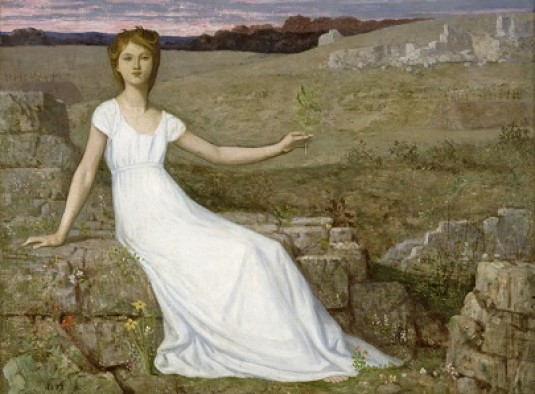
Egremont, as the "spare" to the Marney family titles embodies the patricianism now associated with old-style Toryism. He goes out among the people in his district, and when he's "elected" to the Commons he uses his position to speak up for workers' grievances and presses for their inclusion in the commonwealth. During his travels, he meets with and strikes up a friendship with Gerard and, as per a couple more male characters, falls in love with Sybil. Disraeli describes her in possession of heart stopping beauty, which reflects the angelic innocence of her character. Having been brought up by nuns she spends much of her time at cloisters with a view to entering a convent, but shares her father's politics and sees herself as a daughter of labour. She too goes among the people and does charitable works. When the inevitable declaration of intent comes from Egremont, she rebuffs him because the gulf is too wide between them.
Sybil is not a story of love trumping class location, however. Sybil is somewhat removed from the social setting because of her religious affiliations. This affords her critical distance and she becomes distressed when she sees her father moving in a more radical direction. Her faith inclines Sybil to solidarity and taking up the lot of her own people, but not the violent prosecution of their claims. In this, her political journey is on a trajectory to meet Egremont's. But it's events and tragedy, not ethical commitments, that bring about their union.
Throughout the Chartist cause is pressured by radicalism, but we find extremism on the other side too. Egremont's elder brother, the Lord Marney has little time for the little people. They are slovenly, care-free and, in many ways, have it better than aristocrats like him who are responsible for running estates and attending the rounds of social functions. Poverty is a myth and simultaneously good for them, as extra money will only cause drunkenness, debauchery, and laziness. Disraeli also introduces us to the angry petit bourgeoisie. The Diggs', a father-and-son operation own a few fields and lord it over the local populace through their shop. While the men are down the pit, their wives and sometimes children are forced to humiliate themselves in the lines for their store. Joseph Diggs Jr is particularly brutal, enjoying his station as a tyrant over these women, insulting them, causing them to beg for credit, and jumping in among them with a belt and whip to thrash them. He's indifferent when he puts out the eye of a customer's baby. Ditto for when among them a young boy is found to have been crushed by the stampede away from his blows. The Diggs are not fully fleshed out by Disraeli, but serve as another aspect of the injustice that degrades the life of the poor.
Disraeli's lesson manifests in the rising towards the end. A mob is whipped up into a frenzy under the leadership of a corpulent bishop who styles himself the "Liberator". They rampage through the countryside with the intent of firing factories and farms where the general strike he called is not being observed. For example, the mob stop by the Diggs's shop where they're fired upon by Joseph jr armed with a blunderbuss. In retaliation, they set his building on fire and he's seen perishing in the flames clutching his ledger with the records of all his debtors. Later, at another factory the crowd are halted by an impassioned speech by Gerard, who had earned their respect for his Chartist work and serving time for the cause. He assured them the workers there were on strike, and diverted the mob to one of the nearby estates. The bishop fancies liberating the wine cellar of its contents and they make haste to the big house. It happens that Sybil is there and she and the resident family are terrorised as the mob storms the stairs, take the library, and force themselves into the cellar. Sybil escapes as Egremont and an attachment of yeomanry under his command arrive and drive off the mob. But not before fire consumes the house's lower reaches, and the bishop and his band of sodden lieutenants greet their demise in a haze of insensible drunkenness. Meanwhile, away from the scene the crowd are dispersing when they're attacked by Lord Marney's yeomanry. He fires and kills Gerard, who was merely present. Seeing their leader dead, the mob is reignited and they tear him off his horse and bludgeon him to death.
Months later with the dust settled, everything has come good. With his older brother dead and childless, Egremont inherits the title. And following the recovery of title deeds in one of the book's sub-plots, Sybil is declared blue-blooded and no longer has any hesitancy marrying her Etonian darling. A couple of Chartist allies of Gerard trade in their radicalism and become successful capitalists. Disraeli's message? Class division with its cruelties and inequalities can only lead to mutual ruin if not ameliorated. The deaths of Diggs, Lord Marney, and Gerard demonstrate the zero-sum nature of social conflict. Wise rulers and voices of moderation are not exciting, but they are the best bets for social peace. And when barriers from above and below are cleared, even the most resolute of radicals can become successful in conventional terms and achieve respectability. It's exclusion that breeds disaffection and rebellion. Disraeli here is anticipating, by 150 years, the New Labour discourse around inclusion and exclusion. A discourse that still dominates discussions about "social mobility" and "aspiration". Here, Disraeli is suggesting the war between above and below can be averted if common sense prevails - that legitimate grievances be dealt with, but within the bounds of a law that mutually protects the haves and the have nots.
As limited and as distorting of politics this is, if the Tories want to have a future beyond the catastrophe the polls are expecting, going back to Disraeli and heeding his warnings about stoking two nation politics is a necessity. But One Nation politics and meaning it appears well beyond the ken of today's Conservative Party, and that is why the fall, when it comes, will prove itself unsparing.