Friday, 13 May 2022

Stitching Up Wakefield

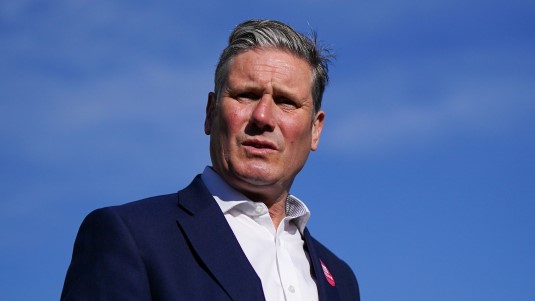
I could simply repost last year's piece on the Hartlepool by-election stitch up. Nothing has changed. In case you happen to have spent the day under a rock or in a cloud of Covid fog, the 16-strong executive of Wakefield Labour Party have resigned their positions. This followed the shortlisting ahead of the upcoming by-election that excluded anyone local from contention, giving members a choice between Kate Dearden of Community and Unison's Simon Lightwood. How do we know it's a stitch up and not the result of their killing selection interview patter? Because the Labour leadership trampled all over by-election rules passed at last year's conference to secure this outcome. Chiefly a rule that required the selection committee to be made up of three local CLP representatives, not the one who was allowed to be part of the actual process. An oversight that does not at all leave the party open to a legal challenge.

This is very much part of a pattern. In Hartlepool the candidate was imposed, and Labour lost. Even in no-hope North Shropshire, you might recall the leadership intervened to make sure a left winger was nowhere near the candidacy. And the same rule applies in Wakefield. Whether Starmer indicated a preference or let his right wing minions steer the candidacy, neither want another leftist in parliament. Starmer doesn't because it's another pain in the arse, and the Labour right apparatchiks because making sure the left's candidate cannot reach the nominations threshold at the next leadership election is their raison d'etre. Remember, as their behaviour since 2015 reminds us, they're more interested in securing power in the party than beating the Tories and winning elections.

This time, the leadership are reasonably confident they can get away with stitching up the seat without any trouble. Totting up the popular vote from last week's local council elections in Wakefield, across the constituency's six wards Labour won 12,082 votes versus 8,025 for the Conservatives - a vote difference greater than the majority the Tories won in 2019. Thanks to the weakness of the government across the so-called red wall, Labour has reason to be bullish about its chances. But bullish is different to complacent, and the way the leadership have approached the selection suggests they think it's a shoe-in. They might be right to think so. The Tories are floundering, and the incumbent is about to get banged up for serious sexual offences committed against a teenage boy. The political mood is anti-Tory, even if it isn't pro-Labour and Starmer's party is the best placed for angry voters to give Boris Johnson a kicking.

The problem is by-elections can get blown off course by local issues. This is a must-win for Keir Starmer. If he stumbles and Labour doesn't take the seat, it's curtains. Fixed penalty notice or not. Therefore introducing an element of uncertainty by giving key local notables a reason not to cooperate isn't the smartest of politics. Also, having fooled themselves into thinking the 2019 result was all because of Jeremy Corbyn, they forget it was equally a protest against the arrogance of the "grown ups" who believed voters in places like Wakefield got Brexit wrong and wanted to reverse their vote. Recalling memories of distant, metropolitan second referendum types, trampling all over the local Labour Party could catch the public mood and votes that might have gone to Labour get picked up by other parties instead. The Liberal Democrats and Greens weren't anywhere in the district council elections, but they could become a repository of discontent. Given the stakes, I simply would not have done anything that makes a crucial by-election gain less likely.

It's a warning to us as well. Starmer treats Labour as if he's still a top administrator managing a state bureaucracy. He has no regard for the rules or the views of those who make up the membership, and that suits the right just fine as they pursue their petty vendettas through the party machinery. But that also means if Starmer becomes Prime Minister we can expect to see the exact same high-handed and authoritarian approach to government. Hardly an inspiring alternative to nearly a decade-and-a-half of Tory misery.

Image Credit

Wednesday, 11 May 2022

Labour's Electoral Discomfort

Last Thursday's local elections were bad for the Conservatives. Very bad. Dropping 500 seats was awful enough, but there's a seldom told story that was lost amongst the spin and is only now coming out. On the BBC's election programming, Yvette Cooper was wheeled out to put a brave face on Labour's modest gains. Gains, in case folks stopped paying attention, that got more modest as the weekend wore on. But on the further advances the Tories made in the so-called red wall, she argued that if you looked at the vote share since 2019, Labour's recovery in many of these places was in fact underway. It's tempting to dismiss this as self-serving spin, but this was a broken clock moment: her claims were fundamentally sound.

Over at Prospect, Stephen Fisher has crunched the numbers. While plenty of people have pointed out Labour hasn't made much progress compared to 2018, the last time these seats were fought under Jeremy Corbyn, that Thursday's results almost put them on a par with four years ago suggests support lost at the general election might be returning. Indeed, Labour was up six points in "Leaveland" versus three points in remain-voting constituencies. Stephen goes on to suggest that the below-the-counter electoral pact between Labour and the Liberal Democrats would actually strengthen Labour's chances in its former strongholds, what with the anti-Tory vote not getting splintered. For example, doing some quick sums from the Newcastle-under-Lyme Borough Council elections for contests in the constituency boundaries, Gareth Snell found that Labour polled 9,500 votes - a thousand more than the Conservatives while the LibDems managed 1,500. This despite the Tories winning new seats on the council at Labour's expense.

Therefore, the Tories are in a worse position than their apparent consolidation suggests. Except, happily, the news for the Tories is even grimmer than that. As we know, older people are more likely to vote and older people disproportionately favour the Tories. Therefore, as council elections are second order elections this age bias in voting becomes even more attenuated. Last Thursday was said to favour Labour because it was fighting more defences than any other party, but the demographic profile of the average local government election voter leans more toward the Tories and, indeed, helps explain why last year's results were so bad. A shift toward Labour among this constituency spells bad news for the Tories regardless of whether the seats are Labour or Tory leaning. Even worse, in the circumstances of a general election when turn out is up and more working age people go to vote - who in the last decade have had a clear preference for Labour - assuming things stay as they are, the Tories could be in for an even worse pummelling.

But that's the red wall. One cannot get away from the fact that the Liberal Democrats were the runaway winner in England, with the Greens in a very respectable second place in terms of seats won. Why are these parties picking up seats across the south? Why are they proving more potent than Labour in the so-called Blue Wall? Firstly, what it isn't is "Long Corbyn". No one except for those who have an interest pretending otherwise can maintain Labour is unchanged under Starmer. We've gone from a radical, transformative politics to an authoritarian mess in which progressive positions are the exception rather than the norm. And yet Starmer's Labour aren't performing like a viable proposition across the south. Why? Reflecting on his party's drubbing, Damian Green writes that Tory culture war obsessions are turning off swathes of Conservative voters, such as those comfortable with the social liberalism of the coalition government or found Theresa May's (rhetorical) social justice pledges attractive. Johnson isn't interested in conserving anything and he's given the green light to his subordinates to bulldoze their way key British institutions, like broadcasting. And so this electorate rebels by turning to the smaller parties.

Why aren't Labour capitalising on this growing anti-Tory mood in the shires? While the leadership has cosplayed authenticity and patriotism to win back property-holding pensioners in the north, Starmer's straight up refusal to support the right thing unless it's electorally expedient has been noticed. Labour did not make a concerted attack on the government's privatisation of Channel Four. Labour chose to emphasise the cost of transporting refugees to Rwanda rather than taking a values position. He did not jump on the 'one rule for them' bandwagin until the focus groups said it was a good idea, and when it comes to other aspects of what you might loosely term liberal Britain, Starmer is nowhere seen to be defending it. In other words, despite sticking up for the status quo by promising nothing Starmer is as inconsequential to this layer of voters as they have been in his electoral strategy. How this differs from Tony Blair who affected enough liberal hero concerns to be seen as a champion self-defined "progressive" or modern one nation centre right voters could believe in. At least before 1997. The LibDems, now realising there are gains to be made from concentrating their fire on the Tories, are the natural protest repository for this substantial layer of soft Conservative support. It doesn't matter what the actual detail of LibDem policy is, they're known for liking nice causes and a little bit of constitutional radicalism. They want a better, kinder politics, so vote for them instead. It's to the Greens' benefit that they too are carving a similar space out for themselves, but with added environmentalism.

But this is only part of Labour's woes in the south. While the old and retired turned out disproportionately for these elections, so did the comparatively smaller politically-engaged working age population. And it's a concern that these, by and large, kept their distance from Labour in the south. It's almost as if they reached for whatever tool was at hand to bash the Tories about with, and in many cases decided the LibDems and Greens were better placed to do it. Nor is it difficult to fathom why. Despite Labour enjoying polling leads among working age people, it has done nothing to maintain this advantage. It goes out of its way to present itself as socially conservative, just as those values are shrivelling up and dying off. It makes a virtue of not highlighting anything that responds to their interests, such as deaing with the housing crisis, crap wages, lack of opportunities, and so leaves the field wide open for others. Political science ain't rocket science. For obvious historical reasons this layer, particularly the younger workers, aren't going to find the LibDem pitch too attractive apart from their not being the Tories, but the Greens are different. Their raison d'etre is the climate crisis, which the other parties only pay lip service to. You don't need me to tell you why this matters more the younger one is, and so from the off they enjoy an association with tackling an existential crisis that can only get worse. Second, while the Greens oscillate between the centre and the radical left, formally speaking its values impeccably line up with that of the rising generation. And for those who look a bit further, its policy platform is more robust in addressing the interests of working class people than Labour's. Is it any wonder they were the go to in parts of the south instead of the party supposedly rooted in the labour movement?

This matters. Contrary to the impression Labour's vote is unified in the "recovering" red wall, the Greens in particular pose it some real difficulties. If Starmer carries on as he does, and he will, what we've seen in the south we could see elsewhere. Local elections come up, and Labour is blunted by a bleed to the Greens and LibDems. If any lessons have been learned from the UKIP surge, it's that protest votes can firm up into general election votes, or offer a gateway to the Tories. Contrary to the dim bulb analysis clung to by the Labour leadership, the red wall is a demographically complex place. Among other things, because Starmer is offering our class nothing, particularly the young, then it's quite likely that enough of this vote could be peeled away by the Greens and LibDems in the Tory-held seats Labour needs to win back. In other words, the Tories aren't the only ones suffering southern discomfiture. The local election results could show Labour a future where challenging the Tories is hopelessly split because of the political cowardice of its leadership.

Monday, 9 May 2022

Keir Starmer's BeerGate Gamble

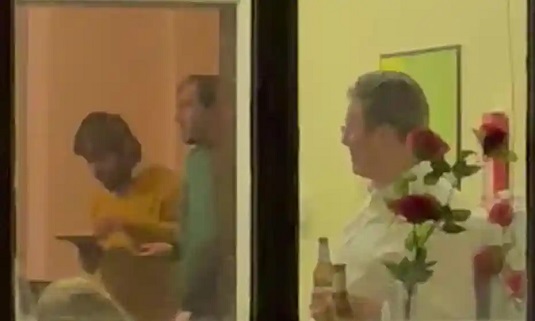
One of the most annoying phrases in politics, and a favourite of Keir Starmer's, is "let me take this head on." Invariably, the answer that follows meanders all over the place and consumes interview time so further, potentially more awkward questions can't ba asked. But for once, by calling a press conference to announce his resignation if Durham Police fine him over "BeerGate", Starmer has done exactly that.

During his brief statement, Starmer positioned himself according to his usual contrivance: as a public servant honour bound by the principles of duty, probity, and integrity. Not just to put a clear distance between himself and the amoral vacuum of Downing Street, but because he undoubtedly believes it. There is perhaps profit in writing a short political profile that symptomatically sifts through Starmer's statements and speeches in which his silences and phraseology are reconstructed to form an internal narrative of honourable behaviour, despite lying to the members about his politics, returning Labour back to banana republic levels of petty authoritarianism, and reneging on a deal struck with Jeremy Corbyn to secure his readmittance to the parliamentary party. Alas, such an exercise has to wait.

But from the point of view of presentation aiming to get the average punter on side, Starmer did a good job of presenting his putative resignation as a matter of honour. A pledge Angela Rayner has signed up to if she's fined by Durham plod as well. It takes the heat off Labour, freeing Starmer and the front bench up to continue harrying Johnson from their moral high horse, and puts the Prime Minister on the spot. Just as it was always going to when the Daily Mail, other right wing outlets, and sundry Tory MPs joined in the crowing and demanding action be taken by the police. And regardless of the politics of onlookers, the hope is his willingness to put his career on the chopping block would win grudging respect across the political spectrum - which is good if your politics is primarily about rebuilding the legitimacy of state institutions, which Starmer's is.

It's not likely Starmer will cop a fine. Not just because of the details of the supposed breach, but also the huge pressure the Durham force are now under. Having been bounced by the Tories into reopening the case file on Starmer's beer and curry, being out on notice that the careers of two powerful politicians are now in their hands makes for a hot potato. This suggests fines aren't very likely. Going in Starmer and Rayner's favour is the reluctance the force has shown dishing out fines. They only issued 1,090 Covid notices between March 2020 and February this year. This is also the same police who did nothing about Dominic Cummings and his own restriction-breaking road trips. And so what might look like a high risk strategy for Starmer really isn't. The pain for Durham police is too awkward and inconvenient if fines are issued, therefore common sense suggests an institutional preference for the quiet life would eventually win out.

What about the politics? This is less certain. It's obvious Starmer's position is untenable if he's given a fine vis a vis his attacks on Johnson, and even if he wasn't inclined to pre-announce his resignation there are plenty on the right of the party, less than overwhelmed by Thursday's stellar performance at the ballot box, happy to enforce a premature retirement. It's unlikely to shift public opinion either. Those with their minds made up about Johnson's rule breaking will stay made up. Very few people are going to change their views by Starmer's example. But where it does matter is in the tete tete of Westminster shenanigans. There are Tory MPs discomfited by their grotesquerie of a Prime Minister and his utter disregard for parliamentary convention. According to their own twisted senses of honour, Starmer's move is audacious and principled. The unfavourable comparison between the Tory leader and Labour's demonstrates to them that decency is possible in politics, with the consequence of firming up their likelihoods of putting a no confidence letter into the 1922 Committee, or inducing a couple of others to follow Christian Wakeford across the floor. It also raises the morality stakes for Tory ministers. The opposition leader's pledge is now something the government can always be bashed with by its critics, and in Westminster where the avoidance of political pain is a chief concern, Starmer has gone some way of restoring the force of parliamentary convention.

Image Credit

Sunday, 8 May 2022

Eurovision 2022 Preview

It's long been the official position of this blog that the Eurovision Song Contest is experiencing its golden age. Year after year, belter after belter, I am hard pressed to remember a duff installment this last decade. Because there hasn't been one. And the good news is the Eurovision joy continues because we've been treated to another great year. So good in fact that even the UK have entered a decent tune. Which is where we shall begin.


It's almost impossible to believe. After decades of pleading with the BBC to a) get someone contemporary and b) press some song writing talent into service, they've actually gone and done it. Sam Ryder is a social media phenomenon and penned this pleasant ditty with proper composers who've worked with Ed Sheeran and BTS. And you know what, there's a good chance the UK won't get panned this year. Indeed, word on the Eurovision streets is top five. Wow.

But the UK are up against tough competition. Like Ukraine's entry.


The Kalush Orchestra have to be this year's favourites for obvious reasons, but it is an excellent entry. Ukraine have long mastered the East-meets-West blend that Eurovision audiences go gaga for, and marrying rap to something traditional-sounding works really well here. I'd be surprised if it doesn't win. But among its exceptional challengers is Sweden's effort.


Cornelia Jakobs's Hold Me Closer is simply incredible. I didn't think much of it on the first playthrough but returning to it a few days later and it bullseyed the emotional register it needed to strike. Probably the best tune this year and a worthy winner should Sweden, yet again, take the crown.

There's time for a couple more. Let's head to Malta.


Controversy time! Emma Muscat's entirely pleasant I Am What I Am wasn't the song she won the Maltese national heats with. This was her tune. Apparently, the song was switched after "negative feedback" on social media. To be honest, her new tune is much better even if it's a cliche. Inclusivity vibes married to gospel backing and uplifting lyrics - what's more Eurovision than that?

And lastly, to the land of Uncle Enver!


Just amazingly bonkers, and another strong contender for the top spot.

This is just scartching the surface of this year's contest. If you want to speed run the songs, here's the official preview reel. As always, the heats run this Tuesday and Thursday with the grand final next Saturday.

New Left Media May 2022

It's about time we gave a shout out to some new media projects. Take it away.

1.sublation magazine (Twitter) (Facebook) (Magazine/Media Project)

2.The Week in Work (Twitter) (Blog)

3.Uncommon Sense (Podcast)

4.Wonk Watch (Twitter) (Blog)

If you know of any new(ish) blogs, podcasts, channels, Facebook pages or whatever that haven't featured before then drop me a line via the comments, email, Facebook, or Twitter. Please note I'm looking for new media that has started within the last 12 months. The round up appears hereabouts when there are enough new entrants to justify a post!

Saturday, 7 May 2022

Covid Update

Don't worry, Covid hasn't put me down for the count. The good news is I'm much better and hoping its reputation for tricksy curveballs don't throw me off my fairly linear path to complete recovery. That said, even though I'm starting to feel more or less normal today I got hit with a wave of fatigue. Not ideal when you're on a promise to write two articles about the local election results. Hopefully a good night's sleep will see me right as rain, because there are plenty of things to talk about. Like,

Sinn Fein's victory in the Northern Ireland Assembly elections.

Why the Liberal Democrats and the Greens benefited from disaffection with the Tories in England and Labour didn't.

How did left-of-Labour electoral challenges do? (For instance, the Lutfur Rahman/Aspire triumph in Tower Hamlets)

And ... will "beergate" force a premature end to calamity Keir's undistinguished leadership?

I'd like to write about all these things, but time is not on my side. Covid and time permitting, we'll see what we can talk about this coming week.

Wednesday, 4 May 2022

Three Points on New Labour

I missed the anniversary bus because Covid, but there are three things that I wanted to say again about New Labour.

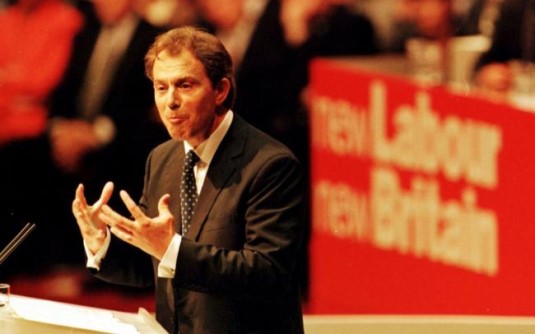
1. The circumstances that produced New Labour's victory are historically specific. As someone who was around at the time and has no political blocks on recalling memory, it was obvious Tony Blair was going to win the 1997 general election. Nor, had he lived, was there any doubt Labour would have won with John Smith. Blair might have reached deep into Tory territory and flipped more seats other right wing leaders couldn't possibly have reached, but a landslide was on the cards anyway. And the conditions that produced that landslide, among other things, were not just weariness with the Tories - large numbers of voters don't simply give up on a party because they fancy a change - but their incompetence, the damage inflicted, unpopular policies, perceptions of sleaze, mean-mindedness, and outright corruption. Sounds similar to today, but then there was no age (class cohort) polarisation, and the residuum of the solidarities built up by the labour movement over generations were more of an electoral factor. New Labour intersected with the moment: it offers no guide to the future.

2. Tony Blair's template was Bill Clinton, and in his turn Blair was the template for Barack Obama. Blair appealed not because he promised the earth, but because he offered something less tangible. The policies were thin gruel, but what we had instead were slogans like 'Education, Education, Education' and 'Tough on Crime, Tough on the Causes of Crime' which chimed with the public mood and a vague sense of hope. Blair continually gestured toward better days ahead. Importantly, while Blair spent his time as leader of the opposition telegraphing his fealty to the Thatcherite settlement, he was far from shy in taking the Tories on. Then, as now, Prime Minister's Questions was a minority pursuit of the politically engaged, but seeing Blair slice and dice John Major on the evening bulletins ensured he tapped into the anti-Tory mood. Blair's empty 'change' vibes resonated with a sense he was on the public's side to such an extent that any social group could deposit their inchoate hopes in him.

3. New Labour did make significant inroads into tackling childhood and pensioner poverty and renovating public services. Individual rights at work were extended, along with equalities legislation, devolution, and the Good Friday Agreement. Understandably, the Labour right like to pretend these were the only matters of consequence. Lest we forget the catastrophe of Iraq and Blair's part in enabling the unnecessary deaths of hundreds of thousands. The racist campaigns New Labour launched against Muslims and refugees, and their attacks on the most vulnerable people in society - cutting social security support to single parents, forcing young people into workfare, and dreaming up the disastrous work capability assessment for the disabled. Its continuation of Tory housing policy led to the dysfunctional mess we have today. These were all bad enough, but its appetite for destruction didn't end there. Through its privatisation schemes, academisation of schools, attacks on public sector pensions while green lighting private employers to do the same, and an evisceration of manufacturing greater than that witnessed under Thatcher, New Labour set about liquidating its own base. The propertied pensioners who disproportionately vote Tory now, many of whom certainly voted Labour during their working lives, are a direct consequence of these short-sighted efforts.

Image Credit

Monday, 2 May 2022

Going Viral

I suppose it was inevitable. Despite religiously wearing face masks on the train, in the shopping centre, and when I'm lecturing lovely students the Covids have made a house call. Thankfully, the symptoms are very mild. Just the sniffles and that achey sense you get when you're on the verge of a cold or the flu. And I am a little bit shivery too, but apart from that not bad. Still got plenty of energy - for the moment. Though I will note I am absolutely stuffed full of the microscopic blighter. The postive LFT came back within a minute.

What this means is blogging might be disrupted over the next week or so. We'll have to see.

Sunday, 1 May 2022

Five Most Popular Posts in April

Some might find the 25th anniversary of New Labour's famous election victory worth celebrating. To be honest, as a government that moved with alacrity to introduce tuition fees and cut social security for single parents, you'd be better off remembering the most popular comings and goings on this blog for the last week.

1. Talk About a Revolution
2. How Boris Johnson Can Be Forced to Quit
3. Propaganda and Ukraine
4. The Assassination of Rishi Sunak
5. Privatising Channel 4

We begin our retrospective of April with Keir Starmer's unforced remarks about how it's "not revolutionary" to ask (not even demand) for support to help with the cost of living. Why even use this language? Why was he almost apologising for going on rising food and fuel prices? This was followed by a quick reflection on what might force the Prime Minister from office. The answer would have been the resignation of Rishi Sunak. But as he didn't fall on his sword the window has closed on this route for seeing Johnson off. But with two tricky by-elections, council elections, and more fixed penalty notices to look forward to the moment of peril isn't over yet. We then moved to the more serious business of the war in Ukraine and thinking through the fog of war and the propaganda that aids it. Sadly, for too many on the left, their tendency to goodie and baddie politics, of putting an anti-imperialist plus wherever NATO, the US, and the British government put a plus leads then into cheerleading for Putin. And at the foot of the table this month was a consideration of Nadine Dorries's plan to privatise Channel 4 to own the libs.

A couple for the second chance saloon today, and they're both to do with France. There's a look at the first round of the presidential election results in light of the theory of immaterial labour as bandied about these parts. Did the numbers confound the theory? No. But for added stress testing we had a butcher's at last Sunday's results too in case they offered a possible refutation. After all, the old and the very young went for the "liberal candidate" while working age people didn't. And the answer is ... they didn't. Read more.

Thanks muchly for reading this blog. Feel free to recommend to friends, acquaintances, comrades, and colleagues. I'm not a bad follow on social media either. And if you're inclined to, there is now a Patreon page. Pledges begin at £1/month, so there's never any need to break the bank. Unless you're Mackenzie Scott and fancy bankrolling this place to the tune of hundreds of thousands.

Next month there's going to be more Tory scandal, stupidity and cunning. More than likely the same from the Labour Party as well. Eurovision is happening in May so expect the preview next weekend, and - in nine posts' time - we'll be hitting the magic 4,000th post. Now that's a lot of lost evenings. Watch out for the special post to mark the occasion.

Image Credit

Friday, 29 April 2022

Who Killed The KLF?

Looks like this is going to drop as 90s nostalgia keeps piling up.