We've had 1,000 years of European history in three minutes, so why not cram the Second World War into seven? The clip below follows the front lines day-by-day and shows how close the Nazis came to tipping Europe forever into the abyss.
Tuesday, 8 October 2013

Monday, 7 October 2013
Ed Miliband's Reshuffle

Firstly, I was heartened to see Andy Burnham retained his place at the health brief. Like many others in the party, I feel Andy has grown into a formidable attack dog and principled champion of the NHS since his leadership bid three years ago. While as wonky as the leader himself, Andy's working class background, policy agenda and obvious passion for the job makes him horribly effective. Which is why the Tories fear him, smear him, and are now apologising to him. Those whose ears catch the idle chatter from the more indiscreet members of Ed's office have let drop that the leader was reportedly "furious" with Andy for raising not-so-oblique criticisms of the 'hush now' approach to party policy, and he could face the chop. And yet he's still there. On 'ability to do the job' there's a big tick. On internal politics, a good many party activists would have been disappointed had he gone - with a difficult 18 months ahead the party needs every pair of hands it can muster. And out there in realworldswingland; passion, competency and a rough plan to implement a national care service to complement the NHS goes down very well indeed. Losing Andy would have been a very serious error of judgement,
I know some readers will be wanting me to say a few things about my ex-boss, Tristram Hunt, who's been promoted to shadow education minister. There's very little to add to what I've already said on Twitter. Tristram will be very effective in pinning down Gove and putting forward Labour's alternative. He also cares deeply about improving schools and ensuring that education produces well-rounded people, not drones for assembly lines with the nonsensical capacity to recite England's kings and queens. And unlike his predecessor, who I believe never really *got* his brief, Tristram has his own ideas about what needs to be done. Internally, it's difficult for the likes of Dan Hodges to maintain there's been a cull of the Blairites when Tristram is one of the directors of Progress. There's also the small matters of promotions for Emma Reynolds and Gloria De Piero, and Wee Dougie keeping shadow foreign secretary and getting joint campaign chair too. Then again it's never the done thing to let facts get in the way of spun narratives.
But is there some truth to the cull hypothesis? A smidgen. It is under-performing Blairites who've had the push, not under-performers normally identified as Ed's people. Was Stephen Twigg effective as shadow education? As nice a bloke he is, I'm afraid not. His barely-concealed support for free schools as Labour policy was at odds with the common view among the PLP and the wider party. He had to go. Same with Liam Byrne. Actually, weirdly, strangely, I've warmed to Liam of late. He's very capable and is an extremely hard-working MP. He has to be - his constituency caseload is reputed to be the heaviest in Parliament. But I think he's too much of the old 'new' school. It's not that he personally believes in being beastly to people who subsist on social security, but is prepared to be so in the name of triangulation. Unfortunately for him, as Labour positions itself as a real social democratic alternative to the Tories, 'conviction politics' are again on trend. Triangulation is subordinate now to politics, not the other way round. Lastly, Jim Murphy who is perhaps the one bruiser the Blairites had left has gone to international development. Jim has been credited with improving Labour's appeal to the armed forces, be they veterans or serving personnel. Whatever one thinks of those efforts, he has nevertheless made real inroads. Jim's problem, however, is not that he is incompetent - rather it was his position over Syria that did for him. It's hardly news that Jim was of a hawkish bent when the matter was still being mulled over by the leadership a month or so ago. His mistake however was to publicly emote and allude to his displeasure with the Labour-led opposition victory against missile strikes. While you could say Andy Burnham was as equally out of order for trying to bounce the leadership on policy, pledges around care are one thing in politics, questions of war and peace are quite another. It meant that for Jim the writing was on the wall.
Yet what of Jack Dromey? I thought he was very effective in housing. Like Andy and now Tristram, he genuinely relished that role. Though the thinking seems to be he's on for some senior role with the shadow home office team.
So here we have Labour's 'Team 2015'. The new line up can be viewed in its entirety here. Not the communist combat squad haunting the limited imaginations of the Tory party faithful, but a collective that can put forward Labour's alternative with passion, rigour and clarity.
Sunday, 6 October 2013
For a Citizen's Basic Income
I've been a fan of a basic income for everyone for some time. And now there's a European Union-wide campaign agitating for one. As Switzerland will be hosting a referendum on a 2,500 franc monthly income for every adult (about £1,720/month), there's no time like the present to whip up support for it. And pioneering work in Namibia shows it's not just something rich countries could indulge.
New Left Blogs September/October 2013
First Sunday of the month is new left blog time.
1. Andy Newman for Chippenham (Labour) (Twitter)
2. Choosing Life (SDLP/Labour) (Twitter)
3. Cllr Alice Perry (Labour) (Twitter)
4. Crow's Head Fell Off Like a Leaf (Unaligned/Feminist) (Twitter)
5. Feminist Times (Unaligned/Feminist) (Twitter)
6. Feminists Fighting Transphobia (Feminist/LGBT)
7. Just A Thought (Unaligned) (Twitter)
8. Ken Bell (Unaligned)
9. Opinionated Planet (Unaligned/Feminist) (Twitter)
10. The Hampstead Trash (Unaligned) (Twitter)
11. The Hidden Voice (Unaligned)
12. The Occasional Pigeon Unaligned/Satire)
13. Yet Another Lefty (Unaligned) (Twitter)
14. Your @flyingparchment is stuck in a tree (Unaligned/Anarchist) (Twitter)
That's your lot for September/October. If you know of any new blogs that haven't featured before then drop me a line via the comments, email or Twitter. Please note I'm looking for blogs that have started within the last 12 months. The new blog round up appears on the first Sunday of every month, and is also cross-posted to Socialist Unity.
1. Andy Newman for Chippenham (Labour) (Twitter)
2. Choosing Life (SDLP/Labour) (Twitter)
3. Cllr Alice Perry (Labour) (Twitter)
4. Crow's Head Fell Off Like a Leaf (Unaligned/Feminist) (Twitter)
5. Feminist Times (Unaligned/Feminist) (Twitter)
6. Feminists Fighting Transphobia (Feminist/LGBT)
7. Just A Thought (Unaligned) (Twitter)
8. Ken Bell (Unaligned)
9. Opinionated Planet (Unaligned/Feminist) (Twitter)
10. The Hampstead Trash (Unaligned) (Twitter)
11. The Hidden Voice (Unaligned)
12. The Occasional Pigeon Unaligned/Satire)
13. Yet Another Lefty (Unaligned) (Twitter)
14. Your @flyingparchment is stuck in a tree (Unaligned/Anarchist) (Twitter)
That's your lot for September/October. If you know of any new blogs that haven't featured before then drop me a line via the comments, email or Twitter. Please note I'm looking for blogs that have started within the last 12 months. The new blog round up appears on the first Sunday of every month, and is also cross-posted to Socialist Unity.
Saturday, 5 October 2013
Mehdi Hasan and the Daily Mail
1. So what if Mehdi Hasan pitched himself to work for the Daily Mail three years ago? Journalists, especially those without a berth - as Mehdi was at the time - have got to work to live. And of course he's going to emphasise how much a prospective employer's values are congruent with his own. I'm sure if he'd gone for a job at The Morning Star, he would have burnished his peace and socialism credentials. This is so much nonsense. In my time I've known teachers at Catholic schools who, in turns, were gay, an avowed atheist, and a Trotskyist. I've known Sainsbury's workers who prefer shopping at Tesco and Asda. How many staff at the Mail hate the crap they're reputedly paid well to write? How many newspaper editors laud family values when they themselves out of choice, not necessity, screw around behind their partners' backs? Little hypocrisies grease the wheels of working life, and this will not change.
2. Publishing extracts of a letter of application is not only immoral, the Data Protection Act may have been breached. This was essentially private correspondence of a commercial nature. All employers I've ever dealt with are obligated to state that information a potential employee provides will be treated confidentially, and that is the case whether applications are solicited or not. I'm not a legal bod and I hope someone in the know will be able to clarify this point. Unlawful or not, it cuts against the professional standards one would expect of any employer and shows the Mail and The Spectator as spiteful, gutter publications that will stoop to every low in pursuit of a vendetta.
3. Unfortunately, his monstering will achieve the desired effect among some on the left. That Mehdi is a socially conservative Muslim is hardly news, seeing as he's already written about it. "He's not really one of us" scream the lefty types for whom politics is an identity choice, and debate is about denunciation, not persuasion. Meanwhile labour movement folk who prefer to think and act about bringing positive social change will ignore the shrill cries and continue to welcome Mehdi's muscular take down of the Tories, their press and their politics. If we're going to have to wait for everyone to be a perfectly rounded-out socialist being, we'll be stuck doing nothing for a long time.
2. Publishing extracts of a letter of application is not only immoral, the Data Protection Act may have been breached. This was essentially private correspondence of a commercial nature. All employers I've ever dealt with are obligated to state that information a potential employee provides will be treated confidentially, and that is the case whether applications are solicited or not. I'm not a legal bod and I hope someone in the know will be able to clarify this point. Unlawful or not, it cuts against the professional standards one would expect of any employer and shows the Mail and The Spectator as spiteful, gutter publications that will stoop to every low in pursuit of a vendetta.
3. Unfortunately, his monstering will achieve the desired effect among some on the left. That Mehdi is a socially conservative Muslim is hardly news, seeing as he's already written about it. "He's not really one of us" scream the lefty types for whom politics is an identity choice, and debate is about denunciation, not persuasion. Meanwhile labour movement folk who prefer to think and act about bringing positive social change will ignore the shrill cries and continue to welcome Mehdi's muscular take down of the Tories, their press and their politics. If we're going to have to wait for everyone to be a perfectly rounded-out socialist being, we'll be stuck doing nothing for a long time.
Friday, 4 October 2013
90 Years from Now
In 2100, the world will look like "a global wilderness dotted with gardens", apparently. And there's full communism too.
Thursday, 3 October 2013
The Sociological Imagination Revisited
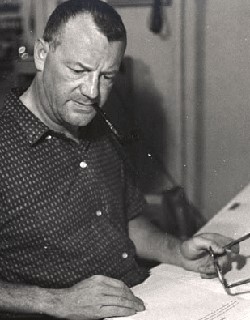
What then is this thing, the 'sociological imagination'? Using the state of 50s America as his jumping off point, Mills argued that the popular sense, the popular mood was suffused with a strange sense of unease. It was a condition in which people were told by their papers, their screens, their politicians and ideologues that they lived in a state of freedom. An American could be whoever they wanted to be and follow their own inclinations and desires. But the scope of this freedom was very much limited to every American's private life. Hence the popular feeling, the hard-to-place sensation that all wasn't safe and well was an outcome of the friction between the boxed-in character of private/familial social relations inside the home, and the uncertain, potentially terrifying buffeting of large, invisible, unknowable and impersonal social forces outside it.
For Mills, to make sense of this, people required
... a quality of mind that will help them to use information and to develop reason in order to achieve lucid summations of what is going on in the world and of what may be happening within themselves. It is this quality ... that journalists and scholars, artists and publics, scientists and editors are coming to expect of what may be called the sociological imagination. (1959, p.5)What the sociological imagination does is provide a way of thinking through and understanding social life, of how the inner lives of each of us as individuals are conditioned by social forces, and - borrowing terminology from Pierre Bourdieu - to understand our trajectories through social space. For Mills, the imagination is also a 'terrible' realisation as it shows that our fate is largely something that is done to us, regardless of our choices.
The sociological imagination asks three sets of questions. These are taken up and formulated in particular ways by the main theoretical perspectives that have come to dominate sociology. The sets are:
1. How is society structured? What are its components? How are they interrelated and mutually conditioning? How do they contribute to social persistence and social change? How does one society differ from another?
2. Where does a society stand in relation to the historical development of human societies? How are present societies stamped with the marks of the past? What are the essential features of modern times?
3. What social groups hold sway? What groups are rising and declining? What are the kinds of human natures that have contemporary currency? And what are their meanings in relation to discrete features of society?
The sociological imagination may well ask these sorts of questions, but how do you begin the business of unravelling the complex tapestry of social relations to make sense of them? Mills begins with distinguishing between 'personal troubles' and 'public issues'. The former denotes the so-called private sphere, and concerns personal, intimate, milieu-specific settings. The latter refers to a higher social scale, or a greater degree of abstraction. i.e. Questions around the integration of milieux into social structures, of how social collectivities mesh, relate with, and constitute one another. Hence problems occurring at this level of societies; dysfunctions, conflicts - pick a category from the social theory of your choice - cannot be anything other than public issues. Therefore how these structure and intertwine with individual experiences, this is the province of the sociologist.
Using this understanding, if we return to Mills' thesis that unease and anxiety underlined the American (modern) condition, he asks if this is the lot of just one or very small groups of disparate people, then it is a matter of individual biographies. But if insecurity, fatalism, fear for the future is a mass experience we are witnessing a social phenomenon that is the expression of how certain social relations are structured. And, of course, this angst might be the spur for further pathological social developments. If this is the modern condition, it falls to the sociologist to investigate, analyse and explain.
What particularly interests me about Mills' argument is the following observation. He argues that every age has a common intellectual denominator, a shared zeitgeist that figures time and again in the cultural tropes, in the stories we tell ourselves, in the senses we use to interpret the social world. For example, in the late 19th and early 20th century one widely-held habit of mind, particularly among the privileged and educated elites, was Social Darwinism. Consciously and unconsciously, social policy, sociology, emerging nationalisms, encouraged the view that relations between human beings were essentially an extension of the evolutionary struggle each and every species wages in the natural world. However, by the time Mills was writing the denominator, the structuring principle of social thought had greatly changed. The social had come to predominate - the sociological imagination was the mindset of the modern world. He held that as the old certainties were melted by the friction of rapid social change, popular perceptions of social problems focus on the routines, behaviours, conflicts and crises that lie at their root. Of this, Mills writes:
It is the quality of mind that seems most dramatically to promise an understanding of the intimate realities of ourselves in connection with larger social realities. It is not merely one quality of mind among the contemporary range of cultural sensibilities - it is the quality whose wider and more adroit use offers the promise that all such sensibilities - and, in fact, human reason itself - will come to play a greater role in human affairs. (ibid. p.15)For 1959, this was a very sharp observation. We're not all Sociologists. But we are all sociologists. Whatever you you think of them, politicians put forward sociological explanations of varying complexity and accuracy to makes sense of society's ills. Economists are forced to acknowledge the social dimension outside of their equations to explain the crash of 2008. Celebrities lay bare the travails of overcoming obstacles thrown by their humble backgrounds as they groped their way toward fame. Our mass media and social media, from frivolous muckraking to "hard news" obsesses incessantly over the character and quality of social relationships. Will Dave sack IDS? Is Simon Cowell going to marry Lauren Silverman? Does Deidre Barlow still pine for Ken? Ours is a 'social age' where even your worth is measured by relationships, crudely denoted by numbers of Facebook friends or Twitter followers.
Curiously, at the moment the sociological imagination is the habit if mind par excellence sociology as a discipline is stuck on the doldrums. It's perceived as a breeding ground for axe-grinding lefties and abstruse waffle few outside of seldom-read specialist journals care about. And it's not controversial to state that the sociological imagination has allowed other disciplines and lay actors to park their tanks on sociology's lawn. New mass killing outrage? Call a psychologist. Youth delinquency? Get a criminologist. Parenting? Katie Hopkins. Class? Paul O'Grady.
Yet fads in the broader social sciences come and go but sociology stubbornly remains. Women's Studies, Industrial Relations, Cultural Studies; these are all cognate disciplines that after a brief life have largely disappeared and find themselves folded into sociology departments. Why and how sociology soldiers on despite being derided and ignored is probably a lifetime's work in and of itself. Perhaps the materiality of the sociological imagination consistently generates a mass education market out of the minds it captivates as a subject of fascination in its own right.
The sociological imagination shows absolutely no sign of ebbing. As dictatorships dissolve and civil societies open up across the globe, not only are the disciplinary futures of sociology secured but more importantly the questions of our times - the environmental crisis, the relations between the genders, nationalism and hate, the balance of inequality, the chaos of the global economy - are also increasingly treated as social, not natural problems. And that realisation may just be the beginning of doing something about them.
Wednesday, 2 October 2013
Tory Conference Quickie
Tonight I was going to write about Conservative Party conference using the same Tory Twitter sample as last week. But now the foam and palpitations have calmed right down, they're all a boring lot really. One waxes about "learning or earning" as if the secret of the Philosopher's Stone stood revealed to him. And another says Dave's speech was "electric". If this flat, uninspiring and, gasp, weak read of the auto cue was sparking off energy, you can understand why Ed's ever-so-slightly-left keynote tipped their ilk into meltdown.
Still, I'm sure some found inspiration in Osborne's "rising sun" and Dave's absurd notion that Britain under his government is "a land of opportunity". All I got was a sense they could offer nothing more than flat metaphors filched from cliched Maoist and Blairite mantras. Still, in attacking the LibDems over their claim on taking the lowest paid out of tax I felt a bit smug that this prediction about a new battleground in the coming election has been confirmed already.
Right. Time for a music interlude.
Still, I'm sure some found inspiration in Osborne's "rising sun" and Dave's absurd notion that Britain under his government is "a land of opportunity". All I got was a sense they could offer nothing more than flat metaphors filched from cliched Maoist and Blairite mantras. Still, in attacking the LibDems over their claim on taking the lowest paid out of tax I felt a bit smug that this prediction about a new battleground in the coming election has been confirmed already.
Right. Time for a music interlude.
Tuesday, 1 October 2013
Socialism for a Sceptical Age

But from their own pathetic, small-minded and life-denying perspective the Daily Mail are absolutely right to hate Ralph Miliband. He was motivated by everything they abhor - tolerance, freedom, reason, equality, socialism. In fact, Miliband senior was the most dangerous kind of Marxist. He was not only widely-read and respected, he had thought creatively and coherently about socialist strategies suitable to Britain. It was this topic he devoted his attention to in his final book, Socialism for a Sceptical Age. And with Ralph in the news, now is as good a time as any to talk about some of his ideas.
Socialism postulates that an altogether different economic system will in due course come to replace capitalism, and that this economic system will be based on the principle that no person should work for the private enrichment of another and under conditions of enforced subordination; and wage labour ... will be taken to be as morally repugnant as slavery or serfdom are now viewed as being. (1994, p.29)Don't pull your punches, Ralph! But how do we get from the antiquated, crisis-ridden system that dominates the globe to an altogether more humane society? Throughout Socialism, Miliband grapples with a novel thought experiment - novel at least by the standards of the British left. As a reenactment of 1917 in Britain is as likely as the Coptic Pope renouncing his faith for Scientology, Miliband imagines the coming to power of a socialist government by electoral means but against the backdrop of heightened class struggle. Far fetched? It's happened before. It could happen again. What next? Wrenched out of the context it was made, Stalin's remark that class struggle intensifies after the taking of power is apposite.
Coming to power by constitutional means automatically conveys a socialist government an immense amount of authority. But there are limits. In Britain, or in any of the old capitalist nations for that matter, the result that brought them to power would likely be a socialist plurality, not a majority. How to proceed? Cannily. A socialist government would face large-scale opposition, resistance, and sabotage from Conservative and far right forces. The difficulties an otherwise straight, mainstream politician like Barack Obama is facing from the Tea Party movement and an increasingly degenerate GOP are but a foretaste of what a socialist government would confront. It therefore needs to be alive to this opposition - how progressive reforms might fuel the opposition, but also undermine them. Miliband therefore recommends that the initiative is taken right away. Radical, thoroughgoing policy is best enacted immediately after the assumption of office, at the very moment one's opponents are temporarily demoralised and disorganised. It's probably best to think through Miliband's advice in relation to the economy, the 'socialist constituency', and the state.
As anyone who's been through the far left will tell you, our cadre training weaned us on the idea that the state is an instrument of the bourgeoisie. It's an obstacle to be smashed by the collective power of the working class, not a lever of liberation a socialist government can pull on. Well yes, the state in the old nations is a capitalist state. It performs the same tasks of defending property relations and class power as it did in Marx and Lenin's day. But its character is not cast in iron. The purview of the state has expanded as it's moved into the management and regulation of populations measured in the tens of millions. It is deeply rooted in the economic activity of our societies - it oversees, arbitrates and intervenes in economies. It is responsible for the funding of a wide range of public services - education, health, social security. The state today is marked by the outcomes of struggles with and integration of movements and their aspirations from below. It is also a bundle of institutions rather than one monolithic authority, and as such it is not just affected by ongoing class struggles; it is a site of class struggles. The state is not a neutral body, but depending on the balance of forces impinging upon it it can be an obstacle to or conduit for progressive social change. It follows that a socialist government would meet opposition and dangers from within the state apparatus. Reflecting real forces in wider society, these dangers are uneven and reconcilable to the new emerging order to greater or lesser extents. Hence in the spirit of Miliband's recommendation to "move fast!", a government would have to move against its most potentially dangerous opponents - the secret services, the military establishment, and top civil servants in strategic departments. Its constitutional authority here is a valuable weapon against those known to be out on manoeuvres.
Moving quickly on the economy is also important. Miliband recommends the early socialisation of key businesses and public sector institutions to open the field of economic democracy as widely as possible and draw ever larger numbers into the project of social transformation. The government might even find big business congenial to find an early accommodation. An intelligent use of so-called win-win agreements and a variety of methods to socialise large economic concerns can force them to come to terms. One shareholder, one vote; cooperative conversion legislation; special arrangements with foreign-owned firms; tax and loan incentives with 'social' strings attached to SMEs, all can be deployed in the initial phase of strengthening the basis for the emerging socialist society.
Given the scale of the task, the unity of the government and the labour movement-led alliance underpinning it is of paramount importance. As we know from our movement's history, there has always been a seesaw between those seeking quick, uncompromising advances; and the more pragmatic who negotiate and compromise. Fallings out and splits are our lot, unfortunately. And there is no quick fix. But one way these sorts of tensions can be ameliorated is by a relentless outward orientation, of always seeking ways of strengthening the socialist coalition by advancing economic democracy, or reaching out to the vast numbers of our natural constituency who pay little attention to politics or have traditionally been opposed to Labour. This is no optional extra either. Socialism isn't something that is 'done' to people - it demands mass democratic participation. The traditional organisations that make up our movement - the unions, the professional associations, the socialist societies - have their part to play in propagating, overseeing, and organising the democratic impulse in the areas under their purview. The party of government also have a heavy load of responsibilities:
They would need to explain and defend the policies being pursued; and they would constitute a visible local representation of the government's purposes. In every locality, parties would need to be centres of activity and persuasion. On the other hand, the party and its activists would be a vital channel of information about currents of thought and feeling on the grass roots; and they would also serve as a constant and critical reminder of what the most dedicated supporters of the government expected from it (ibid. p.184).Miliband's book goes into much greater depth than the outline given here. He discusses the judiciary, the separation of powers, the role of specialists, the legacy of Stalinism, problems of bureaucracy, the temptation of emergency powers and creeping authoritarianism, and how a socialist government in one of the key lynchpins of the global order could lead to a radical rebalancing. It's a book not without its problems. After all, one cannot divine in advance the specific conjuncture that gives us a socialist government, or the balance of forces it faces. It would be easy to say "what if" and "but" about the scenarios and measures talked about in this post, but then again, it's only a thought experiment. The far left in its contemporary reviews (when it bothered acknowledging the book at all) retread familiar themes. "Miliband doesn't appreciate the class struggle ... he overlooks the extra-parliamentary organs of repression ... Rosa Luxemburg!" That nothing has come from this quarter asking the questions and addressing the problems Socialism talks about underlines Trotsky's would-be heirs existence as protest groups with easy answers and a Marxist sheen.
Socialism for a Sceptical Age is an attempt to grapple with how a socialist transformation in Britain would likely look, and the problems that entails. As such Miliband's last book is an important, if overlooked, contribution to socialist politics. That is why the Daily Mail thinks this is an evil legacy, and if that isn't recommendation enough for you to read it, I don't know what is.
Five Most Popular Posts for September
The five most read posts of the month were:
1. UK's Top 50 Worst Political Blogs 2013
2. Syria: Three Questions for Vince Cable
3. Ed, Falkirk and the Westminster Bubble
4. Ted Grant and Trotskyism
5. The Politics of Royal Mail Privatisation
I know from past experience that a list - seemingly any list - tickles the belly of internet-travelling political people. And though the Top 50 may have been a bit of a fail in terms of the smaller numbers who participated than was the case in 2010 and the fact Socialist Unity won, the audiences loved it. Hey, next year maybe some more of you might actually vote?
But this has perhaps been one of the most personally gratifying months since the blog rebooted last October. Why? Because, for the first time, all my pieces of 'straight' political commentary are getting a respectable showing. Who knows, perhaps a £35k/annum gig churning out a couple of columns every week for The Indy lurks around the corner? Wotevs. I confess, I found these sorts of posts difficult to write back when it was all Brownites vs Blairites. Whether the ease with which they pour off my keyboard now is down to my being a better writer, or merely a symptom of deepening political degeneration I leave for you to judge.
Lastly, what's this month's also-ran worthy of a second look? It's got to be Bawbags and Fatherhood.
1. UK's Top 50 Worst Political Blogs 2013
2. Syria: Three Questions for Vince Cable
3. Ed, Falkirk and the Westminster Bubble
4. Ted Grant and Trotskyism
5. The Politics of Royal Mail Privatisation
I know from past experience that a list - seemingly any list - tickles the belly of internet-travelling political people. And though the Top 50 may have been a bit of a fail in terms of the smaller numbers who participated than was the case in 2010 and the fact Socialist Unity won, the audiences loved it. Hey, next year maybe some more of you might actually vote?
But this has perhaps been one of the most personally gratifying months since the blog rebooted last October. Why? Because, for the first time, all my pieces of 'straight' political commentary are getting a respectable showing. Who knows, perhaps a £35k/annum gig churning out a couple of columns every week for The Indy lurks around the corner? Wotevs. I confess, I found these sorts of posts difficult to write back when it was all Brownites vs Blairites. Whether the ease with which they pour off my keyboard now is down to my being a better writer, or merely a symptom of deepening political degeneration I leave for you to judge.
Lastly, what's this month's also-ran worthy of a second look? It's got to be Bawbags and Fatherhood.
Subscribe to:
Posts (Atom)