Friday, 26 November 2010

Don't Let the LibDems Off

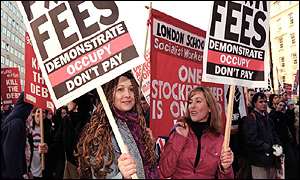
Who says protesting never changes things? In the wake of Wednesday's mass actions around the country (see here, here, here, here to name but a few) the LibDems are looking decidedly wobbly in the face of mass student anger. After spending a week or so denying they had broken any promises, Lorely Burt was shuffled out on Wednesday night to say she and a number of colleagues are considering abstaining on the vote to increase tuition fees. With an eye to the dreadful polling figures and tumbling donations, Little Dave has been hinting he and Uncle Vince might abstain to save their political bacon too.

Short of injecting cement into the LibDems' spine and have them pull out of the coalition, the next best result is making sure LibDems vote against these regressive plans for the university sector. Abstaining is not good enough. Opting out lets them salve what's left of their consciences while doing bugger all to stop fee increases from going ahead. Simply put, an abstaining MP will not close the gap between votes for and against. It's a bit like saying "good luck" to fellow workers as you cross their picket line.


As Will Straw rightly notes, the abstention of every single LibDem MP will still see the legislation pass through parliament - except perhaps in the extremely unlikely event of Tory backbenchers having an attack of the vapours and voting with Lee Scott against the increases. With him in the bag and going by Will's figures, just 16 LibDems are now required to rebel against the provisions of the Coalition agreement.

The one thing all sections of the student movement agree on is the need to keep the pressure up on LibDem MPs. They need to realise in no uncertain terms that anything less than a vote against is tacit support, and that going with their precious agreement means they are sunk beyond the lifetime of this parliament. Targeted actions against LibDems, the whole avalanche of petitions, letters, office occupations and protests are already focusing their minds. Sustaining it could yield the 16 MPs needed to save higher education provision as is.


Wednesday, 24 November 2010

Inside the SOAS Occupation

Ahead of today's day of action against the tuition fee rises, SOAS students have moved into occupation. Here's a video from inside courtesy of Counterfire:


In his comment on the call for another national protest on Socialist Unity, Mark Perryman of Philosophy Football argues occupations, walkouts, and demos are a "disastrous" strategy that will not stop the fees. Instead, echoing the NUS's line, he suggests students ought to be targeting LibDem marginals and particularly those that were won thanks to tactical vote-switiching in the election.

Right now that is a recipe for demobilisation and failure.

Firstly, the 'unofficial' student movement is a decentralised beast. While figures are beginning to emerge with a certain level of authority it is down to local groups at individual universities who are taking up the slack and organising actions. While
Clare Solomon did an excellent job of challenging the establishment narrative in the media, radicalised and radicalising students are more likely to follow the lead of the people they know at their institutions. This means at present a coherent strategy is very unlikely to be adopted by the movement (which, of course, does not preclude anyone from arguing for one).

Second, the movement has momentum. The leadership of the NUS would like nothing more for students to return to their classes and engage in letter writing campaigns to LibDem MPs. It's safe, it allows the leadership to manage expectations and control the opposition against fee rises, it enables them to
lead a quiet life and, most importantly, it doesn't jeopardise their future careers.

Thirdly, the wave of occupations and protests does not stop putting pressure on LibDem MPs. No one is arguing the NUS shouldn't lobby LibDems, rather what many in the student movement find objectionable is their desire to limit it to those kinds of "action". In fact, the more protests, the more occupations, the more marches
strengthen the hand of the movement vis a vis LibDems worrying about their parliamentary seats. You can bet some of them are more worried now after the massive angry demo on the 10th than they would be had students, as in previous years, resorted in the main to polite lobbying.

Mark falsely counterposes the two approaches and ends up backing the 'steady-as-she-goes' letter writing campaign of the NUS. He fails to realise that in politics the constitutional niceties of business as usual is always conditioned by what is happening outside the Westminster Village. By undertaking direct action in large numbers students are demonstrating to the powers that be how angry they are. LibDems who choose to ignore it do so at their peril.

Tuesday, 23 November 2010

The Tory Attack on Aspiration

spEak You're bRanes does a fine job of sending up the most absurd comments found on BBC's Have Your Say and the soon-to-be-switched-off Ceefax teletext service. But very occasionally a diamond shines out among the bigoted rough. This one, from yesterday's letters' page, skewers the Tories' latest plans on council housing:
So social housing tenants may be evicted if their finances are "deemed to have improved enough".

In other words if tenants get a job and come off benefits they'll stand to lose their home.

Not what I call an incentive. How lucky we are to have a government made up of thinkers of genius.

TW, North Yorks
Tories really do believe the root of benefit dependency is the "over-generosity" of the system. So even within their own terms this latest attack on the welfare state makes no sense. What's going on?

Sunday, 21 November 2010

Uncle Vince's Logic Gyrations

I sometimes feel sorry for Uncle Vince. On more than one occasion he's sat there on the front bench looking like his soul's been forced through an industrial strength cheese grater. But like the Tories, he and his fellow Orange Book'ers have learned that power always comes before principle. So way before Vince hits the Strictly dance floor for the Christmas special, he's had plenty of practice gyrating and contorting "in the national interest".

His
latest move however has all the elegance of a John Sergeant/Ann Widdecombe pairing. Vince says the Coalition agreement between the LibDems and Tories trump any commitments and promises made in the party's manifesto. In his own words:
We didn't break a promise. We made a commitment in our manifesto, we didn't win the election. We then entered into a coalition agreement, and it's the coalition agreement that is binding upon us and which I'm trying to honour.
Someone ought to tell Vince he's being a silly sausage. If I promise to my nearest and dearest to take her out for a drink, but then a couple of acquaintances ring up and invite me and not her to dinner, by accepting their invitation I break my earlier promise. Justifying my actions by saying I had a better offer would be like dousing her anger with paraffin. And so it is with tuition fees. Whichever way you slice it, a broken promise is a broken promise and Vince's attempt to make it look like anything else comes across as feeble and desperate.

As we now know, the LibDem leadership made another rod for their back by signing personal pledges to vote against tuition fees, even at the
very moment they were considering abandoning the pledge. By signing them, Uncle Vince, Little Dave and all the rest made personal guarantees to their electorates over and above the party position. This means the crisis of LibDem support is simultaneously a crisis of their standings as politicians.

No amount of political wash powder will shift this stubborn stain on their character in a hurry.

Saturday, 20 November 2010

Being Political Education Officer

As longtime readers will know since joining Labour last February I have become the Political Education Officer for Stoke Central CLP. Holders of the office can more or less do with it what they like and it's not unknown for members to simply take on the role so they can have a seat on the local party's executive. I'm not of that view.

One of the chief strengths of far left organisations is the emphasis they place on political education. The Socialist Party always had a political discussion as the chief item on its branch agenda. I don't know how they do things in the SWP these days, but when I attended Derby SWP meetings in the summer of '96 that was the same too. Yes, the quality of lead-offs and discussions varied greatly, but it offered an opportunity for members to learn about working class political history and helped round them out as activists who can effectively fight for their organisation's politics in a number of different settings.

I've taken this culture with me and tried importing it into the local party. My branch now has a political discussion in each meeting and it's gone down well with members. I'm told politics did used to take pride of place many years ago, but as membership dwindled and the party became ever more top heavy this tradition withered on the vine. I wouldn't want to jump to conclusions but now the local party is growing again and new faces are appearing at meetings, the readiness with which this has been adapted might be suggestive of a new mood and a new set of expectations members have.

Political discussion in the monthly CLP meeting is slightly different as this is usually a pure business meeting. A typical meeting has of late looked like this:

As Stoke is facing all-out elections for the council next year a lot of time has had to be put into the intricacies of candidate selection, the format of interviews, their progress and what have you. This has necessarily eaten up a lot of the agenda. We also hear from the MP, Tristram Hunt, who tells us about his activities over the last month in parliament and the constituency. The meeting receives other officers' reports, including my own. Members' presenting items are often heard and at times floor-led discussions can arise from questions to officers and the MP. And when all is done 90 minutes has passed and it's time to call it an evening.

My political education report, of which I give the briefest of brief verbal overviews, tends to follow a standard format. Rather than writing an essay stuffed full of my correct views on everything, I write a brief preamble summarising recent political developments and then produce a list of ten links referring to pieces that have caught my eye or feel are particularly pertinent. As the CLP has members from all wings of the party I try and ensure my selection covers every shade of Labour opinion. And of course, as a blogger (and because bloggers are producing the bulk of the freshest and most incisive political writing these days) I make sure they get the lion's share of the linkage.

As not all members are online I always append a complete piece. This month it was David Lammy's
defence of the liberal arts. The text of this month's report can be found below sans the full text from Left Foot Forward.

Producing a monthly report is just one aspect of the PEO role. When we've finally got Labour Students up and running at Staffs Uni I will assist those comrades in developing a programme of political education. Doubling up my responsibilities as Trade Union Liaison Officer I have received backing from two large union branches for a 'trade unionists in Labour' meeting in the city in new year, something which could become a semi-regular fixture. And there was the recent all-members meeting under the auspices of the city party on alternatives to the cuts (see 'Labour Councils and the Cuts', below). But the best political learning experiences come outside of programmes and meetings, and that's when you knock on doors or ring people up. The PEO role therefore is not just about education with a capital E. It is responsible for ensuring the experiences of every member becomes the property of the collective, of making sure that the party not only knows about the issues concerning real people (not medialand's constructions of 'real people'), but responds to them too.

The Political Education Officer's role is a crucial one. If Labour is to be rebuilt as the party of a renewed labour movement PEOs in every CLP have a part to play.


Political Education Officer's Report 19.11.10
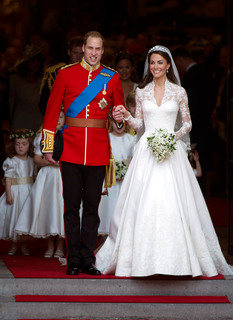
If a week is a long time in politics, then a month must be an eternity. So many things have happened since the CLP last met that it would be impossible to list them all. Not that that will stop me from having a go: we’ve had the suspension of Phil Woolas from the party for defaming his LibDem opponent during the election (though since entering the coalition, our yellow friends have done a pretty good job of that themselves). George Osborne announced his package of cuts, a package tantamount to unleashing class war on millions of workers, benefit claimants, and service users. Tuition fees are set to rise to £9,000/year, which will result in tens of thousands being put off attending university. Meanwhile, the fantastic demonstration in London last week showed students are not taking this attack on aspiration lying down. Ireland and Portugal are on the brink of the economic abyss – again. One man was convicted and fined for posting a joke to his Twitter feed, and lastly a young couple from wealthy backgrounds announced their engagement to a hysterical reception from the press.

In this report and from now on I will be featuring pieces produced from the various think tanks, groups, and policy platforms that exist in the party, alongside the usual culled from bloggers and columnists. From Progress to Compass, from the Fabians to the Labour Representation Committee, each of these prove Labour remains a broad church of contending and clashing ideas. They all play a role in keeping the party's political life vibrant and help shape policy, set agendas, inspire members to become more involved, and (in some cases) get comrades off their bums and onto the phones and into the streets. So, without further ado …

All’s Fair by Tristram Hunt

Cutting It: The ‘Big Society’ and the New Austerity by Anna Coote

So Will Barclays Carry Out Its Threat to Leave UK? (Or the “Exodus” that Never Quite Happens) by Anonymous/Fabian Society

Housing Benefit Reforms Will Cause “Immense Human Suffering” by John McDonnell

Sinners and Sanctions by Eugene Grant

The Power of the Broken Pane by Laurie Penny

Will the Euro Break Up? by Arthur Bough

Labour Councils and the Cuts by Phil BC

Cuts? Women Will Take Them on the Chin by Fionnuala Murphy

A Short Guide to the Financial Crisis by The Flying Rodent

Wednesday, 17 November 2010

More Crap Writing

Only time for a quick foray into Philistines' Corner tonight.

I've
done this one before but it really is shameful when self-described Marxists try and play the inscrutability game. How can socialists who've not had the dubious benefit of "professional" philosophical training access important theoretical issues when writers insist on applying the technical vocabulary with a trowel? The below comes from the English translation of Sebastiano Timpanaro's On Materialism and was published when Althusser-speak was all the rage in academic Marxist circles, so there's your context.

Anyway:
Generally, its point of departure are real and serious problems in the epistemology of the sciences, related to the need for a re-examination of the very foundations of scientific knowledge. But this epistemological crisis is quickly used in order to reassert an absolute, mythological creativity and freedom belonging to man, and in order to be able to disregard both the real conditioning to which man is subject and the way to overcome it. It then becomes possible to proclaim a completely rhetorical and mystifying subjectivism-voluntarism (p.123).
According to this obituary by Perry Anderson our Seb was "one of the purest and most original minds of the second half of the century." Pity more than a few will have been put off by his impenetrable prose.

Tuesday, 16 November 2010

Blessed Be the Royal Couple

I've never had any time for the Royals. Even when I was a teenage Tory I had zero respect for Queen Elizabeth II and her family of Britain's wealthiest benefit claimants. So strong was this dislike for the pomp and pomposity of the monarchy that even at my most nationalist I refused point blank to sing the national anthem. There was something archaic and faintly ridiculous about them that deeply went against the grain of whatever I was thinking - and this was well before my introduction to the socialist critique of constitutional monarchies.

I haven't mellowed with age either. Just thinking about Royal weddings, "Squidgygate", the fire at Windsor Castle, the North Korean-style official mourning for Diana Windsor, the jubilee, the funeral of the ludicrously titled 'Her Majesty Queen Elizabeth the Queen Mother', and all the petty palace intrigues the papers trade in is almost enough to bring me out in a rash. The fawning of the media, particularly the BBC's royal correspondents, is guaranteed to put me in a paroxysm of fury.

So no. I will not be falling over myself to watch the heir to one of Britain's wealthiest families wed the daughter of millionaires at the taxpayers' expense. In fact I confidently predict I'll be doing everything in my power to avoid all coverage. Perhaps I'll join the protest against this waste of money down in London. Or maybe I'll voice my displeasure by penning some Marxist screed or another on why Britain is still lumbered with such an absurd constitutional set up.

Until that time, the best comment on the engagement of William Windsor and Kate Middleton by far comes courtesy of the
Caledonian Mercury. This is their front page:
Couple Who Met at University to Marry
By James Browne

Two people who went to university together are to get married, it has emerged.

William Windsor (or possibly Wales or possibly Saxe-Coburg-Gotha) and Kate Middleton, both 28, met at St Andrews University eight years ago.

Mr Windsor is a Flight Lieutenant in the RAF – and also a prince.

Wall-to-wall, dewy-eyed hysterical coverage can be found in every other media outlet.
If only the rest of the media followed suit.

Monday, 15 November 2010

Merit Not Money, Debt Isn't Funny

Back in 1997 I had few illusions when it came to Tony Blair and New Labour, but that didn't stop me from sitting up with my housemates late into the night cheering as Tory seat after Tory seat tumbled to the red tide sweeping the land. To paraphrase Blair's words a new day may have broken, but politically speaking it looked little different to the neoliberal yesterdays of the previous 18 years. Sure, the New Life for Britain pledge card that committed New Labour to cutting class sizes, cutting NHS waiting lists, cutting the number of under 25s on the dole were the kind of cuts lefties would like to have seen more of, but the clear distancing from anything redolent of traditional social democratic policies, let alone socialist ones, said all I needed to know about New Labour's trajectory over the coming years. Nevertheless Blair's key announcement on higher education that summer came as a bombshell.

A year prior to the election, the Tories appointed a committee of the great and the good to look into the funding of higher education. The
Dearing Report (as it became known) made its recommendations in July, arguing the status quo of free education backed by a maintenance grant for the poorest and the availability of low-interest student loans be replaced by the abolition of the grant, the introduction of up front £1,000/year fees and targeted support for the least well-off. Unlike today, the report didn't try and pretend its recommendations were "progressive", and the government adopted them lock, stock and barrel.

At the time I had managed to scrimp and save enough so that I didn't have to work over the summer. I spent my holidays reading a ton of books a sozzled lefty lecturer had lent me, working on my undergraduate dissertation, and knocking about with
Workers' Power. Coincidentally I was reading around the US student movement of the 60s and 70s when the government announced its intention to abolish free higher education. The changes wouldn't have effected me or those who were in the year below, but I was outraged. I could not believe that a Labour government, even if it was the most right wing and cravenly pro-business outfit the labour movement had ever produced, was going to do in one fell swoop what the Tories had been working towards piecemeal over the Thatcher and Major years. But not only was I angry, I earnestly believed others would be too. My girlfriend was angry. A handful of my mates who had a passing acquaintance with politics were narked. And even my over-the-top Tory mate was pissed off. I believed university would be a seething mass of discontent on my return and students would once again be party to scenes of occupations, demonstrations and militancy. I was hoping for a different kind of 60s revival.

If only.

The one thing more shocking than the government's plans was the near indifference that greeted it. There was nothing in the student rag, no sense of anger or injustice among my wider circles of friends and acquaintances, and even some quiet support for the proposals (after all,
they didn't have to pay). Eventually we managed to corner our union's president and he came across as clueless and seemingly unaware that he and the sabbatical team should be doing something about it. It wasn't entirely his fault, the noises coming from the NUS itself were already tantamount to capitulation. Then president and Labour Students' place man Doug Trainer said they were happy to see the grant go but were concerned about the introduction of fees. With a leadership who flies the white flag at half mast before a single shot had been fired what hope did we ever have of beating off the government's attack?

Two sabs were eventually given the responsibility to organise anti-tuition fees stuff. A small campaign group consisting of my house and a couple of other union hacks met regularly with them to plan local actions. The first was a lobby of then Stoke Central MP Mark Fisher, who was a junior culture minister at the time. I went out with Brother A of
Stoke Socialist Party and a friend I dragged along to leaflet one of the local FE colleges to get a good turn out for Mark's surgery. In all about a dozen turned up to lobby him. Three of us went in and sat on a hard bench for about half an hour before being informed that Mark refused to see us as he'll make a brief address outside. We mingled on the Town Hall steps and when he finally emerged he refused to answer questions beyond a statement committing him to supporting the government's position. A month or so later the protest group managed to get him to agree to a debate in one of the union's bars. But that wasn't to be. He came to take questions all right, but none were from the floor: he insisted on their all being pre-screened! It was a truly shameful performance as he stuck to the script and trotted out the same arguments we're hearing today to justify the Tory/LibDem plans for higher education. (NB, after Mark was dropped from the ministerial payroll he once again found a left wing conscience and came out against fees, among other things).

Meanwhile we were working towards the 1st November day of action against fees. For reasons never fully explained the NUS leadership had decided to hold separate demonstrations in 14 different cities instead of concentrating our forces and maximising our impact down in London. For our part we designed branded t-shirts and badges, coined slogans (my housemate Nikki and I came up with 'Merit Not Money, Debt Isn't Funny') for campaign material, and canvassed halls of residence to get bums on the seats of the two coaches we were taking down to Birmingham. Of all our activities this was the most depressing. Speaking to dozens of first years, who were facing a halving of the grant the following year and then its abolition, it was very difficult to find many takers for tickets. We had to resort to selling them off the back of a free night in the union in many cases. Other friends of ours, who didn't have a political bone in their bodies, had to be encouraged onto the demo in the name of the amorphous 'student experience' ("how can you go to uni and not be involved in a protest?")

The demo itself was probably the most dispiriting I've ever been on, and I say that as someone who's attended a march of 17 people since. The Brum demo attracted around 4,000 - 6,000 participants and we set off on a tour that seemingly took in all the second city's backstreets. It was as if the NUS went cap in hand to West Midlands plod and begged to be allowed to march the least disruptive route possible. At the end I don't recall any speeches, just an opportunity to do some shopping and have a post-demo pint. Politics were supplied by the ubiquitous SWSS signs and the odd paper seller - I can't even remember if the NUS bothered to put out its own leaflets and material beyond its own 'say no to tuition fees' placards.

After that the campaign more or less fizzled out. The message came from on high that the NUS were busily lobbying their Lordships. They believed some constitutional shenanigans in the Lords would delay it and might, on the off-chance, encourage the government to have a rethink. It was a
forlorn hope. The movement revived again at the beginning of the 1998 semester, resulting in a few handfuls of students refusing to pay and some occupations, but by then the NUS had given up.

This was the first time I'd been involved in a "proper" campaign and found it completely dispiriting - it was a few years before I took up activity again, that time as a shop steward with the T&G. I knew from all the Trot and anarchist material I'd read in the years previously that a leadership body like the NUS tops were only good for leading people up the garden path, but it's something else to go through that experience yourself. It seemed to me they were not interested in leading a decent campaign and were more interested in one-on-one lobbying with sympathetic MPs and peers over coffee and croissants. Failing to call a national demo and scattering your limited forces across 14 different sites on a day of action has to take pride of place as the most serious tactical error, but if you subscribe to the view they didn't want to give the new government a hard time this all makes perfect sense.

But a decent leadership can only go so far. Contrary to what some on the left still think, the crisis of the moment, then and now,
cannot be reduced to the question of working class leadership. Blair announced his plans to scrap free higher education right at the start of New Labour's long honeymoon. There was no one else at that time the student movement could link up with to prosecute its agenda. Combine this with the political weakness of the labour movement (of which New Labour was a symptom and later a contributing factor), the common sense acceptance of neoliberal consumer capitalism, the disappearance of socialist ideas from the political mainstream, and the thousand and one other processes contributing to a period of working class political quietude, it was no wonder only a minority of students were exercised by the introduction of fees (though, of course, I didn't realise that at the time). So Matt Bolton, writing on Liberal Conspiracy about the struggle against top-up fees in 2002-3 is too hard on himself and his cohort of students ("My generation was mollycoddled, complacent and, ultimately, complicit"). You can't short-circuit popular consciousness if neither the will, the anger, the belief, the organisation, and the opportunities to beat off a government attack aren't there.

But Matt is also spot on. There
is something different about today's student movement that the campaigns against fees, top-up fees, and the lifting of the cap lacked. And unlike previously, students now will find ready allies among other workers and sectors of society facing the thin end of a very large cuts wedge the Tories and LibDems are determined to batter us with. As the Tories are fond of saying, we really are all in it together, but not in the sense they understand it.

(Also at
Socialist Unity)

Sunday, 14 November 2010

Protest and Political Privilege

"Anarchists, Trots and Idiots" were responsible for the violence on Wednesday, according to Caroline Flint on Question Time this week. She wasn't there, of course: she just knew. Someone ought to get James Randi on the phone because Luke Akehurst is exhibiting a similar talent with second sight. Luke's 'The Old Cancer at the Heart of the Student Riot' on Labour Uncut stands as the most miserably wretched commentary on the 10.11.10 demonstration to have been produced outside Tory circles (and even then he gives them a run for their money).

After whinging about how the protest was supposedly spoiled by a
tiny minority (in reality, the occupation of Millbank was a mass action, involving anywhere between 2,000 - 5,000 people), we are informed that this was inspired by a most sinister enemy within. Luke writes of the protesters, "I’m not convinced they were all even students – I’m sure there were a good few rent-a-Trots and anarchists there who just came along for the scrap and wouldn’t have cared what the issue was ... Probably the same grizzled veterans of the struggle for dictatorship of the proletariat planned this little jape, updating their efforts only to employ social media as an organising tool." And Luke's evidence? Um ... he doesn't actually have any. There were no plans for insurrection organised via Facebook, no direct action organised on Twitter. Going by the accounts of people who were really there - including actual anarchists - it sounds as if the invasion of Millbank caught everyone on the hop. Police, NUS stewards, Trots, anarchists, all were left responding to the situation. If Luke has evidence to the contrary gleaned from afar via astral projection, he should present it.

He won't of course. Luke
has form when it comes to this sort of thing, and just like witch-hunters of old suspicion is evidence enough. But Luke's pathetic calls to hammer the hard left, which hasn't been in the rudest of health for many a year anyway, show he's not only completely out of touch, but also is voicing the commonsense assumptions of a rigid and dogmatic form of thinking that is shared between Tories, LibDems and plenty in the Labour party: the idea of politics as a minority pursuit. In their world, only people like them are able to understand the problems society faces and have the political education necessary to make "tough" decisions. Differing opinions are okay if, and only if, they're relevant to and couched in the language of their managerial politics. The "activists" and the "grassroots" have some funny ideas, but as long as they knock on doors, stuff envelopes, do as they're told and try not to win positions in the party for themselves and their opinions, they're tolerated as a regrettable necessity.

As for the broad mass of people they're little more than spectators. They don't have opinions and interests of their own. They're a herd to be managed and manipulated. So if large numbers spontaneously begin doing things off the official script - such as protesting and occupying it
must be the troublemakers of the far left who are to blame. For our political managers behind every outbreak of direct action or mass anger are the machinations of a shadowy central committee or the whispering of balaclava-clad anarchists. That people might be genuinely and violently pissed off is something that cannot be entertained: it challenges their elitist view of politics and the chummy constitutional carve-up on which their positions of privilege depend. Politics is their property, and they don't like being elbowed aside by manifestations of people power one bit.

What Luke and his ilk cannot see is how adrift they are from the people they claim to represent. They exist in a bubble governed by the rules of politics-as-usual and the media. It believes it condenses the defuse concerns of atomised Britons but in fact it only reflects back what they
think these concerns are. And unsurprisingly these tend to reinforce what passes for their commonsense. Chris Dillow recently wrote that Nick Clegg can no more see his privilege than a fish can see that water is wet. He could almost have been writing about the inhabitants of the Westminster village.

Next time worthies pronounce on protest movements, offer advice and condemnation, or try to separate out particular minorities from the mass; remember that not only are they voicing their own interests and prejudices, they do so from a position of contemptuous ignorance too.

Saturday, 13 November 2010

Clare Tells It Like It Is

Many congratulations to Clare Solomon of ULU and Counterfire for standing firm in the face of media pressure and remaining four square behind the student occupation of Millbank on Wednesday. While NUS president Aaron Porter exposed himself as being completely out of his depth, Clare's voice has been one of the few in the media that has dared to contest the official version of events and has quite rightly argued the violence the Tory/LibDem attack on higher education entails is an order of magnitude above a few broken windows.

In the recording below, which was broadcast on Thursday, Clare debates Tory MP Roger Gale on the Jeremy Vine Show. Gale is clearly rattled by Clare's arguments and at times sounds as though he can't believe a member of the
hoi polloi has the temerity to question what passes in Tory circles for received political wisdom.