It was inevitable cracks would start showing in the coalition as the Autumn Spending Review loomed ever more menacingly on the horizon, though some might be surprised the first significant public difference of opinion is between the Tories instead of their yellow bellied LibDem satraps. But given the nature of the first fracture I suppose it was inevitable.
One of the Tories' strongest suits has been their unqualified support for British militarism. Whereas Labour's record has never been one of principled anti-imperialist internationalism given the nature of the party and its support base, the influence of pacifistic, unilateralist and anti-militarist positions have ebbed and flowed and have tended to be (rightly or wrongly) associated with Labour's "ideological family".
This is not the case with the Tories. Where there has been episodic opposition to particular military adventures, such as Iraq, it has tended to be qualified in terms of pragmatic considerations rather than overarching principles. This is after all the party who last exercised an "independent" foreign policy by taking Britain to war over the Falklands, are most associated with Britain's nuclear deterrent, aggressively prosecuted the Cold War to its conclusion, and enthusiastically joined in America's assault on Iraq in the 1991 Gulf War. And that's just the recent history.
So cuts to the military budget was always going to be a hot potato for the Tory party. This is the context for the leak of defence minister Liam Fox's letter to David Cameron. In the piece, Fox opines that big cuts could threaten front line morale and hit the Tories themselves: "I am concerned that we do not have a narrative that we can communicate clearly", he moans.
He is right to be worried. Since Blair's invasion of Iraq the Tories have opportunistically jumped on every logistical problem for political advantage. Not enough flak jackets to go around? A shortage of helicopters? Inadequate armour on APCs? No matter the issue, the Tories were over them like a rash trying to tap into the latent but widespread support for "Our Boys". So to be seen dismembering the armed forces is very dangerous for the Tories short and medium term electoral prospects.
But the issues Fox highlights are potentially more catastrophic than a set back at the polls. The Tories' obsession with the deficit was bound to cause ructions within capital itself. The financiers and their lackeys in the City were never going to be too concerned. Despite Dave's Big Society rhetoric it remains responsibility-free business as usual. On the other hand, for manufacturing and construction capital the Coalition's subordination of economic policy to deficit reduction was always going to drive parts of this sector, especially that dependent directly or indirectly on public sector spending, into some form of opposition. These cuts however are different. Not only do they threaten to upset British arms companies grown fat on decades of military Keynesianism, but shake up one of the key organic props of Toryism itself: the officers' establishment.
This is akin to New Labour's ill-thought attacks on its core support. By slashing spending here not only are the numbers of officers under threat but so are the cosy careers many can assume upon retirement in the arms industry. Tory MPs from a military background will not be pleased and many beyond their numbers will be subject to the high society pressure of esteemed brigadiers and colonels. While by itself it won't be enough to split the party, it could mobilise a back bench rebellion of sufficient magnitude to scupper Osborne's military spending plans and with it the whole edifice of the cuts programme. Using his own rhetoric against him, will party interest come before national interest?
Not many on the left will lose sleep over this. Despite claiming to be opposed to all cuts I can't see many Trotskyists marching for Trident or demanding the aircraft carrier programme goes ahead. And yes, one can sit back and enjoy the schadenfreude of the Tories fragmenting at the rate of their beloved cluster bombs. But we need to make clear our own positions on what is to be done about "defence": calling for the army's abolition and a workers' militia just won't cut it if we want to exploit the Tories' divisions to the full, let alone effectively tackle the persistent roots of British militarism.
Update: Duncan recommends Eric Joyce's shadow cabinet pitch as a means of thinking about Labour and the labour movement's relationship to "defence".
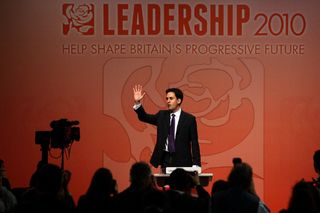
Someone has been reading Lord Ashcroft's recent report. Given the nature of stupid red-baiting criticisms leveled at Ed Miliband since his victory in the Labour leadership contest, today's speech was never going to include the nationalisation of the top 100 monopolies. It struck a broadly social democratic tone while simultaneously appealing to the Middle England that obsesses the media and the triangulators alike. It was replete with buzzwords - new generation, good society, fairness, opposing new thinking to old thinking - and delivered with a conviction (whatever one may think of its content) that Blair's speeches often lacked. No, he didn't walk around the stage, and no he didn't speak without notes, but who really cares?
The key talking points were:
* The dogmatism of New Labour and its transformation from a "radical" and "establishment-challenging" force into a remote and out of touch establishment itself.
* The need to reduce the deficit with Alistair Darling's four year plan as a starting point. Neither was he necessarily opposed to every cut, accepted that certain things cut by Cameron would not be reinstated by a future Labour government, and was concerned with rebuilding Labour's "fiscal responsibility". He also attacked the Tories' lack of a plan for growth.
* Labour must understand why many voters are exercised by immigration. But instead of using it as a cue to start bashing them, he argued that employers should not be able to play different nationalities off on one another to undercut wages (when was the last time any mainstream politician fielded such an argument?)
* Unsurprisingly, Ed Miliband distinguished between responsible trade unionism for ensuring "decency" and "fairness" at work and the more militant kind. But also argued for a "disciplined" campaign against the coalition, one which does not see "irresponsible strike action" against the cuts for fear of alienating public support.
* While stressing the unions' responsibility, he also said business and the rich had their own. He reiterated his commitment to the living wage and to incentivise the tax system to encourage it.
* The ritual (coded) pledge to get tough on benefit claimants but again, using careful language to avoid demonising welfare recipients and speaking of a "benefits trap".
* Reinforced his commitment to civil liberties, wanting to reclaim this ground from the Tories and LibDems.
* A "values-based" foreign policy.
* The need to make politics more responsive via vote reform, an elected Lords, more local democracy, and a vague demand politicians have to speak to the issues and not focus group talking points.
Obviously this will be filled out with detail over the coming weeks. Who he appoints shadow chancellor will demonstrate the line of march on the deficit issue: his brother if he wishes to stick fairly closely to the Darling plan, Ed Balls/Yvette Cooper if he wants to assume a more combative approach (given his comments about strike action and "responsibility", he's more likely to go with the former, with qualifications). And of course there's the Autumn Spending Review: he has previously pledged to have ready an alternative to the coalition's demented slash and burn policies. But will it be that much of one?
It wasn't radical but it was something of a break with Blair/Brownism. And it did what it set out to do, stake out a new centre ground of mainstream politics and pitch a tent there. As he said himself, "Red Ed? Come off it ..."
This short report comes from Campaign for a New Workers' Party secretary Pete McLaren via the Independent Socialist List. It seems after years of prevarication, sectarian squabbles, and a general passing up of opportunities, the far left could finally be getting its act together. And in typical fashion, it happens to do so in the least auspicious of circumstances to found a party to Labour's left in a generation. Let's just say if all the Trade Unionist and Socialist Coalition can boast about is a £20k donation from the Rail, Maritime and Transport union and a national vote of 15,580 then prospects are grim to non-existent. As always this blog will cover interesting developments on the far left, even if they're on the road to nowhere.
Comrades
A very brief report from today's CNWP Open Steering Committee. A full report will be available in the next few days.
There were 22 present, including members of the Socialist Party, Socialist Alliance, Communist Party of Great Britain and a number of independents
Hannah Sell's political introduction laid out the tone for the meeting - anti cuts campaigns were growing, and a number would want to stand candidates in next year's local elections. TUSC welcomed that and would endorse any such candidates who wanted to stand under its umbrella. There would be a Conference for all such TUSC anti cuts candidates on January 15th. She accepted TUSC was not the finished article, let alone a new Party, hence the need to continue promoting the CNWP. However, she argued that TUSC had laid down a marker with its TU support, the RMT having donated over £20,000 to general election candidates which was a first in terms of a national TU promoting non Labour candidates. She accepted that the election of Milliband would galvanise the TU leadership and the labour party, but not the rank and file - and Labour Councils were already pushing cuts through.
Dave Nellist, in the chair, added that the next TUSC Steering Committee on October 13th was discussing how to broaden the structure of TUSC, including how to involve independent socialists which Nick Wrack was delivering a Paper upon. There followed a wide ranging discussion on the possibilities arising out of TUSC, its limitations, how we should learn from the anti poll tax campaign, the role and potential to grow of the Labour Party under Ed Milliband, the serious effects the cuts would have on benefit claimants as well as public services.
It was agreed that the next CNWP Conference, initially scheduled for March 2011, might have to be delayed until June to avoid any clash with a national anti cuts demonstration which the TUC was at present suggesting should be in March. It was noted that there would almost certainly be anti cuts demos before then, locally and nationally, with the Fire Brigades' Union, RMT and Public and Commercial Services union giving serious considersation to a national demonstration on Sat Oct 23, three days after the Public Services Review, itself a day earmarked for local and national demonstrations.
After a break, the SP and SA resolutions were debated at length, most of the discussion centering around the SA resolution, but not in a particularly negative way. Both were passed without any votes against (one abstention to the SP resolution)
As a result, the CNWP is now committed, amongst other things, to establish the prototype of a new Left Party before the end of 2011 at the latest. This process will include a specific session at the CNWP 2011 conference which will consider an outline draft constitution for consideration by a future founding conference which includes:
* The long term aims of the Party
* A federal structure recognizing the rights of both affiliating organisations and individuals,
* A mechanism to ensure that no single affiliated organisation can impose its views on the Party as a whole
* Clear democratic structures to ensure that any internal Party body is representative of the Party as a whole,
* Recognition that affiliated organisations remain free to campaign externally to the Party
* Recognition that members are entitled to form open political factions able to campaign both internally within and externally to the Party.
So at least there will now be discussion about how a new Left Party should look - that surely is a start, and could be the blueprint, dare I say, for the creation of such a Party in the forseeable future. But I don't think I will hold my breath!
Comrades should join the CNWP to help us in any discussions that do take place
In unity
Pete
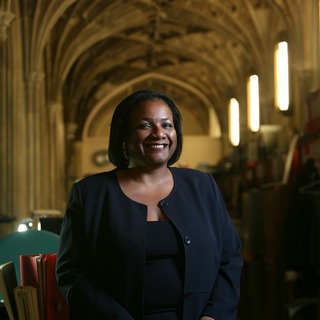
Across the electoral college Diane Abbott won 35,259 individual first preferences (10.42% of total votes cast). For someone who ran a lacklustre campaign and wasn't taken all that seriously by the press, that vote isn't too bad. It is a better tally than the one mustered by Andy Burnham (28,772 votes) and Ed Balls (34,489 votes). But because of the unequal weightings between MPs, party members, and affiliate members, Diane's third place in terms of votes translates into just 7.42% of the college, while Burnham and Balls were on 8.68% and 11.72% respectively (see here for a solution to the present electoral college). Does this tell us much about the strength of the Labour left?
Not really. In the Labour members' section Diane polled just 9,314 votes (7.3%) and came in last place. Only the individual trade unionists boosted her overall total above Burnham and Balls. It might prove tempting to identify this with the 'Labour left vote' and extrapolate a number of conclusions from this - such as its weight in the party, the limited horizons of its prospects and, who knows? Maybe that Labour is dead and a new workers' party is needed? But some caution is needed.
No one is denying the Labour left is weak. But it is wider than the confines of the Labour Representation Committee and sundry Marxists with an internet connection knocking about the party. These days the Labour left is not so much a force and more a constituency: strictly speaking it is less than the sum of its parts. If the Trotskyist shibboleth of boiling working class politics down to a crisis of leadership has any relevance, this is the one place it will find most purchase.
Without any real cohesion the manner of Diane's entry into the contest alienated a lot on the hard left who were banging the drum for John McDonnell. And as the campaign progressed hers failed to become a point around which left-wingers could rally. Another side effect of this is without an acknowledged and authoritative lead coming from anywhere, a lot of the left went all over the place. For me and a lot of comrades Diane became the choice by default. For others, Ed Balls' campaign conversion to Keynesianism was a good enough reason to command left wing support. And more than a few elected to give Ed Miliband a punt as a means of keeping David out. This poor state of affairs is indicative of the distance to be travelled before the influence of the Labour left matches the numbers of its self-identifying adherents.
Does this support the arguments of those comrades who remain advocates of a new party of the left? Despite being persistently reticent about where an alternative to Labour could come from, you might reasonably assume its impulse to come from within the labour movement (further thoughts here). But as the results for Diane in the trade union section demonstrate, if there was little appetite for the left wing Labour leadership contestant among the more conscious layers of the workers' movement, what scope for the more 'advanced' demand of a new vehicle of working class political representation?
There is another issue too. Ed Miliband's victory graphically demonstrates that Labour remains open to the influence of the organised working class. That the more social democratic of the two front runners managed to win a plurality of trade unionists' votes counts for something, a reality I'm sure none are aware of more than Ed Miliband himself. So while he will inevitably tack to the right, the conditions of his victory has placed something of a leash on him. It is something he cannot get away with too often or for too long. And all because of the organic links Labour has with the labour movement. Having far from withered away, the links are there and should be deepened. Socialists who ignore or deny them are making a lot of unnecessary and ultimately frustrating work for themselves.
And so "Red" Ed Miliband pipped David Miliband to the post thanks to the affiliated votes of rank and file trade unionists. Predictably some Blairites have been crowing about this while mendaciously ignoring the affront to democracy of the MPs and MEPs section, where one of their votes counts for that of 600 members. The Tories and LibDems immediately jumped on it too, some of them making themselves look completely stupid in the process. Strangely, some of the loudest mouths attacking the trade union section are enthusiasts of open primaries. Well, what is more open than a primary of 250,000 people?
Andy has a good piece defending the trade union vote.
Contrary to the worst nightmares of the triangulators, we are highly unlikely to see the return of social democracy circa 1983. During the campaign he did make some very soft noises in this direction. There was the pledge to extend the 50% tax rate. The junking of New Labour's civil illiberalism. The commitment to review industrial relations legislation. A coherent industrial strategy. A more 'independent' foreign policy. A refusal to demonise immigrants. The need to reconnect with core working and middle class support. Hardly the stuff of a latter day transitional programme, but a clear break with New Labour into the sunlit uplands of (right wing) Labourism. And neither are they the electoral albatross some in the party and the press like to pretend.
But there is a gap in his politics that will ultimately determine the outcome of his political career and whether Labour are able to win the next general election. And that's his attitude to the cuts.
His piece in the Telegraph this morning flags up a certain ambiguity on this issue. He writes:
But I will do that in a way that doesn’t fall into the trap of opportunism. On the deficit, we will not oppose every cut. After years of expansion that transformed our public services from the days of leaky roofs and portable cabin classrooms, our public services will now need to learn to do more with less.
This is followed by a list of qualifications and excuses that amount to 'too deep, too soon'. This sounds more like a slightly fluffier version of Alastair Darling's commitment to arbitrarily cut the deficit in half in four years (this was also the programme David Miliband was wedded to). But then again the way the language is couched could leave the door open for Ed Balls' alternative, which doesn't talk about cuts (nor, for that matter, rules them out), but at least has the virtue of offering a powerful challenge to the coalition's cuts consensus. Unfortunately, rumours abound that his aggrieved brother's in the frame for the shadow chancellor's job - a move I believe will cost Labour dearly down the line. So on this crucial issue, the indicators point to an uncomfortable fudge that concedes way too much to the Tories.
Then there's Ed Miliband's attitude to workers' struggles and labour disputes. He might be committed to looking at the law in this area (without offering concrete proprosals), but on further commitments he's proving more slippery than an eel dipped in KY jelly. On this I agree with what Louise says, his Delphic language about genuine grievances and "justified strikes" means we won't be seeing Ed on a picket line any time soon.
Overall, Ed Miliband's election represents less a move to the left and more an awkward shuffle. But that in itself opens more political opportunities for socialist ideas than would have been the case under the alternative. However, it means those of us who want the Labour party to become a properly effective weapon in the battle against the Tories still have a job of work ahead of us.
Many thanks to Brother G for drawing my attention to this. I'm no slacker when it comes to reading impenetrable philosophy. For instance, I've been able to read Louis Althusser *and* understand the points he's been arguing (though I do have memories of spending about an hour trying to understand two particularly dense pages in his Reading Capital). But everyone's favourite Marxist wannabe submariner has nothing on the bizarre works of Gilles Deleuze and Felix Guattari. I know these guys are important fellas in the history of 20th century philosophy. Both of their works ran with a number of post-structuralist themes around decentering the subject, the problem of how we 'do' thought, how things constantly shift and metamorphose into other things, deterritorialisation/reterritorialisation, and a host of other issues. I've had no problem thinking through these sorts of issues in graduate essays past with recourse to good, solid materialist dialectics. But, as Martin Heidegger once noted, legibility is suicide for philosophy. And so it is for our deceased pomo friends. With that in mind, what the hell are we supposed to make of this from their A Thousand Plateaus?'For in the end the anus also expresses an intensity, in this case the approach to zero of a distance that cannot be decomposed without its elements changing in nature. A field of anuses, just like a pack of wolves. Does not the child, on the periphery, hold onto the wolves by his anus? The jaw descends to the anus. Hold onto those wolves by your jaw and your anus. The jaw is not a wolf jaw, it's not that simple; jaw and wolf form a multiplicity that is transformed into eye and wolf, anus and wolf, as a function of other distances, at other speeds, with other multiplicities between thresholds.' (p.36)
Answers preferably not on a 700 page tome. And please, no jokes about this blog becoming arse.
My heart bleeds for Chris Moyles. It really does. In a rant against the BBC on his Radio 1 breakfast show yesterday morning, he attacked his bosses for not paying him since July. Among many other things, he said "I am so angry that they've put me in this position where now I have to choose whether or not I go to work."
Being paid your wage regularly and on time is still, incredibly, something that has to be struggled over in *this country*, never mind elsewhere. So despite the obscene amount of money Moyles commands (or rather, doesn't), trade unionists and socialists would instinctively sympathise with his predicament. But then again there might be a certain reluctance to support him when we recall this from May 2005:
The BBC's flagship Today radio programme fell victim to a 24-hour strike by thousands of journalists and technicians today.
A 24-hour strike by BBC workers brought disruption to TV and radio schedules today.
The BBC's flagship Today radio programme was the most high-profile victim of the industrial action.
Picket lines have been mounted outside Bush House in central London, TV Centre in White City, and Broadcasting House.
Thousands of journalists and technicians are taking part in the stoppage in protest at plans to axe BBC 4,000 jobs.
As well as Radio 4's Today programme, BBC1's Breakfast, BBC News 24 and BBC World have also been affected by the strike.
... Some stars of BBC radio, such as Radio 1 Breakfast Show presenter Chris Moyles and Radio 2's Terry Wogan, did break the picket line and went to work as normal.
Oh dear.
Perhaps if Moyles had backed the union then they would be backing him now. There's a lesson there for anyone prepared to do the indecent thing and scab on a strike.

This is how I voted. I have doled out all five of my preferences, because that's the way I fly.
No prizes for guessing first preference. I gave it to Diane Abbott. I haven't been impressed with her campaign or pleased with the manner of her nomination. From the stand point of socialists politics John McDonnell's candidacy would have made for a much more interesting and lively contest. There is talk of Ed Balls challenging the cuts consensus (more on that shortly), but McDonnell would have fronted a much more comprehensive and wide-ranging critique (which is precisely *why* he didn't secure enough nominations). But we are where we are. Diane Abbott is the only candidate in favour of scrapping trident, opposed the Iraq and Afghan wars in deeds as well as words, does not think the public sector and the working class should pay for the deficit, has a parliamentary record of opposing New Labour's authoritarianism, refuses to scapegoat immigrants, and takes seriously the need to restore party democracy. I know Diane won't win, and she can't even count on united left backing, but a good vote sends a clear message. It tells the eventual victor that they can afford to ignore the left at their peril. And it shows the wider electorate who've been alienated from Labour by the Blair/Brown axis that a significant section of the party is unchanged and unashamed of its relationship to the working class. That's why I voted Abbott, and would recommend others to do so too.
Barring an unforeseen upset, one of the Milibands are going to win. With this in mind my second preference went to "Red" Ed. I won't lie. When Ed Miliband visited Stoke he performed much better than I expected. Politically he's hardly Marx or Engels, let alone Tony Benn, but he does appear to have drawn many of the right conclusions about why we lost the 2010 general election. He knows New Labour's blind enthusiasm for repressive legislation cost the party dearly among its core middle class support as much as its default setting for useless and regressive neoliberal policies drove a section of our working class vote away. Significantly, along with Abbott, he has refused to bash immigrants. He knows they are a lightning rod for all kinds of discontent, not least unemployment and lack of housing. He is committed to rebuilding the trade union movement and making sure they're listened too (though MiliE has been equivocal over his support for strikes against the cuts). And above all, he's more of a social democratic figure than the others bar Abbott and is not wedded to the disastrous "worse than Thatcher" cuts Alastair Darling promised before the election. If Ed Miliband wins, I think there will be more room for socialists to make their influence in the Labour party felt and more of a chance of Labour getting back into power than under any of the others.
Ed Balls would probably have got my last preference if it wasn't for his saving grace: economic policy. For those opposed to the cuts, it is difficult to overstate how important it is for our argument to have someone articulate an anti-cuts position from within mainstream politics. Yes, we can put forward arguments light years ahead of present day consciousness about expropriating the expropriators, but there are hardly useful for winning a majority against the cuts now. Whoever wins, a fair vote for Balls will give a boost to his shadow chancellor's campaign, which he's sure to launch shortly after the the conclusion of this contest.
I just want to reiterate something I've said on this blog before. On a personal level, I quite like David Miliband. And if it wasn't for his mistaken view of how to win the next election, the question marks over rendition flights during his watch as foreign secretary, his submission to the cuts agenda, a good chunk of his policy platform, and the support of the most right wing, anti-democratic and neoliberal figures in the Labour Party, I might have voted for him. All that said, he is no Blair mark II. He is more "Labour" than the anointed one and appears more relaxed about trade union influence. Much is made of his name recognition among the public, but I'm convinced this is more a function of having a higher profile in the previous government than the others. What is potentially very worrying is Miliband's endorsement by practically all the right wing press. He is part of the New Labour cohort still obsessed with how things play out in The Mail and The Sun, even though their power is not what it was when The Project was germinating. Among the five, he is the candidate most likely to win Murdoch's endorsement at a general election. But he's also the one most likely to be blown from pillar to post by press pressure.
But it's Andy Burnham who gets my last preference. He has said some good things about the NHS, the need for a national care service, and party democracy. But little else. His 'aspirational socialism' makes vacuity look substantive. His continued support for the Iraq War, despite everything, shows Burnham up as dogmatic and out of touch. And advocating a reduction of union influence in the party was never going to score brownie points with me. So no, Andy, no.
Elections for the National Executive Committee have been taking place too. There has been much less public discussion of this, for obvious reasons. Just so you know, I voted for Sam Tarry, Christine Shawcroft, Susan Press, Sofi Taylor, Ann Black, and Peter Kenyon.
Cheers to Louise for posting this. As Sundays are the day for memey posts I thought I'd have a go too. The objective, she writes, is to rustle up "a note with 25 random things, facts, habits, or goals about you." Here goes ...
1. There was a member of the SWP in my sociology class at college. He never tried selling the paper and was more interested in talking about Nottingham Forest.
2. My nana and grandad's house were one of the few places around my ex-pit village you could see Tory literature on display at election time.
3. The first time I got drunk was in December 1993. I can remember it (fairly) clearly.
4. On firsts ... the first Labour meeting I went to was in 1996. The chair opened with the words "if we don't win the election, there's no point being in the Labour Party". He subsequently went on to become a party full timer.
5. Our cat is ridiculously vocal.
6. For a brief period in my early teens I was attracted to fascism. Watching a single interview with John Tyndall was enough to convince me the errors of my ways.
7. I used to hide my money box underneath my bottom drawer.
8. I'm joining the ranks of the aspiring petit bourgeoisie and going into business!
9. To my eternal shame, I really like watching Starcraft II matches.
10. I have never lived alone.
11. On a Thursday afternoon at college, 'Don' Andy, Ledge, and myself repaired to the library to flick through copies of Stern and read up on European and colonial history.
12. Well into my 20s my mum kept insisting on giving me £3/week pocket money.
13. We got married in Las Vegas at the Little White Wedding Chapel.
14. Sometimes wish I'd paid more attention to physics and maths and gone down the astrophysics/astronomy route.
15. For about a year I used to drink a three litre bottle of Old English before going out, followed by four or five pints of Scrumpy. Without fail I would spend a portion of the next few hours hunched over a toilet bowl.
16. When I was about eight I had an argument with a car parked on the pavement. It left me with a hole in my forehead big enough to stick your thumb in (or so my folks say).
17. From the age of about 15 I began seeing myself as some sort of socialist.
18. We held our engagement do at a local balti house.
19. In my four years as a Socialist Party member I never met Peter Taaffe.
20. There was a point when willfully stupid and mistaken criticisms of Marx used to massively wind me up.
21. When I was about 15 I passed up the chance of going to a 'cool kids' house party for a night at some weird Christian event with the class's token religious girl. I didn't even fancy her.
22. Spent an evening at a rave in Amsterdam in the company of Workers' Power.
23. Failed my driving test four times :(
24. If I could have my time blogging again, I'd call this place '... well grubbed old mole!'
25. My SO made me wear bunny ears for a set of arty photos.
Shall I tag? Why not. Here you go Jim, Anna, and Mod. And to help them out of their blogger's block, consider yourself so tagged Splinty and Glyn.