Monday, 20 July 2026

Andy Burnham in Downing Street

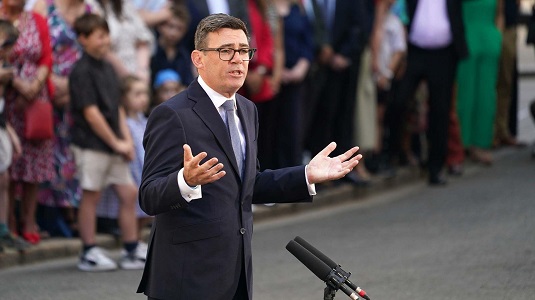
A new dawn has broken has it not? You could be forgiven for thinking these famed words of Tony Blair applies to our shiny new Prime Minister. Outside Downing Street sans the lectern and without the benefit of a crib sheet, Andy Burnham sketched out his plan for his premiership. Tomorrow we're going to see immediate measures to ease the cost of living and set out the direction of travel. Perhaps some of my suggestions might make the cut? This, in due course, is going to be followed by a ten-year plan. But the proverbial rabbit at lunch time was Burnham's pledge on homelessness. Channelling Jeremy Corbyn circa 2019, the first priority will be ending rough sleeping. In short, good speech. Great first impression.

The cabinet appointments were more a mixed affair. Seeing sackings handed out to Rachel Reeves, David Lammy, Liz Kendall, Darren Jones and "resignations" from others, like Steve Reed, were encouraging signs. Unfortunately, that's where the fun ended. Burnham defied the Fleet Street sages who were forecasting Shabana Mahmood in Number 11, and - rabbit number two - out popped John Healey instead. There are several ways the appointment can be interpreted. Unlike Keir Starmer's last reshuffle, that saw all the powerful offices of state filled by empty suits from Blairite central casting, Burnham's cabinet is poised to be more ecumenical in its political colouration. Healey is well-respected across the PLP, so for the operation it's a good "non-factional" pick. Lots of Labour love the military, and his standing wasn't harmed when he resigned as defence secretary over budgetary allocations. The question is what does this mean for the politics? On the one hand, the "surprise" might be suggestive of Burnham wanting a chancellor firmly subordinate to Downing Street. Which is a definite if one is serious about restructuring British capitalism. But on the other, it can suggest continuity. Healey is no stranger to the Treasury and did five years there under Tony Blair. Treasury brain is a thing in British politics, and one that reproduces its institutional pre-eminence in state institutions. Anyone thinking like this is a safe pair of hands as far as the common sense of British commercial and financial capital is concerned.

More continuity is found in keeping Pat McFadden at the DWP and, most disappointingly, Mahmood gets to stay on at the Home Office. Not what you would call a clean break. Making Ed Miliband foreign secretary gives him a big job that's unlikely to get the unhinged right wing press going. Indeed, this move might convince them it was their pressure that kept him out of the Treasury and ejected from from his energy brief. But it opens that up for someone keen to make a splash. At the time of writing, Wes Streeting hasn't been given a job yet. Yvette Cooper has been shuffled over to health, and room has been cleared for a somewhat triumphant return of Louise Haigh, who was punished under the ancien regime for being too independent and settling the Tory-stoked rail dispute relatively promptly. Taking the reins of the Cabinet Office means she will play a central role in Burnham's oft-floated devolution, including the relocation of some of the operation to the promised Number 10 North. Angela Rayner is back in housing, Jonathan Reynolds is at business, and Lucy Powell - this last year Burnham's representative at the top of the party - is in education. Hard lines again to Bridget Phillipson.

Hoping for the best but prepared for the worst is the mindset of many current and former Labour Party people this evening as the appointments news dribbles in. As Burnham said after winning Makerfield, this is his party's one chance to make everything right. Retaining some key Starmer-era figures in position, and a new chancellor famous for wanting more cash for the military points to the status quo that did the last government in. But, commenting earlier, former Blair aide John McTernan rightly argued that what matters are the first actions the new government takes. Starmer had a disastrous start, all of it self-inflicted. On Tuesday Burnham will set out his immediate decisions, and those will point to what kind of government we're getting. They will affirm whether or not the pre-emptive pessimism a lot of people are feeling is warranted.

Image Credit

Thursday, 16 July 2026

Science Fiction Book Haul #9

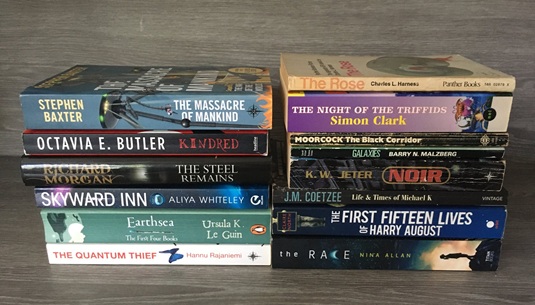
My book haul brings all the boys to the yard, so it's time we had another. These have been picked up in dribs and drabs from a variety of exotic locations. I.e. Nottingham and Derby.

Digging into the B formats first, it's the doyen of British hard SF, Stephen Baxter. His officially endorsed sequel to HG Wells's The Time Machine might just be his best book in my opinion. So what can he do with the Martians? As you might have gathered from the title, The Massacre of Mankind, it's not likely to be positive for humanity. Britain has enjoyed a technological bonanza from picking over the fighting machines left in the wake of the Martians' defeat. With a souped-up military and a planet full of microbes sure to smite the Martians if they come back, the world is reasonably content. That is until the famous green flashes light up the surface of Mars, signalling a new fleet of cylinders are on their way. Yes, this time the Martians have had their jabs. Massacre has earned less praise and comment in the 10 years since publication than The Time Ships enjoyed. Over long and repetitious is the wisdom of the Goodreads crowd, but as The War of the Worlds is my favourite novel I'm sure there's something in here worth persevering with.

The second on the list is easily the most famous of this clutch, Octavia E Butler's Kindred. To my shame, I've not read any Butler yet. The premise here is that Dana is enjoying her birthday celebrations when she passes through a time slip into antebellum Maryland. She rescues a slave owner's drowning son, and here is set up a cycle where she bounces between the present and the past. Each time, she has to save this privileged white boy from scrapes, even though he becomes increasingly monstrous as he ages. Regarded as something of a classic, I've perhaps laid off because novels dealing with American slavery are grim, and packed with trauma and pain. But it has been some years since reading the last one, Colson Whitehead's SF-adjacent The Underground Railroad. It's time, and it'll definitely be read very soon - I've persuaded my book group to read it for September.

Much lighter fare comes from Richard Morgan with the first of his fantasy series, The Steel Remains. Best known for Altered Carbon and its sequels, Remains pitches itself as a "grimdark" fantasy with a gay lead. Fair enough, but having read it I didn't think it was particularly grim. In fact, it's more chilled than Morgan's more famous titles. People who like plenty of choppy, choppy sword play will be satisfied, and some unpleasant experiences befall poor peasant unfortunates, but it runs along at a decent canter with more than a dollop of Dying Earth/Viriconium influences. To be honest, I liked this more than Altered Carbon.

Aliya Whiteley's Skyward Inn was shortlisted for the Arthur C Clarke Award, so what's it about? There has been a war which, apparently, humanity won against the alien Qita. And now a bunch of veterans from both sides have clubbed together to run the titular inn. A visitor shows up asking for assistance, and with them opens a Pandora's Box worth of questions. Some things, it seems, are better left unsaid and unquestioned. Whiteley has steadily been accruing cred over the years, and walked off with the BSFA's novel award last year. I have read her The Loosening Skin, which is an alternate history thinking through the cultural implications of humans shedding their skin, snake style, instead of it flaking off as it does. That, I thought, had a strong opening before tapering off. But seeing as Skyward Inn scooped a nomination, I am hoping this is better.

The next should need little introduction - an omnibus of Ursula K Le Guin's first four Earthsea novels. Really, I bought this for my niece but seeing as I haven't read it yet ... There's a fairly standard fantasy set up. Ged has a gift for magic and gets sent to wizarding school where he becomes a mighty spellcaster, but over the years evil slowly reveals its predictable head. I wonder who got inspired by such a set up? Another series of books that caused Le Guin to expand her trophy cabinet, and one I'll be tackling very soon.

Then down at the base is The Quantum Thief by Hannu Rajabiemi. This does come with a super hard SF warning, the sort that melts the unwary reader's brain with their exploration of quantum effects and the weirdness associated with that layer of reality. As far as I know, this revolves around a protagonist locked in a virtual prison where he undergoes endless cycles of the prisoner's dilemma. He gets busted out, and it gets stranger from there. This book is known for refusing to explain much, and the reader is just expected to get with the vibe, including all the discomfiting future post-human solar system. Not sure what I'll make of this.

Bottom up on the second stack there we find The Race by Nina Allan. Her debut and BSFA-shortlisted novel features an environmentally-ruined Britain and a character study of four equally-damaged people. In other words, this is as slipstreamy as they come. Nevertheless, my expectations are elevated as I enjoyed The Rift very much, which also played fast and loose with its genre status while telling a great story.

The First Fifteen Lives of Harry August is a well-received variation on the Groundhog Day theme. Wee Harry lives his life, dies, and comes back to live it all over again. And at the outset he's done so 15 times, presumably making different decisions along the way to try out those paths not taken. On the last occasion, he's visited on his death bed by someone who knows, and she needs his help in the next incarnation. Harry August was nominated for the Clarke and the BSFA, and North has won a significant following as an SF writer with her recent space opera, Slow Gods, winning critical praise. This one sounds like the sort of science fiction novel you might get away slipping it to your mainstream fiction reading friends.

Last among the Bs is JM Coetzee's Life & Times of Michael K. It's also another borderline novels, a bit like his preceding release, Waiting for the Barbarians. Here our hero has to journey across an alternative civil war-torn South Africa to return his mum to her rural birthplace. Michael, however, has a cleft lip and learning difficulties, and his mother is a servant to a rich Cape Town family. The path is not a smooth one, and the authorities detain him for "reeducation". Apparently, it has more than a few references to Kafka's The Trial.

Diving into the best paperback format, KW Jeter's Noir presents itself. An underappreciated master of SF and Philip K Dick associate, the only Jeter I've read is his Infernal Devices. A steam punk novel from the guy who coined the term, this was incredibly silly with a preposterous plot, but thoroughly entertaining for all that. Noir is a hard-boiled detective novel set in the only industrialised area left in the world. It's polluted, grimy, and dangerous. To make it extra grim, this hypercapitalist dystopia can raise the dead to pay off debts acrude in life. Sounds charming. And for that reason, a book to look forward to.

Sitting atop that is Barry Malzberg's Galaxies. This slender thing is a deconstruction of space operas, dressed up as a schlocky sounding faster-than-light zombie astronaut romp. It's presented as notes towards a novel by a science fiction author, who allows the story to zip along with inserts on the state and status of the genre, and other asides besides. Malzberg's critical reputation as a fine, if unsung SF literary hero is based on misanthropic works such as this.

Michael Moorcock has written so many books that it's easy to come across one you've never heard of before. The Black Corridor is such a title. Civilisation is falling apart (when is it not?), and one man flees from the Earth with his family. They're in hibernation, and it's a five-year trek to their destination. How will he cope with the intense loneliness? And how will this solitary tale tie in with Moorcock's multiverse? Will the hibernators dream of Jerry Cornelius?

Our penultimate title is The Night of the Triffids. Can you guess what this is a sequel to? 25 years have passed on our survivors' Channel hideaways and all is well. The son of our original hero scours the world looking for the means to defeat the Triffid menace, and finds a glimmer of hope in a New York colony. While the original was the first cosy catastrophe novel and was of considerable literary merit and influence, I understand Simon Clark's authorised sequel has none of these virtues. It's - apparently, for I've nto read it yet - more action/horror-oriented with more blood and guts and little originality. Still, Night might be mindless fun.

And the last of this haul's heap is The Rose, a wee find tucked away hidden in a charity shop's book case. Harness is best known for The Paradox Men, a 1950s space opera that won m admirers, including the aforementioned Michael Moorcock. The Rose is a collection of short stories, featuring the award-winning novella of the same name. This, apparently, features mutants, quantum mechanics, and the relationship between science and art.

That's the haul done. Have you picked up anything interesting lately?

Tuesday, 14 July 2026

The Political Uses of Ann Widdecombe

Nigel Farage has used every opportunity to fabricate a persecution complex. Being criticised for pocketing £5m and facing a standards inquiry is the establishment out to get him. Questions about his relationship to a moneyed fraudster and his mother is so much hounding. Having his by-election stunt backfire as all the other parties rightly refused to play his game is an elite conspiracy. The appearance of wounding is central not just to Farage's increasingly unpopular populism, but the politics of the right in general.

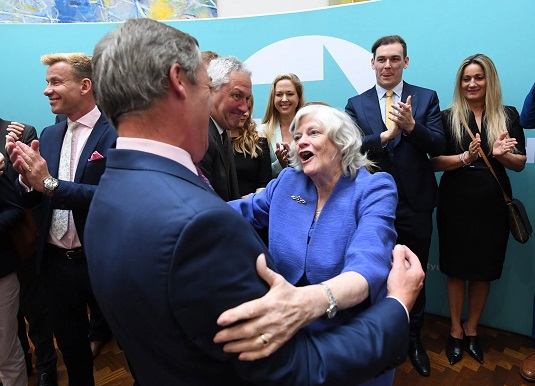
The murder of Ann Widdecombe which, accordingly to the police, now looks like a targeted killing has become an unseemly Reform jamboree because it plays into the victimhood dynamic they continually set up. A photo opp of leading Reform figures laying wreathes, plenty of buddy-buddy photos of Farage and Richard Tice with Widdecombe flooding Reform-affiliated social media, Farage moaning about the lack of security afforded him even though he declined a state-funded package offered him this year, and his claims to receive "300 threats" a month. Widdecombe was useful in life to the Reform cause as an able media performer who played well with a layer of Tory-Reform voters, and she continues to have crude uses in her demise.

Understandably, how Reform have exploited her death has attracted most attention and criticism. But far less focus has resolved on how politics generally have used Widdecombe's passing. You will have seen the tributes. Every leading politician has given the same one. "I disagreed with her politics", they say, before offering some humanising anecdote, or tribute to her energy, or her formidability, or how, once you got to know her, she was actually quite nice and kind. That all these things might be true are beside the point. Their endless repetition constitutes the received wisdom, the illusio of politics. To put it another way, Widdecombe was being treated as if her views were of no consequence, that her opinions were weightless. This is politics as if it's a dinner party, where everyone chips in with a point and position, and are so much colour that might have made for a memorable evening.

But politics does have weight. It does have consequences. Widdecombe's voting record as an MP out her on the wrong side of every single argument over the 23 years of her parliamentary career. As a social security minister and later as prisons minister, she oversaw attacks on the most vulnerable people and, famously, defended the handcuffing of pregnant prisoners giving birth. As a key Reform spokesperson, this ever-so-kind woman spent her dotage building a political party that exploits and tacitly encourages racist violence, and would threaten the limited democracy we have in this country if they form or become part of the next government. But mentioning all this is the height of rudeness, because politics presents as a public service where politicians are motivated by the noblest of intentions. Where they differ is how best to serve their constituents. It cannot be acknowledged for what it really is - the more or less transparent struggle of interests. The illusio must be maintained, even if the only people who really buy into it these days are the politicians themselves.

Image Credit

Tuesday, 7 July 2026

The Desperation of Nigel Farage

"This is 4D chess!!" shouted Matthew Goodwin into the howling void that is Twitter. With such an endorsement, you just know he was heaping praise on stupidity. And so it was. At 2pm Tuesday afternoon, Nigel Farage fielded a press conference about his political future. Was he going to resign? Yes! Sort of. Viewers were treated to a self-pitying whine about how terribly unfair it was that he wasn't allowed to trough on the freebies, gifts, and cash windfalls showered on him by billionaires, gold bullion companies, and convicted fraudsters without declaring them as per parliamentary rules. It's all a stitch up, he moaned, the establishment are out to get me! And so he's quitting his Clacton seat to force a by-election, showing the world that ordinary people back him.

The Des A masterful gambit this is not. For one, the formal investigation into his troughing does not go away. Assuming Farage is returned to the Commons it simply picks up where it left off. The possibility of a recall petition and a second Clacton by-election some time in the Autumn cannot be discounted. The second was Farage assumed all the other parties would play ball, relishing the chance of having a crack at him in his stronghold to feed his David vs Goliath posturing. Which has already backfired. The Tories, Labour, and the Liberal Democrats aren't going to dignify Farage's by-election stunt with a candidate. If there is any sense, nor should the Greens. Also out is Rupert Lowe's Restore Britain, who say they're holding fire for the proper by-election-to-come following the standards investigation. Therefore, the Reform leader is going to look silly railing against the establishment from the victor's podium, flanked by Count Binface, the Monster Raving Loony Party, and whoever else fancies pouring their deposit down a drain.

Without much of a contest, the media interest is unlikely to make much of the by-election. Undoubtedly, Farage was hoping Clacton would generate Makerfield levels of publicity and allow him to dominate the summer's politics coverage, wresting the spotlight away from Andy Burnham. Instead, other parties choosing not to participate makes the by-election look like a pointless waste of time. The punters of Clacton will be wondering why this farce is even happening, and a few might be turned off from the Reform leader because of this frivolous waste of money. While simultaneously reminding them that the stakes of this contest is he right to take free gifts and cash money. How man-of-the-people of him.

Farage's gambit smacks of desperation. Having been an adroit and skillful operator for so long, in his hubris he might think nemesis is never going to come for him. Hoping that no one cares about his capacious pockets nor the crude political favours he's done in return for cash, such as bigging up crypto, and prominently featuring JCB machinery on local election literature, how the £5m story refuses to go away and keeps getting murkier has left him at a complete loss of what to do. Lying about it, dismissing it, being brazen about it, none have worked as allegations pile on allegations. Farage must rue the day when he decided not to apologise for failing to declare Christopher Harborne's gift and tried to fight it. A case, perhaps, of his being high on his own supply and thinking nothing can touch him nor the solid layer of Reform support that has proven resilient versus everything else thrown at him. This is a moment of maximum peril for Farage and his political chances, made more delicious by how it's entirely self-inflicted.

Sunday, 5 July 2026

From Brexit to Frexit?

If you're sparing a thought for Nigel Farage this Sunday, his exposed links to a convicted fraudster are likely to colour them. The Sunday Times writes that Farage received security support, housing perks, and staff funded by crypto "entrepreneur", George Cottrell. Deliciously, Cottrell was arrested in the US in Farage's company in 2017, after doing the rounds at that year's Republican convention. These benefits were, apparently, provided in the lead up to the 2024 general election and, what with Farage's custom and practice, they were not declared.

It's been a bad week for the Reform leader. We learned he'd pocketed £270k fronting a gold bullion dealer, and that he has acquired a £4m property portfolio. He also got testy being pressed on his £5m gift from Christopher Harborne, the Thailand-based crypto billionaire and Russian oil profiteer. From BBC Breakfast's Sally Nugent, to TalkTV's Julia Hartley-Brewer, and LBC's Nick Ferrari, he came across as exasperated, petulant, and annoyed that he should get questioned on this topic. This comes after a poor campaign in Makerfield, where Farage went to ground to avoid those giving answers. These difficulties and his uncharacteristic avoidance of the media spotlight have led some to ask the unthinkable: is Farage long for this political world?

Undoubtedly, it's a question Farage will be asking himself. He will apparently be taking a long break this summer, which will be good news for Andy Burnham and gives his government plenty of opportunities to set the political agenda. But might Farage throw in the towel? It must be tempting. According to former Farage lackey Ben Habib, Farage stood in the election because Harborne ponied up the cash. His frequent issues with not declaring earnings is a sign of a politician on the make, and while not the wealthiest MP he did report the largest income from outside interests - the eight or nine second jobs he's taken since his election as the very occasional representative for Clacton. For Farage, he's got to know that life would be easier and his earning power not dimmed too much if he walked away.

Consider the parliamentary standards investigation. Given precedent, he won't walk away with a slapped wrist. Indeed, a Commons suspension and a recall petition are the likely consequences of the Harborne affair. Undoubtedly exacerbated by the multiple occasions he's failed to declare earnings, including today's Times splash. Unless all the other parties could get behind a squeaky clean anti-corruption but non-political figure, like finance guru Martin Lewis, Farage would surely win the by-election. But would he want to fight a campaign when it's his money grubbing that's the reason for and the focus of the contest? Does Farage want to risk the awkward viral videos of having random Clacton'ers berating him, or having a strip torn off him on a previous Reform voter's doorstep?

The second issue is his political future. Braving the by-election means more years of scrutiny and accountability. It's possible, thanks to past behaviour, that there are going to be future non-declarations, and perhaps more Commons investigations. But supposing those storms are weathered, everything goes wrong because Burnham turns out to be no different to Keir Starmer and Farage finds himself in Number 10. Not only would this be the gravest disaster in British political history, it would be an opportunity for him and his lieutenants to engorge themselves. However, Farage is a greedy man, not a stupid man. Does he want a future where yes, he can fill his boots, but afterwards face possible pursuit by whoever might succeed him. Would Farage rather spend his infirm old age relaxing on sun loungers, or fending off investigations, legal challenges, criminal probes, imprisonment? Hence why the Reform leader's Frexit can't be entirely discounted.

Image Credit

Friday, 3 July 2026

A Secret Plan to Sack Striking Bin Workers

The Birmingham bin strike has been rolling on for 18 months, and the workers - organised by Unite - have long suspected that the council's refusal to negotiate and willingness to throw money at breaking the strike, more than it would have cost to have settled the dispute, suggests the local authority wants to break the union. And yesterday, ITV West Midlands regional news confirmed it. They reported on a leaked council document from March that set out a plan to sack the bin workers while bypassing councillors, a move the document recognises would fall foul of the new unfair dismissal legislation and cost the council about £23m. People familiar with local authorities often complain about officer-led councils, but this is something else entirely. Unelected senior officers and Whitehall commissioners appear to be in cahoots when this scheme was hatched, and all of them deserve firm and tough action taken against them.

The bulletin on these revelations covers 15 minutes of the report.

Wednesday, 1 July 2026

Five Most Popular Posts in June

Another scorching month! For the blog that is. June was kind to this corner of the internet, and not all the traffic was from LLMs hungry for new content to "train" on. Here are the favourite five.

1. Authoritarian Babyism
2. A See Ya to Keir
3. Labour after Makerfield
4. On Cowardice
5. Right Riot

Coming out on top is the government's plans to curb social media use for teenagers. Typical authoritarianism from the most authoritarian and, as it turns out, brittle Prime Minister ever. Speaking of which, in at two is Keir Starmer's resignation timetable. I suspect most readers will not be sorry to see him go. Coming in at three is a post superseded by events, a what now? after Andy Burnham's by-election victory. At four and five respectively are interlinked posts. The first is on Labour's pathetic response to the far right and loyalist riots/pogroms in Southampton and Belfast and the second on the extremist efforts, which include that nice Mr Farage, in stirring something up.

Who gets the second chance this time? It's some friendly advice for Andy Burnham.

In July we can look forward to a new Prime Minister, so there will be politics aplenty that might motivate me to write a bit more than of late. Perhaps some science fiction novels might get a look in or, even rarer, some ramblings on matters other than politics.